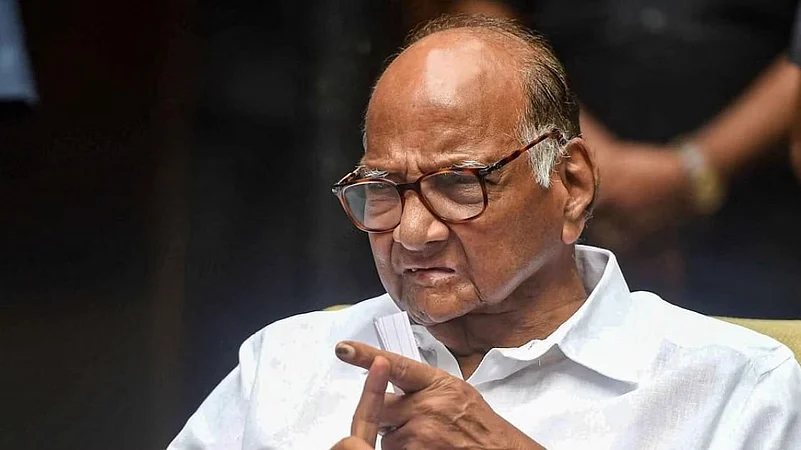
Sharad Pawar urged Tata Sons and Tata Trusts to resolve their dispute through dialogue and due process.
He said the group’s governance rules and Articles of Association should guide the resolution.
Pawar stressed the Trusts’ majority stake and Tata’s philanthropic legacy made the dispute significant.
Sharad Pawar has urged Tata Sons and Tata Trusts to resolve their differences through dialogue, due process and the Tata Group's established governance rules, as the dispute over leadership and the future structure of Tata Sons intensifies.
In a post on X on Tuesday, the Nationalist Congress Party (SP) chief said the matter should be handled within the framework that has governed the Tata Group for decades.
Pawar also stressed that the dispute was more than a routine boardroom disagreement. Tata Trusts hold about 66 per cent of Tata Sons, the holding company at the centre of the group, giving the row wider implications for control and continuity.
Pawar's intervention comes as the two sides differ over the interpretation of Tata Sons' rules following a recent board vote. The dispute now covers N Chandrasekaran's reappointment, the interpretation of the company's Articles of Association and the proposed listing of Tata Sons.
Trusts And Philanthropy
Pawar said the Trusts' majority stake was not merely a conventional investment but an integral part of the Tata Group's institutional structure. He linked the arrangement to the group's long-standing practice of directing wealth generated by its businesses towards philanthropy and public welfare.


He said the structure supports charitable work in healthcare, education, research and rural development. He cited Tata Memorial Hospital, the Tata Institute of Fundamental Research and the Tata Institute of Social Sciences as institutions associated with that legacy.
The broader issue, Pawar said, was one of continuity. Any move to alter the Trusts' role or rights should be assessed in the context of the ownership structure that has shaped the group for decades.

Board Vote Fallout
The immediate trigger was the Tata Sons board meeting on September 17.
At the meeting, Tata Sons reappointed Chandrasekaran as executive chairman for another five-year term beginning in February 2027. The board also approved steps towards a possible listing of Tata Sons.
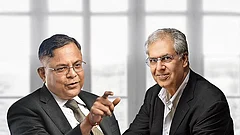
Reuters reported that Tata Trusts Chairman Noel Tata opposed both decisions, while the Trusts' other nominee director, Venu Srinivasan, voted in favour. The Trusts later challenged the validity of Chandrasekaran's reappointment.
Their argument rests on Tata Sons' Articles of Association, which they say require the support of a majority of Trust-nominated directors for the appointment or reappointment of a chairman. Since Noel Tata voted against the resolution, the Trusts contend that the condition was not met.
The disagreement has since widened. What began as a leadership decision has turned into a broader governance dispute, with Tata Sons and the Trusts differing over the interpretation of the same provision.

Articles And Listing
Tata Sons' Articles of Association are at the centre of the dispute.
The Articles of Association serve as Tata Sons' internal constitutional framework. Pawar said these provisions should be respected and that the leadership issue should be resolved within the agreed governance structure rather than through further escalation.
The Tata Trusts have also maintained that their nominee directors have specific affirmative rights under the Articles. They have cited the Supreme Court's ruling in the Cyrus Mistry case to argue that these rights were recognised, although the legal interpretation remains disputed.
The proposed listing adds another layer to the dispute. Tata Sons has moved ahead with preparations for a public listing, while the Tata Trusts have opposed changes to the long-standing structure and pushed for alternatives.
Reuters reported that the proposed listing is linked to regulatory requirements after the Reserve Bank of India classified Tata Sons as an upper-layer NBFC in 2022. The classification is significant because Tata Sons holds stakes in several major Tata companies and sits at the centre of the group.

Legacy And Stakes
The stakes in the dispute extend beyond the immediate leadership question.
Pawar's intervention is a call to return the matter to the group's established governance framework rather than allow the disagreement to deepen. The unresolved issues include Chandrasekaran's reappointment, the interpretation of the Articles of Association and the proposed listing of Tata Sons.
The dispute also raises broader questions about how control is exercised within the Tata Group, the rights of Tata Trusts as the majority shareholder and whether the group's long-standing ownership structure will remain intact.
Pawar said protecting the Tata Group's trust-based legacy is important because of its contribution to India's development.