There are moments in the life of every great institution when history becomes more than a record of the past. It becomes a responsibility.
For the Tata Group, this is one such moment.
Few business houses in India carry a legacy as expansive as Tata’s. For generations, the name has represented industrial ambition, technological progress, philanthropy and, perhaps above all, trust. Its companies have become part of everyday Indian life from the vehicles people drive and the software that powers businesses to the products they consume and the hotels in which they stay.
But history alone cannot secure the future.
The world around Tata is changing faster than perhaps at any other time in its modern corporate journey. Artificial intelligence is rewriting the rules of technology. The transition towards cleaner energy is reshaping automobiles and manufacturing. Global supply chains are being redrawn by geopolitics, while a younger and more demanding consumer is changing the economics of business.
At the meeting point of this history and uncertainty stands Noel Tata.
As chairman of Tata Trusts, Noel Tata now occupies one of the most consequential positions within the wider Tata ecosystem. His responsibility extends beyond the management of a business. It involves helping safeguard the institutional character of an organisation that has survived wars, economic crises, political change and technological disruption.

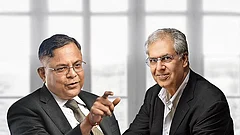
The challenge is not to preserve Tata exactly as it was.
It is to ensure that the principles that made Tata endure do not become obstacles to what it must become next.
That distinction may define Noel Tata’s moment.
Unlike many contemporary corporate leaders, Noel Tata has never built his reputation around visibility. He has largely remained away from the glare of public attention, allowing his work to speak through the businesses he has helped build.
His career at Trent offers perhaps the clearest example.
The growth of Westside established a strong foundation in organised retail. But Zudio demonstrated something equally important: the ability to recognise a changing India before that change became obvious to everyone else.
The brand understood the aspirations of a young and increasingly value-conscious consumer someone who wanted fashion and choice without the premium price. Its growth was built not simply on expansion but on execution: efficient sourcing, accessible pricing, rapid inventory movement and a model that could scale.
It was a business lesson with a wider relevance.
Institutions do not remain successful because they are large. They remain successful because they learn when the world around them changes.
Noel Tata’s years at Tata International brought another perspective. International business requires a comfort with uncertainty. Currencies fluctuate, trade relationships shift and supply chains can be disrupted by events occurring far from the boardroom.
Today, those uncertainties have become central to corporate strategy.
For Tata, the future presents enormous possibilities. India’s economic expansion, its growing role in global manufacturing and the emergence of new technologies offer opportunities across several businesses. But every opportunity comes with a corresponding risk.
Technology is shortening business cycles. Competition is intensifying. New industries demand capital, speed and a willingness to make decisions before outcomes are certain.
That is where the tension between Tata’s past and its future becomes most visible.
The group’s legacy is built on patience, trust and long-term thinking. Its future will demand agility, experimentation and calculated risk-taking.
One without the other may not be enough.
Noel Tata’s importance lies precisely in his position between these two imperatives. He understands the weight of the institution because he has spent decades within it. But his most visible business achievements have come from responding to changing markets and new consumers.
The Tata Group will not be shaped by Noel Tata alone. Its future will depend on professional managers, boards, entrepreneurs and thousands of decisions made across a vast corporate network.
Yet institutions also need people who understand what must remain constant while everything else changes.
That may be Noel Tata’s most important responsibility.
He is not being asked to recreate the Tata of the past. Nor can the future be built by simply discarding it.
His challenge is more difficult: to stand between the two, carrying forward the principles that gave Tata its identity while ensuring they do not prevent the institution from discovering what it can become next.
For a man who has spent much of his career outside the spotlight, it is an unusually visible moment.
And perhaps that is precisely why Noel Tata now finds himself at the point where Tata’s past meets its future.