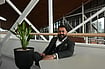
Krishan Rattan’s professional journey has been defined by an ability to look beyond immediate market cycles and identify where capital, technology and changing consumer behaviour could intersect to create long-term value. As a capital allocator, entrepreneur and investor, he has developed a perspective shaped by transactions across sectors and an interest in businesses capable of evolving with changing economic realities.
Over the course of his career, Rattan has raised, deployed and overseen more than US$12 billion in transactions. Before his current work with Terra Invest, he founded Mount-Row, an alternative asset manager that grew to more than US$1.2 billion in assets under management. These experiences have given him exposure to different industries, business models and stages of growth, while reinforcing his belief that successful investing requires looking beyond conventional categories.
For Rattan, the most interesting opportunities often emerge when an established industry is approaching a fundamental transition.
His growing interest in healthcare reflects precisely such a transition. Rather than viewing healthcare simply as a sector that treats illness, he sees an opportunity to rethink how health itself is managed. The shift, in his view, is from reactive treatment towards earlier detection, continuous monitoring and interventions designed to preserve capability.
“The investment case for longevity becomes much easier to understand once you stop thinking about age and start thinking about capability.”
That distinction captures an important part of Rattan’s investment philosophy. Longevity, for him, is not primarily about extending the number of years a person lives. It is about increasing the number of years in which people remain physically capable, cognitively active and independent.



This perspective has led him to examine a broad ecosystem of technologies and services, including diagnostics, imaging, genomics, metabolic health, cardiovascular prevention, oncology screening, regenerative medicine, digital health and wearable technology.
Yet Rattan’s approach is not built around betting on a single scientific breakthrough. His focus is on the infrastructure and systems that could make better healthcare possible at scale.
He sees a significant opportunity in the vast amount of health information already being generated. Blood tests, imaging, medical histories, genetic information, prescriptions, sleep patterns and wearable data can each provide useful signals. The challenge is connecting those signals and turning them into information that can support earlier and better decisions.
This is where Rattan sees artificial intelligence becoming increasingly relevant. Rather than positioning AI as a replacement for medical professionals, he believes its greater value may lie in augmenting clinical expertise.
“I am much more interested in the idea of an excellent doctor augmented by technology than in a narrative where technology eliminates the doctor.”
The statement reflects a broader characteristic of his approach: an emphasis on practical application over hype. Technology, in his view, becomes meaningful when it improves outcomes, increases efficiency or makes high-quality services more accessible.
Rattan also draws inspiration from the world of elite performance. Professional athletes have long used detailed measurements of sleep, recovery, nutrition, training load and physical performance to identify deterioration before it becomes a serious problem. He believes elements of this model can increasingly move into mainstream healthcare.
The objective is not to turn ordinary individuals into professional athletes, but to encourage a more proactive relationship with health: establish a baseline, monitor changes and act before a manageable issue becomes a major medical problem.
“The most interesting shift is from asking ‘what disease do you have?’ to asking ‘what is changing in your health, and can we do something about it now?’”
This philosophy also informs Rattan’s interest in creating a more continuous healthcare experience.
Terra Invest provides the investment platform through which Rattan can pursue opportunities aligned with this thinking. Its interest in longevity reflects his broader belief that healthcare is undergoing a structural transformation, rather than simply experiencing another technology cycle.
Ultimately, Rattan sees longevity as an economic question as much as a medical one. Healthier populations can remain productive for longer, participate more actively in society and potentially reshape industries ranging from insurance and financial services to travel, employment and consumer markets.
“Adding healthy years is not only a medical outcome. It is an economic outcome.”
For Rattan, that is what makes longevity compelling. The opportunity is not necessarily to predict the next miracle treatment, but to identify the systems, technologies and businesses that can help make healthier ageing a practical reality. It is an investment philosophy rooted in a simple idea: some of the most significant opportunities of the future may emerge from solving problems that affect almost everyone.