Tata Trusts said Tata Sons’ September 17 decision to reappoint N Chandrasekaran as chairman did not meet the Articles of Association
The Trusts argued that affirmative support from its nominee directors was required and that the chairman’s casting vote could not override it
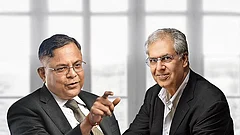
Noel Tata voted against the extension, while Venu Srinivasan supported it in the Tata Sons board meeting
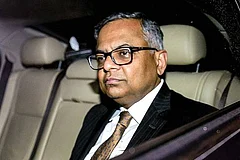
Tata Trusts has challenged Tata Sons’ Sept. 17 decision to reappoint N Chandrasekaran as chairman, saying the move did not satisfy the company’s Articles of Association.
PTI reported that the Trusts said the Articles give Trust-nominated directors an affirmative say and that the chairman’s casting vote cannot be used to sidestep that rule. The row deepened last week when Tata Sons’ directors backed another five-year stint for executive chairman N Chandrasekaran, a move the group’s largest shareholder labelled illegal. Noel Tata, who heads the charitable trusts that own roughly two-thirds of Tata Sons’ shares, voted against the extension.
Venu Srinivasan, the other Tata Trusts nominee on the Tata Sons board, supported it. In a statement, the Trusts said there was no deadlock at the board meeting and that the resolution could not have been validly passed after one of the two Trust-nominated directors voted against it.
“There are two Tata Trusts nominees on the Board of Tata Sons. Majority amongst two is two and not one,” the Trusts said. “On September 17, 2026, one such Director voted against the resolution. Thus, the affirmative support of Tata Trusts Nominee Directors as mandated by the AoA was not given. The condition failed, and so did the resolution.”


Board Vote Dispute
Tata Sons’ board backed Chandrasekaran for another five-year term, 4-1, with Noel Tata alone in opposition. Chandrasekaran had earlier ruled out another term, but he later agreed to stay on after the board asked him to reconsider. The Trusts, whose stake in Tata Sons is about 66 per cent, said the board total did not decide the issue because the Articles set a separate hurdle for Trust nominees.
“Whether the result of the vote was 4:1, or any other figure, is irrelevant. A condition is either met, or it is not. In this case the condition was not met,” the Trusts said.
The Trusts also said Noel Tata’s vote did not create a deadlock that the chairman’s casting vote could resolve. “The Chairman’s casting vote is available only where there is equality of votes at the overall board level. It does not apply amongst Tata Trusts’ Nominee Directors,” it said. “There was no paralysis, and there was no deadlock. The Board put a question, and the AoA answered it in the negative. The exercise of a protective right conferred by a company’s own constitution is not a deadlock; it is that constitution working as it was written to work.”

Void Ab Initio Claim
The Trusts said the Sept. 17 resolution "was not validly passed and has no legal effect" and was "void ab initio" — legally void from the outset. Tata Sons has acted on the view that the board properly cleared Chandrasekaran’s return. The Trusts also cited Tata Sons’ earlier defence of the same Articles in the case over former chairman Cyrus Mistry’s removal.
In that case, the Trusts said Tata Sons had defended the affirmative voting rights of Trust-nominated directors under Articles 104B and 121 before the Supreme Court, treating those provisions as legitimate protections for the company’s majority shareholder. When the Mistry litigation reached the Supreme Court, the court examined the special rights built into Tata Sons’ Articles, including clauses tied to Trust-nominated directors. The Trusts said Tata Sons could not pick and choose when to rely on those provisions. “The Company cannot now disown the protection it went to the Supreme Court to preserve. They are either in the Articles, or they are not. Tata Sons has already told the highest court in the country that they are,” the Trusts said.
Listing And Governance
The clash extends beyond the board vote and sits within a broader dispute over Tata Sons’ future structure. On Sept. 17, Tata Sons’ board also approved steps toward a possible listing of the holding company after the Reserve Bank of India rejected its application to give up its registration as a core investment company. The Trusts opposed listing and urged the company to explore alternatives.
The Trusts said Chandrasekaran’s Aug. 12 decision not to seek another term had already been accepted by it, and that a successor-selection process should have begun under the Articles. It said his later reappointment did not fit that earlier process. Tata Sons also has a pending shareholder meeting, and Chandrasekaran’s continuation as a director is a separate shareholder matter from the board-level chairmanship decision.
The Trusts also rejected the argument that listing is needed to improve governance, saying Tata Sons has long held itself to public-company standards. “Tata Sons has for years chosen to hold itself to the standards of a public company,” the Trusts said. “It was done voluntarily, for reasons of transparency and governance, and long before any of the present questions arose,” it said.
On the listing argument, the Trusts said that “pulling apart a hundred-year-old structure to fill an imaginary gap is taking a sledgehammer to crack a nut.”
“It is also suggested that listing is to be welcomed because it will bring enhanced corporate governance. That argument assumes a governance gap which does not exist. Independently of listing, Tata Sons has for years chosen to hold itself to the standards of a public company. Its own AoA contain provisions applicable to public companies, including the appointment of independent directors, the constitution of an audit committee and a nomination and remuneration committee, provisions governing related party transactions and the retirement of directors by rotation, together with a code of conduct for the prevention of insider trading,” the statement said.
“A company that adopted these standards by choice is not a company in need of the discipline that listing is said to supply,” it added.
Philanthropic Stakes
The Trusts framed the dispute as a fight over its place within Tata Sons and the wider Tata Group. It said the issue was not simply “which framework governs Tata Sons better or who governs Tata Sons better” but “who is left in the room to speak for the millions of underserved and excluded Indians” who sit at the centre of its philanthropic work.
It reiterated its legal position and criticised Tata Sons’ reading of the Articles. “The company cannot now disown the protection it went to the Supreme Court to preserve. They are either in the Articles or they are not. Tata Sons has already told the highest court in the country that they are,” it said. “It is unfortunate that the Chairman of Tata Sons, a company renowned for setting high standards of corporate governance, is contending reappointment on such an untenable interpretation of the Articles.”