



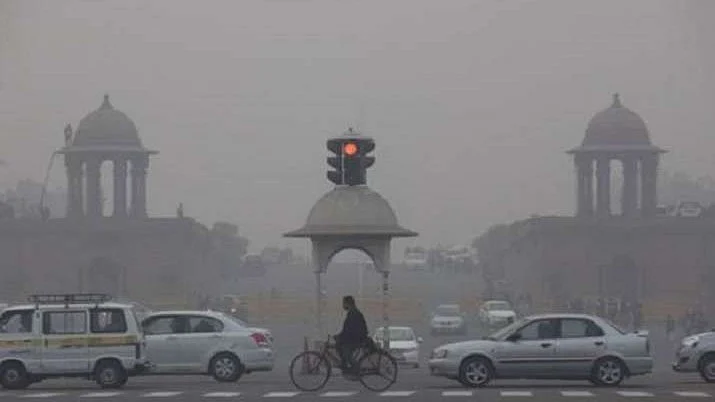
Delhi’s citywide AQI climbed to 522 on Sunday morning, with Baljit Nagar recording 797.
The capital’s PM2.5 concentration stood at 336 micrograms per cubic metre, while PM10 reached 471, more than 10 times the WHO guideline.
Delhi recorded the worst air quality among eight major Indian metros.
Delhi woke up to hazardous air pollution on Sunday, with the citywide Air Quality Index (AQI) climbing to 522 by 8:01 am on November 29, according to AQI.in. The capital ranked 12th among the world’s most polluted cities at the time, while some neighbourhoods recorded readings significantly higher than the citywide average. Baljit Nagar topped the list with an AQI of 797.
Railway Colony was close behind at 745, followed by Punjabi Bagh Cooperative Housing Society at 719. Than Singh Nagar recorded 635. All four localities were in the hazardous category, which begins at 301 on the scale used by AQI.in. Even the lowest of these readings was 113 points above Delhi’s overall AQI.
The sharp rise followed a temporary improvement in air quality across these neighbourhoods on Saturday. Baljit Nagar’s AQI had fallen below 300 before surging towards 800 by Sunday morning. Railway Colony saw its reading approach 200 before it climbed past 700 again. Similar fluctuations were recorded in Than Singh Nagar and Punjabi Bagh, where readings dipped below 300 before rising above 600 and 700, respectively.



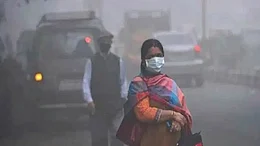
PM2.5 And PM10 Levels Remain High Across Delhi
The citywide PM2.5 concentration stood at 336 micrograms per cubic metre on Sunday morning, while PM10 levels were higher at 471 micrograms per cubic metre. AQI.in said the PM10 concentration was more than 10 times the World Health Organization’s guideline of 45 micrograms per cubic metre.
Baljit Nagar recorded the highest concentrations of both pollutants among the four neighbourhoods. Its PM2.5 level reached 474 micrograms per cubic metre, while PM10 stood at 664. Railway Colony reported PM2.5 and PM10 concentrations of 449 and 628, respectively. Punjabi Bagh recorded 435 and 610, while Than Singh Nagar registered 393 and 551.
The latest readings followed a sharp deterioration in Delhi’s daily air quality over the weekend. The city’s average AQI stood at 378 on Saturday, 128 points higher than Friday’s reading of 250. The daily figures for Tuesday, Wednesday and Thursday were 235, 226 and 240, respectively. The highest daily AQI recorded between November 1 and November 28 was 666 on November 9.

Delhi Records Worst Air Quality Among Major Indian Metros
Delhi also had the highest AQI among the eight Indian metropolitan cities listed by AQI.in. Pune was a distant second at 197, followed by Hyderabad at 182 and Bengaluru at 173. Mumbai recorded 172, Chennai 171 and Kolkata 162. Ahmedabad had the lowest reading among the cities, at 152.
Despite the hazardous pollution levels, Delhi was sunny on Sunday morning, with the temperature at 25°C. Wind speed was recorded at just 3.6 kmph, according to the citywide update.
AQI.in estimated that exposure to Delhi’s average PM2.5 concentration over a 24-hour period was comparable to smoking 12.6 cigarettes. The comparison, which uses average PM2.5 levels over the preceding 24 hours, is credited to Berkeley Earth.








