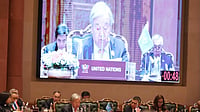
Chinese President Xi Jinping has proposed five initiatives on AI, trade, digital industries, intelligent manufacturing and scientific talent as China prepares to chair BRICS
Xi called for stronger cooperation among Global South countries and greater representation for developing nations in global institutions
China’s proposed BRICS agenda places technology, industrial cooperation and economic integration at the centre of its push to deepen ties across the Global South
Chinese President Xi Jinping called on BRICS countries to rally the Global South and presented five initiatives aimed at deepening cooperation in artificial intelligence, trade, digital industries, manufacturing and scientific talent at the BRICS Summit in New Delhi.
Speaking at the summit on Sunday, Xi said BRICS should be an “active, stabilizing and positive force” in international affairs and work towards a fairer international order. He said the collective rise of the Global South had become a key driver of global multipolarity.
Xi's remarks came as China prepares to take over the BRICS chairship and host the next summit. He said the grouping should strengthen ties with emerging markets and other Global South countries, safeguard industrial and supply chains, foster a large integrated market and build incubators for innovation.




Five Priorities
Xi's first proposal was an open-source and inclusive AI initiative. China said it would help establish a BRICS AI open-source community, support cooperation on the development and application of large language models, hold specialised AI seminars and training courses, and build an open ecosystem for AI.
The second initiative focused on trade and investment facilitation. China proposed a BRICS special economic zone partnership, under which participating countries could set up an intelligent portal and coordinate policies. Beijing also said it would hold a BRICS Forum on Trade in Services next year to develop new drivers of economic and trade cooperation.
The third proposal was for digital industry cooperation, including a BRICS digital ecosystem cloud platform, digital skills training, technological exchanges and industrial alignment to support the development of the digital economy.
The fourth initiative centred on intelligent manufacturing. China said it was ready to assist BRICS countries in building smart factories and developing standards and norms, with the aim of promoting manufacturing transformation and upgrading.
The fifth focused on science and technology talent development. China proposed setting up a BRICS engineer cultivation alliance for joint training and mutual recognition of competency standards. It also said it would launch a youth exchange programme focused on scientific and technological innovation.
Global South Focus
Xi framed the initiatives within a broader call for greater representation of developing countries in global affairs.
He called on Global South countries to uphold sovereign equality, non-interference in internal affairs and the peaceful settlement of disputes, and said international law and international rules should be applied to all countries without double standards.
He also called for stronger multilateral institutions and support for reform of the United Nations and World Trade Organisation. Xi said the international financial architecture should be reformed to increase the representation and voice of developing countries.
On development and emerging technologies, he urged Global South countries to work towards a consensus-based framework for global AI governance and said new technologies should contribute to shared prosperity.

China To Take Over
China is set to take over the BRICS chairship after India's current presidency and host the next summit.
Xi said Beijing would use the opportunity to deepen BRICS cooperation, strengthen ties with the wider Global South and build what he described as a new chapter of “strength through unity” for developing countries.
The emphasis on AI, digital industries, smart manufacturing and technology talent also places technological cooperation at the centre of China's proposed BRICS agenda, alongside efforts to strengthen trade, investment and the group's role in global governance.