



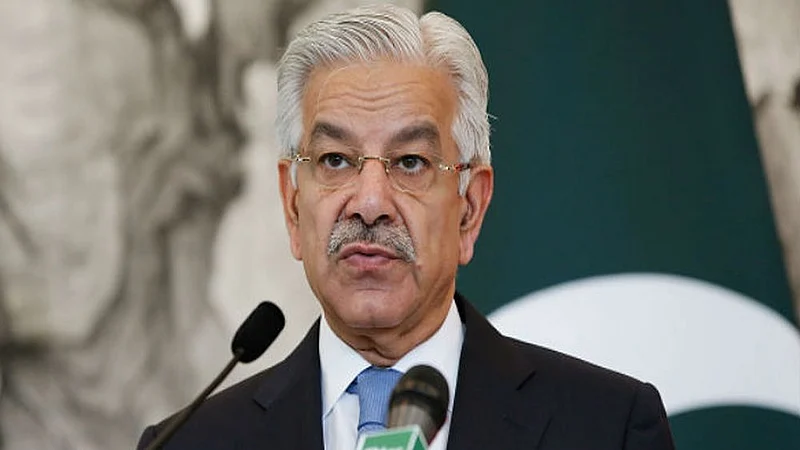
Defence Minister Khawaja Asif has suggested that Pakistan could introduce a new provincial system by the New Year, potentially dividing its four existing provinces into smaller administrative units.
The proposal faces opposition, particularly in Sindh, while Article 239 of Pakistan’s Constitution requires a two-thirds parliamentary majority and approval from the affected provincial assembly for boundary changes.
Balochistan’s separatist insurgency, the BLA’s attacks and Islamabad’s allegations against India complicate the debate, although the proposed reorganisation is not itself evidence of a direct threat to India.
Pakistan’s provincial map has remained largely unchanged since the country’s creation in 1947. Four vast provinces — Punjab, Sindh, Khyber Pakhtunkhwa and Balochistan — hold together a country of nearly 250 million people. Defence Minister Khawaja Asif wants to pick up the brush. A senior leader of the ruling PML-N, he says consensus is close and expects that “the new year will see the new system.” Then comes the hedge, delivered with practised ease: this is his own assessment, and he has “no inside information”.
The caveat deserves underlining. No formal decision has been taken. But when a defence minister talks in weeks rather than years, even Delhi must pay attention.
The Arithmetic Of Grievance
The idea doing the rounds is four provinces becoming 12: Punjab split four ways, Khyber Pakhtunkhwa and Balochistan three each, Sindh two. Asif says the new lines should follow administrative grounds, not linguistic, ethnic or political ones. He has also suggested that Karachi and Gwadar stay with the federation instead of becoming provinces.
The case for change is not frivolous. Pakistan’s population is estimated at 259.3 million, yet it has four provinces. Punjab alone holds 127.69 million people (2023 census), while Balochistan has 14.9 million spread across nearly 44 per cent of the land. Distance breeds neglect, the argument goes, and smaller units would bring government closer.


The case against is sharper. Sindh has been strongly opposed to any proposal that would divide it. Asif has accused the PPP of a double standard on the issue. A think tank, PRIME, has put out a report on the costs, with the headline figure of Rs730 billion annually. And history whispers. The One Unit scheme of the 1950s, meant to cut costs, instead centralised power and bred deep resentment in Sindh, the North-West Frontier and Balochistan. Redrawing a map, Pakistan has learnt, can also redraw grievances.

The Black Storm In Balochistan
Any mapmaker must reckon with the Baloch Liberation Army (BLA), a separatist group designated a terrorist organisation by Pakistan and the United States. It fights for a Balochistan independent of Islamabad. Its offensives carry the name Herof, which means “black storm”.
On January 31 this year, its fighters began coordinated gun and bomb attacks across at least 12 towns and cities. Pakistan said its forces killed 92 militants, a tally that later rose to 145. A US State Department security report put civilian deaths at 30 and warned that the attacks threaten mineral extraction. Other groups join the fray: the Balochistan Liberation Front claimed a March attack in Khuzdar that briefly took Karkh town. The BLA claims dozens more strikes since, 27 in just ten days in April, but these are its own claims and are hard to verify independently.
Here is the point for the map. The province Islamabad most wants to manage is the one that most resists being managed.

Should India Worry?
Concern, not alarm.
Pakistan has taken to calling Baloch militants “Fitna al-Hindustan”, a label meant to suggest they act at India’s behest. It has told the UN that India backs the BLA through proxies. India’s foreign ministry rejects this as a tactic to deflect attention from Pakistan’s internal failings.
The risks for Delhi lie elsewhere. First, narrative: a contested redrawing, especially in Sindh, hands Islamabad one more unrest to blame on India. Second, stability: reports suggest the BLA struck while Pakistan’s army was busy against the Pakistani Taliban in Khyber Pakhtunkhwa, so a state stretched across two fronts, with a new political fight on top, is an unpredictable neighbour. Third, the Gwadar question: carving Balochistan up while keeping its prize port under federal control may read to Baloch nationalists as dilution, not devolution.
None of this is a threat to India’s borders. But a Pakistan arguing over its own shape tends to look outward for someone to blame.
Yet the first hurdle for Islamabad is arithmetic, not geopolitics. Pakistan’s Constitution recognises four provinces but has no separate procedure for creating new ones, so the debate turns on Article 239, which governs amendments. Any amendment needs two-thirds of the total membership of each house of parliament: 224 of 336 members in the National Assembly and 64 of 96 senators. Article 239(4) adds a second lock: a change to a province’s boundaries must also win two-thirds support in that province’s own assembly before it reaches the president.
That clause is Sindh’s shield. Its assembly has already passed resolutions rejecting any proposal to divide the province, reaffirming its intention to invoke Article 239(4), and its chief minister has told lawmakers that any such move would be decided by the assembly’s two-thirds vote. The Pakistan Peoples Party (PPP), which rules the province, is staunchly opposed to a divided Sindh, and that puts the PML-N-led coalition in a fix, since any amendment needs two-thirds in both houses. The Muttahida Qaumi Movement-Pakistan (MQM-P), meanwhile, has called the Sindh resolution unconstitutional, so the fault line runs through Karachi itself.
A nationwide referendum has reportedly been floated to build a public mandate, but critics argue it cannot substitute for the Article 239 procedure. Reorganising administration without altering provincial boundaries, by contrast, would be a different undertaking.

So, for now, the new map exists mostly in speeches. The New Year may well bring a new system, as Asif hopes. But whether it brings new provinces will be settled as much in Karachi’s assembly hall as in Islamabad’s corridors of power. That, perhaps, is where Delhi should look hardest: not at who is blamed, but at who has the votes.








