



A 22-year-old Meerut man has been arrested over alleged links with Pakistan-based handlers
Police are investigating Instagram and Session groups allegedly used to recruit teenagers and circulate extremist material
Session's encryption and metadata protections present challenges for conventional digital investigations
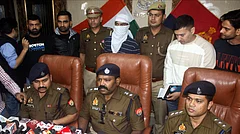
The arrest of 22-year-old Uzaid Qureshi in Meerut has brought a Pakistan-linked online recruitment network under scrutiny, with investigators examining how social media and encrypted messaging applications were allegedly used to reach young people in India. Police allege that Qureshi administered groups on Instagram and Session, including ones named ‘Tuition-40’ and ‘Brigade’, where extremist material and discussions about suicide attacks were circulated.
The investigation began with a terror-related FIR registered at Jammu's Bahu Fort police station against Jammu-based accused Mohammad Sajid. Investigators identified suspicious accounts linked to Meerut, Kishtwar and Pakistan. Qureshi allegedly came into contact with Sajid after responding to an anti-India video with the message, “We are also ready”. Sajid then approached him on Instagram.
Authorities allege that the network sought to influence teenagers aged 14–16, encouraging anti-India activities and suicide attacks. Investigators are also examining discussions about procuring suicide vests, contact with handlers in Pakistan-occupied Kashmir and exploring possible routes through the Gurez Valley.




From Instagram To Encrypted Groups
The sequence points to how online recruitment can move between platforms. Instagram and YouTube expose users to content, facilitate contact through comments and direct messages, and allow strangers to establish communication. Investigators allege that Qureshi and Sajid used Instagram to make initial contact before moving conversations into closed groups on Session and other messaging services, including Signal.
The case has renewed attention on efforts by Pakistan-linked elements to draw young people, including Muslim youth, towards anti-India extremist networks. The public police accounts so far identify teenagers aged 14–16 as the intended audience.
What Makes Session Different?
Session is designed around anonymity and metadata protection. Unlike conventional messaging services, it does not require users to register with a phone number or email address. Instead, users communicate through a Session Account ID that is not linked to conventional personal contact details.
Its messages are end-to-end encrypted, meaning only the sender and intended recipient hold the keys needed to read their contents. Session also uses onion routing: messages pass through multiple encrypted nodes so that an individual node cannot identify both the sender and recipient. The company says its system does not collect users' IP addresses or geolocation data through its messaging service.
These features complicate investigations that rely on phone numbers, network records or access to message content. Encryption and decentralised routing make it harder to establish who communicated with whom and from where. Investigators can still examine seized devices, recovered messages, screenshots, account identifiers and activity on other platforms. Session's privacy architecture creates obstacles to conventional tracing.
India's Wider Security Challenge
The Ministry of Home Affairs' February 2026 counter-terrorism strategy, PRAHAAR, identifies the misuse of social media and instant messaging applications for propaganda, recruitment, funding and attack coordination. It also notes that encryption and dark-web technologies can allow terrorist groups to operate anonymously. The document places online radicalisation and cross-border networks within India's wider counter-terrorism challenge.
India has previously acted against messaging applications allegedly used by terror networks. In May 2023, the government blocked 14 applications, including Conion, under Section 69A of the Information Technology Act after intelligence inputs that they were being used by groups in Jammu and Kashmir to communicate with handlers and local operatives. The provision allows the government to block public access to specified online information on grounds including national security.
The Meerut investigation brings the same challenge into focus: alleged cross-border recruitment increasingly relies on a mix of open social platforms and private communication channels. For security agencies, identifying the individuals behind anonymous accounts, tracing their connections and establishing the movement from online propaganda to operational planning remain central to disrupting such networks.








