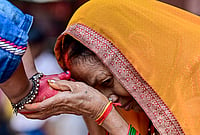
Awareness among mothers could become one of the most important tools in identifying developmental problems in children early and reducing some avoidable risks associated with disability. Union minister Dr Jitendra Singh, Minister for Science and Technology, said recently at an event, 'Prevention and early intervention must begin even before birth.'
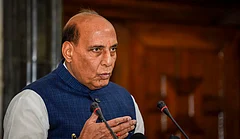
Addressing the Prabudh ‘Matri Shakti Sammelan’ organised by Saksham, an organisation working for the empowerment of persons with disabilities, Singh said mothers are often the first to notice changes in a child's development or health. Equipping them with the right information, he said, could help families seek medical advice and rehabilitation support before a condition becomes more difficult to address.
“Empowering mothers can enable early identification of disability in a child,” Singh said at the event in Kathua in Jammu and Kashmir, underlining the role of women in the larger effort towards prevention, early intervention and empowerment of persons with disabilities.
The emphasis is significant in a country where millions of people live with disabilities and where the causes and needs vary widely. According to the Census 2011, India had about 2.68 crore persons with disabilities, accounting for 2.21% of the population at the time. The figure included people with disabilities affecting seeing, hearing, speech, movement, cognition, mental health and multiple functions.


Census data recorded visual impairment as the largest category, followed by disabilities related to movement, hearing and speech. It also identified intellectual and mental disabilities, multiple disabilities and other categories.
More recent government surveys suggest that the number and prevalence of disability may be considerably different from the 2011 Census estimate, partly because definitions, identification methods and population structures have changed. This makes early identification particularly important rather than relying only on a later formal disability assessment.
Singh said awareness should start during pregnancy, with women encouraged to undergo regular antenatal check-ups, recommended screening, maintain adequate nutrition, prevent infections and consult healthcare professionals before taking medicines.
Certain congenital and developmental conditions can be identified during pregnancy or soon after birth, allowing doctors and families to plan appropriate care. Early intervention after birth can also be critical for children with developmental delays, hearing or vision impairment, neurological conditions and other disabilities.
The message, however, is not that every disability can be prevented.
Many disabilities arise from genetic, congenital or acquired conditions that cannot be avoided. But timely maternal care, safe childbirth, newborn screening, vaccination, prevention of infections, good nutrition and early treatment can reduce some preventable risks and, importantly, limit the impact of certain conditions through timely intervention.
For parents, the distinction is crucial. Early identification does not mean labelling a child; it means opening the door to help sooner.
A child with a developmental delay, for instance, may benefit from physiotherapy, occupational therapy, speech and language intervention, hearing or vision support, assistive devices or specialised education depending on the underlying condition.
The government has been expanding mechanisms for early intervention. Singh referred to the establishment of cross-disability early treatment centres intended to identify and support children from infancy.
The approach also shifts the focus from disability as a lifelong limitation to the possibility of greater participation when appropriate support is provided early.
“Awareness, however, must extend beyond prevention to the complete empowerment of Divyang persons,” Singh said, emphasising access to education, rehabilitation, assistive devices, skill development and employment.
For families, the journey does not end with diagnosis. A child may need years of rehabilitation, inclusive education and assistive technology before moving towards independent living and employment. The availability of these services close to where families live can make a significant difference, particularly for those who cannot afford repeated travel to major cities.
Singh also highlighted efforts to expand opportunities for persons with disabilities in sports. India’s performance at the Paris 2024 Paralympic Games, where the country won a record 29 medals, has demonstrated what specialised training and appropriate infrastructure can achieve.
A high-tech sports training centre for persons with disabilities has also been established in Madhya Pradesh, aimed at providing systematic coaching and training.
The larger challenge, however, lies beyond elite sport.
India's disability policy increasingly needs to move from a welfare-orientated approach to one centred on early detection, accessibility, education, skills, employment and independent living. For this to work, families need to know what signs to look for and where to seek help.
India's disability challenge cannot be solved by any one intervention. But ensuring that families have the knowledge to act early could be one of the simplest places to begin.
As Singh put it, the vision is to have “every mother aware, every family empowered, every child given the best possible beginning, and no one left behind.”
Area MLA Rajeev Jasrotia appreciated the work done in the region during the Modi regime, particularly the continuous efforts of the minister and local MP Dr Jitendra Singh for having transformed the entire district of Kathua beyond imagination within 12 years.
On behalf of "Saksham", Abhay Pargal, National Secretary, Saksham, delivered the welcome address and spelt out the agenda and the various programmes undertaken by the Saksham organisation for the empowerment of Divyangs across the country. Among other prominent figures who were present on the occasion were Swami Vishwanand, Principal, Government Degree College; Dr Pragya Khanna, State President; Saksham; Shri Attri; Manjeet Singh and others.