Legislative Councils function as the second chamber in six states, with members serving six-year terms and one-third retiring every two years.
MLCs are elected through different electorates, including local authorities, graduates, teachers and state legislators, while governors nominate some members.
Article 169 outlines the process for creating or abolishing a Legislative Council, while debates over costs and political patronage continue.
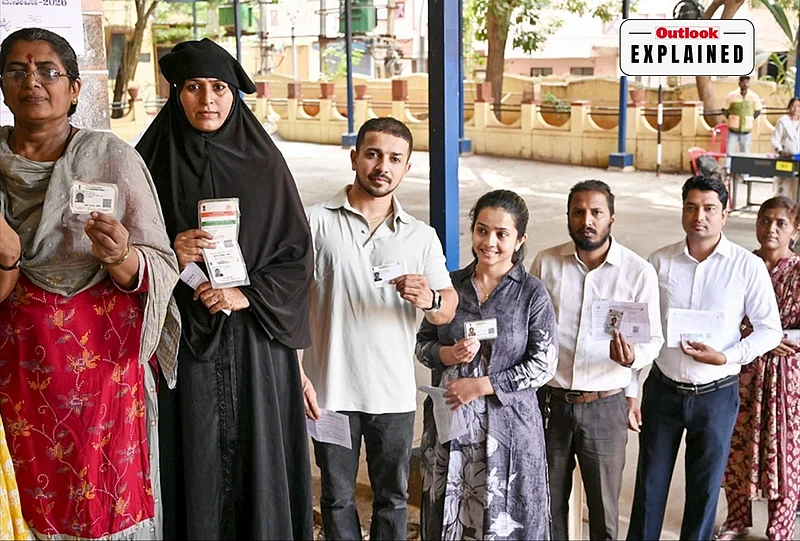
Polling for 28 Legislative Council seats across Uttar Pradesh, Bihar, Maharashtra and Karnataka was held on October 23, with counting scheduled for October 27.
The polls drew attention in Uttar Pradesh after a software glitch in the state's electoral rolls reportedly turned some voters' names into Hindi sentences, including “Ram ne Yadav ko maara”. Uttar Pradesh Chief Electoral Officer Navdeep Rinwa ordered an inquiry after 158 irregular entries were reported across 11 MLC constituencies.
In Bihar, attention has also turned to Jan Suraaj founder Prashant Kishor following his victory in the Bankipur by-election. His party is now challenging the ruling NDA in the Legislative Council elections.
The elections have renewed attention on Legislative Councils, the role they play in state legislatures and the process through which their members are elected. Unlike Assembly elections, these polls do not involve every adult citizen, as voting rights are restricted to designated electorates.

What Are Legislative Councils?
Some Indian states have a bicameral legislature, comprising a Legislative Assembly and a Legislative Council. The Council serves as the second chamber at the state level, similar to the Rajya Sabha in Parliament.




Six states currently have Legislative Councils: Uttar Pradesh, Bihar, Maharashtra, Karnataka, Telangana and Andhra Pradesh.
The Council provides another forum for deliberation on legislation. Its members serve six-year terms, and one-third retire every two years. Members must be at least 30 years old to contest an MLC seat. Unlike a Legislative Assembly, a Legislative Council cannot be dissolved.
However, the Council has fewer powers than the Assembly. It cannot reject the Assembly's recommendations on a Money Bill, and disagreements between the two Houses can ultimately be resolved in favour of the Assembly.

How Are Legislative Council Members Elected?
Article 171 of the Constitution sets out the composition of Legislative Councils. Their membership cannot exceed one-third of the state's Assembly strength and cannot fall below 40.
Members are elected through proportional representation using the single transferable vote, under which electors rank candidates in order of preference.
One-third of the members are elected by local authorities, including municipalities and district boards. Another one-twelfth are elected by graduates who have held their qualifications for at least three years. A further one-twelfth are elected by teachers who have worked for at least three years in eligible educational institutions.
The remaining seats are filled through elections by members of the Legislative Assembly, while the Governor nominates members with special knowledge or practical experience in areas such as literature, science, art, the co-operative movement and social service.
How Can A State Create Or Abolish A Council?
Article 169 of the Constitution provides the procedure for creating or abolishing a Legislative Council. A state's Legislative Assembly must first pass a resolution by a majority of its total membership and by a two-thirds majority of members present and voting. Parliament must then pass legislation to give effect to the decision.
The arrangement has been debated since the framing of the Constitution. Supporters argue that a second chamber can provide additional scrutiny and prevent hasty lawmaking. Critics have questioned the cost of maintaining another House and its limited powers.

Why Have Legislative Councils Been Controversial?
The existence of Legislative Councils has often been shaped by political decisions. West Bengal abolished its Council in 1969 after the Assembly passed a resolution, followed by parliamentary approval. Punjab also abolished its Council that year.
In Andhra Pradesh, the Council was established in 1958, abolished in 1985 and restored in 2007. Tamil Nadu has also seen prolonged political disagreement over proposals to re-establish its second chamber.