The government will fully cover export certification costs for micro and small enterprises under the Export Promotion Mission.
Support extends to meeting stringent global regulations, including the EU's CBAM and EUDR requirements.
Implemented via DGFT through sub-schemes like Niryat Protsahan, the ₹25,060-crore initiative aims to boost MSME exports.
Commerce and Industry Minister Piyush Goyal on Friday said the government is willing to bear the entire cost of "expensive" certification for micro and small enterprises under the Export Promotion Mission (EPM), urging existing and new exporters to approach the Directorate General of Foreign Trade for support to access global markets.
In November last year, the government approved the mission with an outlay of Rs 25,060 crore for six financial years. The mission is being implemented through two sub-schemes: Niryat Protsahan (Rs 10,401 crore) and Niryat Disha (Rs 14,659 crore).
"Under the mission, we are willing to support everybody who wants to export anywhere in the world. We will give them support. For micro and small (enterprises), we are willing to literally take care of the entire cost of certification and others also, if there is some very expensive certification or process," he told reporters here.
He urged existing and new exporters across product categories and sectors to approach the Directorate General of Foreign Trade (DGFT) for certification support, saying the government would cover the entire cost.
He added that the costs of complying with European Union regulations, including the Carbon Border Adjustment Mechanism (CBAM) and the EU Deforestation Regulation (EUDR), would be covered for micro and small enterprises, while support for other businesses would be provided on a graded basis.
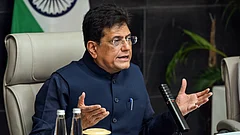


"We urge Indian exporters, both old and new, to take benefit of this, so that it'll encourage more people to go in for new products, new markets and encourage new exporters in this business," he said.
The minister's remarks are significant as certain Indian exporters, particularly micro, small and medium enterprises, have raised concerns over the high costs of complying with European regulations.
They have flagged the financial burden of meeting stringent reporting, certification, emissions-monitoring and traceability requirements, warning that these could raise export costs and affect the competitiveness of Indian products in the European market.
A component under EPM - Trade Regulations, Accreditation and Compliance Enablement (TRACE) - provides financial support to exporters to meet international testing, inspection, certification and other conformity requirements necessary for accessing global markets.
Support under TRACE is available to MSME exporters with a valid Importer Exporter Code (IEC) and valid MSME Udyam Registration Number. Assistance is provided for certifications included in the notified positive list, with higher levels of support extended for certifications under the notified priority positive list.
For certifications under the Positive List, financial assistance of 60 per cent of the actual cost net of taxes, or Rs 25 lakh, whichever is lower, is provided. For certifications under the Priority Positive List, assistance of 75 per cent of the actual cost net of taxes, or Rs 25 lakh, whichever is lower, is provided. The annual cap for support under TRACE is Rs 25 lakh per exporter.
India's exports to EU countries dipped by 4.57 per cent to USD 72.4 billion in 2025-26 from USD 75.85 billion in 2024-25.The EU accounted for about 17 per cent of India's total merchandise shipments in the last fiscal.
Imports, on the other hand, rose by 9 per cent to USD 66.18 billion in 2025-26 from USD 60.68 billion in 2024-25. These countries accounted for about 9 per cent of India's total merchandise imports in the last fiscal.