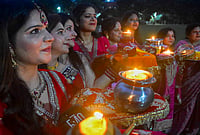
Every Diwali, as Ayodhya lights up with thousands of diyas, the story of Lord Rama’s return home finds its way into millions of Indian households. Children hear how the people of Ayodhya welcomed their king after fourteen years of exile. Homes are decorated, prayers are offered, and the victory of good over evil is celebrated with great enthusiasm.
But somewhere in the familiar telling of this story, another place often gets left behind: Sitamarhi in Bihar, the land traditionally believed to be the birthplace of Goddess Sita.
For the people of Mithila, Sita is not simply the woman at the centre of the Ramayana. She is Janaki, the daughter of King Janaka, a symbol of the region’s cultural identity and a presence that lives on in its songs, paintings and traditions. As Diwali approaches each year, remembering Sita also means remembering the land that has cherished her story for generations.
Sitamarhi: Where Sita’s Story Begins
According to Hindu tradition, Sita was discovered by King Janaka while he was ploughing a field in Mithila. She emerged from a furrow in the earth, which is why she is also known as Bhumija, the daughter of the earth. The name Sita itself is associated with the Sanskrit word for a furrow.
In present-day Bihar, Punaura Dham, near Sitamarhi town, is widely revered as her birthplace. Devotees visit its temple to offer prayers to Janaki, while Sita Kund remains an important part of the site's religious landscape. Janaki Sthan, in Sitamarhi town, is another place deeply associated with her worship.


The exact historical location of Sita’s birth cannot be independently established, but the faith surrounding these places has endured for centuries. For local devotees, the connection is woven into everyday life, passed down through family stories, religious observances and the traditions of Mithila.
There is something particularly moving about this connection. The story celebrated across India during Diwali begins, in part, with a woman whose roots are remembered in the villages and towns of Bihar.
Beyond Ayodhya, the Story Belongs to Mithila Too
Diwali is widely associated with Rama’s return to Ayodhya after his victory over Ravana. Yet Sita’s journey is inseparable from that homecoming. Her abduction, her years of hardship in Lanka and her return with Rama are central to the epic.
For the people of Mithila, this is not merely a story about a king returning to his kingdom. It is also the story of Janaki, the daughter of their land, whose life connects Mithila with Ayodhya.
That bond can still be felt during Sita Navami, which commemorates her birth according to Hindu tradition, and Vivah Panchami, which celebrates her marriage to Rama. The latter holds a special place in Mithila, where the wedding is remembered with the affection and excitement of a family celebrating the marriage of its own daughter.
And Sita’s presence is not confined to temples or festival calendars. It appears in the region’s art, where generations of artists have found ways to keep her story alive.
When Mithila’s Art Keeps Sita’s Memory Alive
Walk through the world of Mithila painting, and the stories of Rama and Sita appear in colours, patterns and intricate hand-drawn details. Known internationally as Madhubani painting, this traditional art form has long depicted Hindu deities, wedding rituals, nature and scenes from the Ramayana.
The paintings are more than decorative pieces hung on walls. They carry memories, beliefs and stories that have travelled from one generation to another, often through the hands of women who learnt the art within their families.
In Madhubani, Mithila Chitrakala Sansthan is part of the effort to preserve and promote this distinctive artistic heritage. Under the leadership of its director, Chandrasekhar Prasad Singh, the institution is connected to a tradition that gives Mithila’s cultural identity a living, contemporary expression.
The relationship between Sita and Mithila becomes especially meaningful when viewed through this art. The same stories that devotees remember in Sitamarhi can also be found in paintings created by Mithila’s artists. A scene from the Ramayana becomes a work of art; a religious memory becomes part of a family's creative inheritance.
This is how cultural traditions survive. They are not kept alive by books alone, but by people who continue to paint, teach, practise and pass them on. During Diwali, when Rama and Sita are remembered in homes across the country, Mithila’s artists offer their own tribute to the story. Their work carries the spirit of Janaki far beyond the boundaries of Bihar.
A Festival That Deserves a Wider Memory
Sita’s story is often told through her relationship with Rama, but her character deserves to be remembered in her own right. Her courage, dignity and endurance have inspired generations, while her story continues to invite reflection on the strength required to face hardship.
For Bihar, remembering Sita also means recognising a cultural inheritance that deserves greater attention. Sitamarhi’s sacred sites, Mithila’s wedding traditions, its folk songs and its paintings are all part of the region’s continuing relationship with the Ramayana.
Perhaps this Diwali, alongside the familiar images of Ayodhya illuminated by lamps, we can spare a thought for Sitamarhi and the people who have kept Janaki’s memory alive. We can remember the artists who paint her story, the devotees who visit her temples and the families who pass her name down through generations.
Because the story of Diwali is not only about the return of Rama to Ayodhya. It is also about Sita, whose journey began in the traditions of Mithila and whose presence continues to illuminate the cultural life of Bihar. And sometimes, to understand a familiar story more deeply, all we need to do is remember the place we have overlooked.