Ameer Shahul’s first book Heavy Metal: How a Global Corporation Poisoned Kodaikanal (2023), chronicled one of India's most egregious cases of industrial pollution. His second book Vaccine Nation was widely acclaimed for its chronicle of India's vaccine journey.
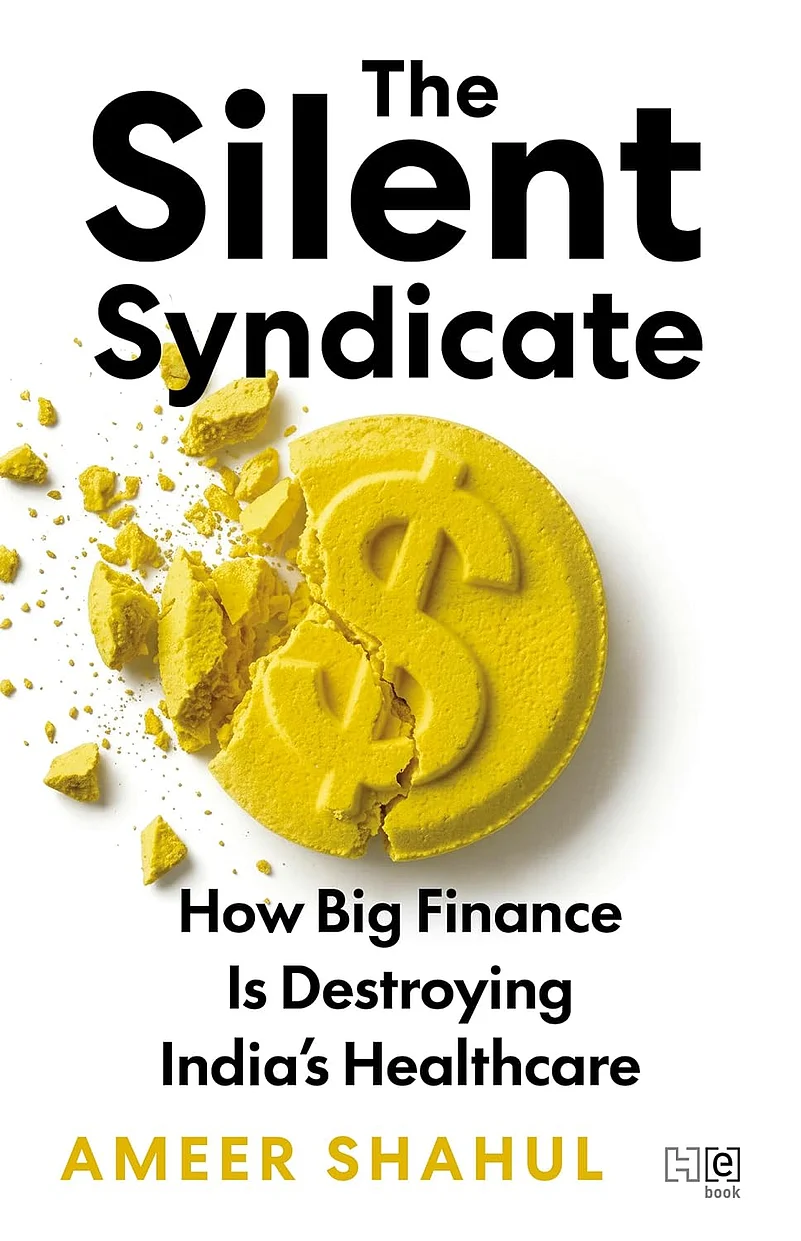
In his new book, The Silent Syndicate, Shahul says that healthcare in India has been quietly rewritten over the past two decades through a “transformation of ownership".
The Silent Syndicate is worth reading for its excellent reporting.
Author, environmentalist and public policy expert Ameer Shahul begins his book The Silent Syndicate: How Big Finance Is Destroying India's Healthcare (Hachette India) with a memory: accompanying a family member for diagnosis and treatment in 2024, chasing diagnostic centres for imaging studies, fighting an insurance claims rejection, and making endless rounds of pharmaceutical companies and pharmacies to source a drug that wasn't yet widely available in the country. That frustration, layered onto years he spent as a healthcare consultant watching how lobbies shape national policy from the inside, leads to the central question of his book The Silent Syndicate.
Shahul says that healthcare has been quietly rewritten over the past two decades through a “transformation of ownership”. “The state that once vowed to protect citizens’ health access has become a silent spectator to market excess,” he says. In the opening pages of his book, he asks, “Who prices your health?”, if not your doctor, your country, or its Parliament?” His answer, spread across 14 chapters covering hospitals, diagnostics, pharmaceuticals and insurance, is that these decisions have increasingly moved to boardrooms in New York, London, Basel, Zurich and Singapore. India, as he puts it, doesn't confront this shift so much as go along with it.




On the establishment of Apollo Hospitals, Shahul writes that when Dr Prathap C. Reddy, who returned from the United States in the early 1970s, found India’s healthcare infrastructure was “fragile, skeletal, and ill-equipped for complex care”. Reddy, a cardiologist, decided to build a hospital after the death of a 38-year-old patient who needed cardiac surgery. The man lost his life because his family couldn't raise $50,000 to fly him to Houston for treatment. That death "changed his life and that of India’s healthcare”. With Prime Minister Indira Gandhi's backing, Reddy got his hospital built.
The book then follows Apollo’s growth as it became a favoured stock among foreign institutional and portfolio investors, with its institutional health—in Shahul's telling—increasingly tracked less by patient outcomes than by quarterly financial results.
A parallel arc runs through Dr Naresh Trehan's Medanta, which opened in Gurugram in 2009. Its ownership passes through a sequence of private equity investors: Avenue Capital put in Rs 224 crore in 2006, the Carlyle Group bought a 27 per cent stake in 2013 for a reported Rs 650 to 700 crore, Temasek and TPG Capital Asia took over that stake by 2020, and the parent company Global Health, finally listed in November 2022, raising about Rs 2,205 crore. The ownership history does much of the work. Two doctor-founded institutions passing through successive rounds of private equity ownership is enough to raise the questions Shahul wants the reader to seriously consider.
The cases Shahul documents show private equity ownership, lobbying, consolidation and financial pressure across different parts of health care. These clearly illustrate the growing influence of global capital. The book also mentions India's Digital Personal Data Protection Act, enacted in August 2023, which stayed dormant for over two years before its rules were notified in late 2025, leaving the country's data protection framework, as of 2026, still waiting to be enforced.
The Silent Syndicate is worth reading for its fine reporting. Shahul has clearly done the legwork: the founder-to-PE ownership arcs at Apollo and Medanta, the Nexavar patent battle, the lobbying disclosures around Special 301, the Patient Assistance Programme investigations and the data-acquisition trail behind Watson Health and Apollo HealthCo are useful additions to a conversation India needs to have about who actually controls the price of falling ill.