Derek O’Brien critiques One Nation One Election for sidelining regional issues, citing multi-phase assembly polls such as West Bengal 2021.
This rise in cess and surcharge has inversely led to a reduction in the divisible pool of taxes
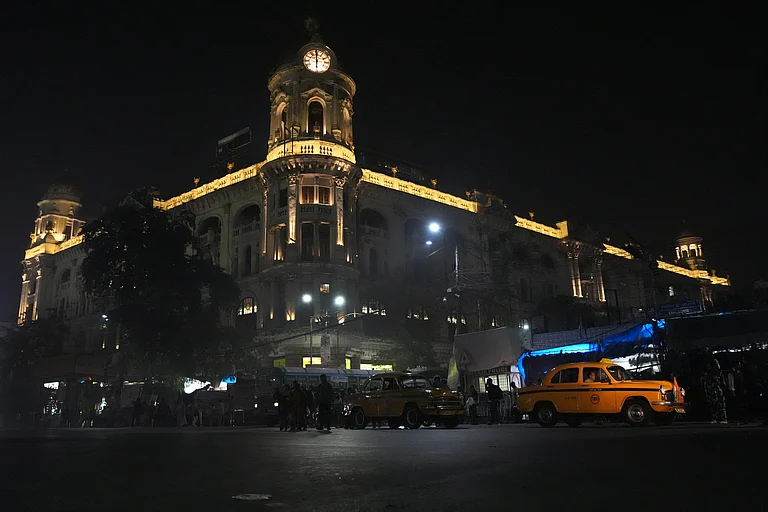
Since 2021, West Bengal has grappled with delayed funds, ignored schemes and alleged sidelining in Parliament.
Book Excerpt: 'Politics, Policy And Predictions', By Derek O’Brien
A sharp critique of One Nation One Election, the author interrogates media narratives and power politics and looks at the manner in which the inner workings of Parliament have changed and whether lofty political promises have converted to law

Summary
Lok Sabha elections. The BJP government, predictably, seeks to homogenize electoral opinion across all facets of political and personal life. As the 1960s, particularly 1962, demonstrated, simultaneous elections can sway voting behaviour, and sideline regional aspirations and state-level issues. In the 1962 General Elections, the party that won at the Union swept the simultaneous state assembly polls in Madras, Gujarat, Bihar, Andhra Pradesh and Assam.186 The Election Commission has struggled with the logistical complexities of conducting multi-phase elections. The 2019 Jharkhand assembly elections were held in five phases and the 2021 West Bengal Assembly Elections were held in eight phases. The 2024 Lok Sabha elections across three states were held in seven phases, and even then, it took eleven days just to release the voter turnout data for Phase 1. And we are talking about conducting simultaneous polls! Why were the Maharashtra elections not announced along with elections in Haryana and Jammu and Kashmir? Here’s why: the Maharashtra government announced the Ladki Bahin scheme in the budget in June 2024.

The first tranche reached the bank accounts of women in August and second tranche reached beneficiaries mid-October. This timeline, naturally, was not conducive to the government’s plan, and hence the elections were not announced simultaneously. More questions. West Bengal Chief Minister Mamata Banerjee, in a detailed letter to the HLC, asked how many state assemblies’ terms would need to be curtailed or extended before implementation of ONOE? And once implemented, what would happen if a state assembly or the Lok Sabha is dissolved before its five-year term? Fresh elections will be held for the remainder of the term. This, per se, is contrary to the very idea of ONOE. Oh noe!
‘Chief Minister Narendra Modi today accused the Centre of adopting a policy of coercive federalism and thus pushing states to a subordinate position by monopolizing all powers of financial allocations, reducing even the constitutional rights of states.’
Advertisement
—A media report on 16 January 2012
I distinctly remember the then Finance Minister, the affable Arun Jaitley, inviting about half a dozen fellow MPs to his room in Parliament for a hearty lunch sometime in 2015. Our gracious host wanted to celebrate the good news: the 14th Finance Commission had recommended increasing the devolution of the divisible tax pool to states from 32% to 42%.187 We all saw this as a big win for federalism. But Jaitley’s boss, the former Gujarat chief minister, had other ideas.
A dirty four-letter word that damages federalism: cess. As any undergraduate in commerce will tell you, cess is not a part of the divisible pool—that is, the money collected is not shared with state governments. A cess is a specific tax imposed by the Union government to raise funds for a designated purpose. The Union government currently levies a Goods and Services Tax (GST) compensation cess, a cess on Health and Education, Road and Infrastructure, Agriculture and Development, Swacch Bharat, and Exports and Crude Oil, among others.
Advertisement

Increasing Reliance on Cess
Consider this. In 2012, cess formed 7%188 of the Union government’s total tax revenues. In 2015, this rose to 9%.189 In 2023, cess contributed to 16% of the total tax revenue.190 From 2019–23, the Union government has collected a whopping 13 lakh crore rupees as cess. This excludes GST compensation cess. In the last five years, it has collected 84,000 crore rupees as cess on crude oil.191 The share of cess as part of the Union government’s gross tax revenue has tripled, up from 6% in 2011 to 18% in 2021. This rise in cess and surcharge has inversely led to a reduction in the divisible pool of taxes. The divisible pool has shrunk from 89% of gross tax revenue in 2011 to 79% in 2021. This, despite the 10% increase in tax devolution to states as recommended by the 14th Finance Commission.192
Advertisement
Gross Mismanagement
A Comptroller and Auditor General (CAG) report exposed that in 2018-19, the Union government withheld 1 lakh crore rupees of the 2.75 lakh crore rupees collected through various cesses in the Consolidated Fund of India (CFI). Ten thousand crore rupees of the Road and Infrastructure Cess collected during the year was ‘neither transferred to the related Reserve Fund nor utilized for the purpose for which the cess was collected’. More alarmingly, 1.24 lakh crore rupees collected as cess on crude oil in the last decade ‘had not been transferred to the designated Reserve Fund (Oil Industry Development Board) and was retained in CFI’.
The report further stated that ‘non-creation/nonoperation of Reserve Funds makes it difficult to ensure that cesses and levies have been utilized for the specific purposes intended by the Parliament’. 193
The key reason for imposition of cess and surcharge is for the Union government to increase its revenue. One of the major criticisms has been its inability to increase revenue substantially, despite increasing cess. Revenue receipts have increased only marginally in the last ten years, from 8.8% of the GDP in 2014 to 9.6% of the GDP in 2024. Less than 1%.194
Advertisement

Blot on Federalism
In 2024, the CM of Karnataka wrote to eight other Chief Ministers, of both NDA-and Opposition-governed states, expressing concern that states with higher per capita Gross State Domestic Product (GSDP) were being penalized for their economic performance by receiving disproportionately lower tax allocations.
In the early 1980s, the Sarkaria Commission had recommended that cesses and surcharges should be levied for a specific purpose and for a limited time period. In 2010, the Punchhi Commission stated that ‘extension of cesses and surcharges amounts to dilution of the recommendations of the Finance Commissions and deprives the States of their due share in Central tax revenue’. It further elaborated: ‘We recommend that the Central Government should review all the existing cesses and surcharges with a view to bringing down their share in the gross tax revenue.’ 195
…mention about ‘Beti ko naukri dilao’. But look at West Bengal. Kanyashree Scholarship Scheme touched the lives of 85 lakh girls, and won the UN Public Service Award. Over 2.2 crore women have been financially empowered through schemes like Lakshmir Bhandar. Financial assistance of 12,000 rupees annually for general category, and 14,400 rupees for women of SC/ST categories have been provided. Only three states in the country have enterprises where women own more than three out of ten establishments, and these three states are Telangana, West Bengal and Karnataka. It is not coincidental that all three states are governed by the non-BJP political parties. BJP and women empowerment simply do not align, and are rather paradoxical.
I now come to ‘D’, which stands for ‘deprive’. You spend 20,000 crore rupees on revamping Central Vista. You did this to improve the homes of the rich, influential and powerful. Over the past decade, the BJP-led Union government has made its Bangla-virodhi stand abundantly clear by deliberately depriving people and abusing power to suppress Bengal’s voice. They have made an array of hollow promises, disrespected Bengal’s culture and hatched continuous conspiracies to tarnish the state’s image.
The honourable Finance Minister gave a statement today in the Rajya Sabha, saying that Bengal has failed to implement the scheme that Centre has aided in the last ten years. I challenge the honourable Finance Minister if she can release the White Paper detailing how many rupees the central government has given to Bengal after its embarrassing defeat in the West Bengal Legislative Assembly elections in 2021. Official interactions with the honourable Prime Minister and the other BJP ministers were met with a dismissive attitude and constant rejection. Our leaders fighting for the people of West Bengal were detained in Delhi. Women MPs were manhandled and dragged by their hair. And BJP talks about naari shakti!
The Finance Minister yesterday in her speech proposed flood control initiatives for states like Bihar, Assam, Himachal Pradesh, Sikkim and Uttarakhand. Unsurprisingly, West Bengal was once again left out in spite of the northern part of West Bengal being one of the worst flood-affected areas and despite the fact that six out of eight MPs from parliamentary constituencies that fall under the northern part of West Bengal are from BJP. I hope people of Jalpaiguri and Alipurduar are watching this, and listening to what I am saying. This government is depriving the students.
The inability to conduct NEET is one of the biggest failures of this government, jeopardizing the future of almost 33 lakh bright students. More than 12,000 vacancies in Kendriya Vidyalayas nationwide are yet to be filled. There are more than 7,50,000 vacancies for teaching posts nationwide from Class I to Class VIII. There are more than 1,20,000 vacancies for teaching posts in Uttar Pradesh alone from Class I to Class VIII. Students account for 8% of the total number of suicide victims. Lives of more than 13,000 students…
Published At: