State government sources confirmed almost 6.55 lakh forms were distributed across Bengal in the first two days
In Kolkata itself, 22,000 forms were distributed from the 35 camps on February 16
Political observers and the opposition raise questions on the timing, cases of misuse and misallocation, and the reality of unemployment in the state
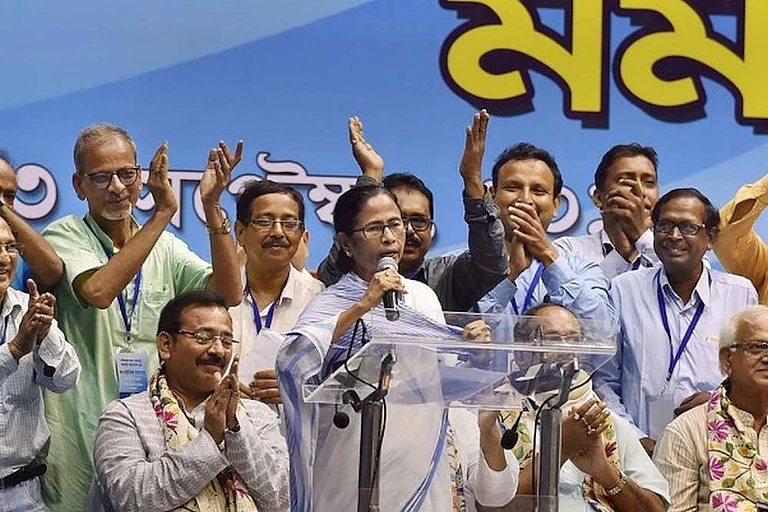
Mamata's Banglar Yuva Sathi Scheme Draws Crowds, Even As Opposition Calls It Eyewash
State government dole aimed at wooing young voters in the run-up to assembly polls is raising questions.

Summary
“Missed it by an inch, tch,” says Chanchal who, to his disappointment, turned 41 this year. An aide to a local promoter in Hooghly, Chanchal was visibly intrigued at the prospect of tuning his age to meet the requirements of the Banglar Yuva Sathi Scheme, registrations for which began on February 15.
The scheme, announced by the Mamata Banerjee-led Trinamool Congress government for its interim budget, assures unemployed residents of Bengal between 21 and 40 who have passed Madhyamik (secondary) examinations a monthly assistance of Rs 1,500 for five years or until they secure a job.
“It is the opportune moment, just fill the form out and try your luck, the cash will flow right before the EVMs come into the state,” assured Chanchal’s barber, 34, who is also planning to register for the scheme. Thousands of people thronged the registration camps in long queues across 294 constituencies, over the past few days to secure forms.
The scheme which was supposed to be implemented in August was preponed by the government, and is now scheduled to come into effect from April 1. According to The Telegraph, in Kolkata itself, 22,000 forms were distributed from the 35 camps on February 16; 14,900 forms were distributed on Sunday, the first day of the camps, while state government sources confirmed almost 6.55 lakh forms were distributed across Bengal in the first two days.
The camps are scheduled to continue till February 26. Aadhaar card, voter card, Madhyamik (Class X) pass certificate and admit card, and a bank document linked to the Aadhar for the amount to be credited, along with the filled-out form have been listed as requisites for the application process.
The government had allocated Rs 5000 crores for the scheme when it was announced as a part of the state’s budget.
Speaking on the scheme, Leader of Opposition in the state, BJP Leader Suvendu Adhikari accused the TMC government of rehashing the Yuvashree scheme which was launched earlier and whose funds have been blocked. He said, “It is the same old tactic of reintroducing the same scheme with a new name. In a bankrupt state that is economically starving because of the flight of capital and lack of investments, the true appreciation of talent is non-existent. Now it is yet another ploy of the state government to make unemployed youths stand in queues for submitting the applications at the designated camps.” The opposition further raised questions on advancing the date and branded the scheme as ‘eyewash’ and targeted doles ahead of elections in the state.
Advertisement
TMC dismissed the claims, with Finance Minister Chandrima Bhattacharya accusing the Centre of withholding dues and stating that welfare schemes would continue despite fiscal constraints. “In the Yuva Sathi scheme we are actually giving financial assistance. It's not something only to cover up the unemployment, not a question of unemployment. Think of a student who has passed Madhyamik (Class X) - the basic requirement for getting into the scheme, while taking admission in a college has to opt for a loan while also catering to the other needs. This financial assistance will help them in managing things while also pushing themselves to pursue entrepreneurial aspirations,” said Bhattacharya.

TMC spokesperson Kunal Ghosh also said that the BJP had no right to question the state government on employment pointing at the job promises made by the BJP ahead of coming to power in 2014. “Where are the 24 crore jobs promised over 12 years?” questioned Ghosh.
Advertisement
Like Chanchal, people are divided in their outlook on the youth unemployment scheme. Beyond doubt, there is hope. Beyond optics, there is intrigue. Despite critics, political observers and the opposition raising questions on the timing, cases of misuse and misallocation, and the reality of unemployment in the state, the camps saw almost 2 lakh youths applying for the Yuva Sathi scheme on the very first day. The TMC government, despite being on the receiving end of numerous questions on the efficacy of such aids (Lakshmir Bhandar, Kanyashree and now Yuva Sathi) and if it all they manage to address the larger questions in hand, has been no stranger to political dividends that these aids targeted at the youth, women and minorities have paid over the last decade.
Dr Ambar Kumar Ghosh, political commentator and Non-resident Fellow, European Partnership for Democracy, Brussels, believes that short term impact associated with these schemes weaving together social safety measures and social security measures prevents people from falling into destitution or absolute poverty ensuring basic needs, and a life of basic dignity “It also gives them some opportunities to leverage some capacity building measures by saving up. The financial leverage assured by these schemes have spurred people to do something on their own in terms of learning something new, which would give them more opportunity to actually enter the labour market,” he says.
Advertisement
Ghosh also harps on the fact that this is not the first time that an Indian state is rolling out an unemployment cash transfer scheme with almost 10 states, including Bihar, Assam, Chhattisgarh, Karnataka and Tamil Nadu among others currently also running unemployment cash transfers for young people.
While Ghosh believes it is of utmost importance to realise and reiterate that these schemes are never substitutes for long-term meaningful employment opportunities and job opportunities, he notes the potential impact that the scheme can have on the young voters. He predicts that despite West Bengal, like many other states, facing an acute labour market crisis, the youth who are being benefited by this scheme, are going to be positively mobilized by the ruling regime. “There are skewed optics about the quantum of unemployment in the state which is amplified by these visuals of long queues enrolling for the scheme but in poll-bound Bengal, I think that reflects more in narrative than on-ground impact
Advertisement
Despite optics, going by precedents and the impact that these schemes have had on Banerjee’s targeted demographics over the years, Ghosh states it points at a confident increase in the support base of the ruling party, at least among the beneficiaries.
Published At: