Going by convention, the state budget is presented within a week of the Union Budget.
There is particular interest over whether New Delhi will announce steps to clear the state's long-pending dues.
It is to see if the TMC government will again develop on existing welfare schemes or announce fresh benefits targeting women, the rural poor and marginalised groups.
In Poll-Bound Bengal, Mamata's Interim Budget Triggers Expectations Of Welfare Push
With Finance Minister Nirmala Sitharaman set to table the Union Budget for 2026-27 on February 1, the state government is expected to convene its budget session in the first week of February and place a 'vote on account'.

Summary
With barely three months left for West Bengal Assembly polls, the spotlight has shifted to the interim budget next month, widely viewed as Chief Minister Mamata Banerjee's last major opportunity to woo voters before the model code of conduct kicks in.
Going by convention, the state budget is presented within a week of the Union Budget.
With Finance Minister Nirmala Sitharaman set to table the Union Budget for 2026-27 on February 1, the state government is expected to convene its budget session in the first week of February and place a 'vote on account'.
Parliamentary Affairs Minister Sobhandeb Chattopadhyay has confirmed that preparations for the budget session are underway, signalling that the state government is entering a crucial pre-election phase where fiscal announcements often double up as political messaging.
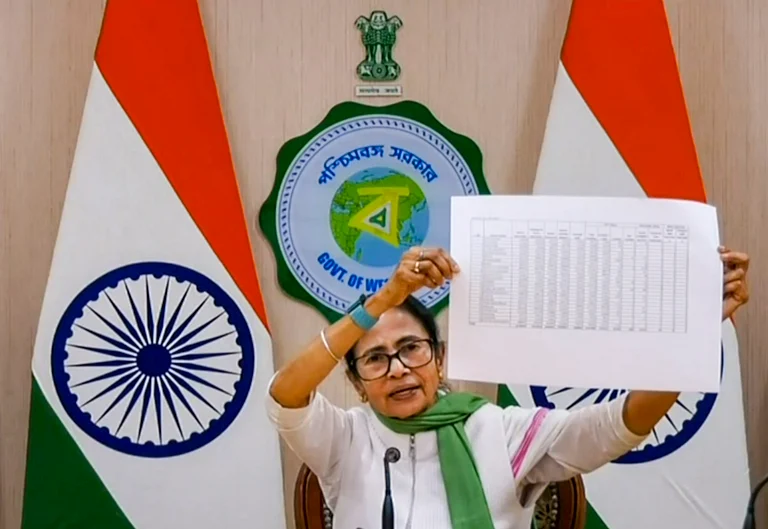
"The process for the budget session has started. The House is likely to meet in the first week of February," he said.
The interim budget will outline proposed expenditures and flagship announcements, with the understanding that full implementation would follow only if the incumbent government returns to power.
In 2021, ahead of the last Assembly polls, the Trinamool Congress government used the interim budget to significantly enhance allocations for 'Lakshmir Bhandar', now one of the state's most popular social welfare schemes.
The monthly assistance under the scheme was raised from Rs 500 to Rs 1,000, a promise that was later fulfilled after the party returned to power for a third consecutive term.

Political observers say precedent has sharpened speculation this time around over whether the government will again sweeten existing welfare schemes or announce fresh benefits targeting women, the rural poor and marginalised groups, constituencies that form the backbone of the party's electoral strategy.
"The budget before elections is never just about numbers. It is also about signalling priorities and reassuring core voters," a senior political observer said.
Advertisement
The budget session will follow the completion of the ongoing Special Intensive Revision (SIR) of electoral rolls, with hearings scheduled to conclude on January 31.
The state skipped the winter session of the Assembly, citing lawmakers' preoccupation with the SIR exercise, making the budget session the first sitting of the House in months.
There is particular interest over whether New Delhi will announce steps to clear the state's long-pending dues, an issue the TMC has consistently foregrounded in its confrontations with the Centre.
Senior TMC leaders said the contours of the state's vote on account would also depend on what fiscal space remains after the Union Budget, especially in terms of central transfers and borrowing limits.
"The state's fiscal planning will naturally factor in what the Centre announces or does not announce for Bengal," a senior TMC leader and MLA said.
As campaigning gears up and parties fine-tune their narratives, the interim budget is expected to serve as more than a routine fiscal exercise. For the ruling TMC, it could be a statement of intent before seeking a renewed mandate; for the opposition, a document to scrutinise for "pre-poll inducements".
Advertisement
Published At: