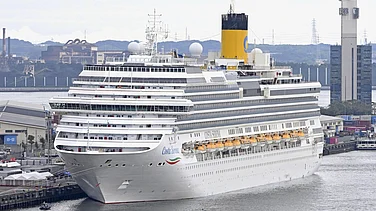
Asian Games organisers in Japan are worried a typhoon could disrupt the event in Nagoya just as more than 17,000 athletes and officials arrive in the city and wider Aichi prefecture. Around 4,000 Games participants are staying on the cruise ship Costa Serena in Nagoya's port.
On Thursday, two days before the opening ceremony, forecasters said a typhoon could hit Japan's main island on Sunday or Monday. Nagoya sits on that island.
The concern builds on accommodation problems after heavy rain last week. With no traditional athletes' village in place, competitors are using temporary huts, hotels and the Costa Serena.
Accommodation Shortages Mount
Cost-cutting has shaped the accommodation plan. Instead of a standard athletes' village, competitors are staying in temporary huts, hotels and on the Costa Serena.
Last week, record rainfall drenched Nagoya and briefly forced participants to evacuate the container-style lodgings.
Several delegations have objected to the huts' quality, including beds that are too short, while others have said there are not enough rooms for everyone at the Games.




Storm And Rainfall
"All we can do is to pray that the worst-case scenario will not happen," The Asahi Shimbun quoted an unnamed sports federation official as saying.
According to a report storm Dujuan's course "remains uncertain". It added that one severe outcome could force the ship to leave the port area and relocate, affecting the estimated 4,000 participants staying on board.
Typhoon season in Japan runs through September and October. Thursday was dry and sunny in Nagoya, but earlier wet weather had already hit the schedule, with the women's China-Bangladesh cricket game abandoned before a ball was bowled.
Nagoya logged about 104mm (four inches) in an hour on Tuesday last week, prompting municipal officials to issue an evacuation order for parts of the city. Rainwater also seeped into several competition venues.
Scientists say climate change caused by human activity is making extreme weather in Japan and elsewhere more frequent and severe.