




Tripura High Court refused to quash criminal proceedings against content creator Madhabi Biswas Chakraborty.
The cases relate to alleged derogatory remarks against the Prime Minister, Agartala Mayor and Mata Tripureshwari.
The court said political criticism is protected, but abusive or defamatory speech can attract legal action.
The Tripura High Court declined to quash criminal proceedings against a content creator accused of posting derogatory remarks about the Prime Minister, observing that posting abusive, defamatory or derogatory language on social media is illegal
A division bench of Justices T Amarnath Goud and S Datta Purkayastha was hearing petitions filed by Madhabi Biswas Chakraborty seeking the quashing of FIRs and chargesheets registered against her by Tripura Police.
The court noted the growing use of social media to express opinions, but said the same platforms were also increasingly being used for what it described as cyber defamation.
“The Prime Minister holds a high constitutional office in India, and while political criticism is part of democracy, posting abusive, defamatory, or derogatory language targeting the Prime Minister on social media is illegal. Law enforcement actively monitors and takes legal action against such offensive content under Indian law. Police can register an FIR under laws covering defamation, public mischief, and intentional insult with intent to provoke a breach of the peace,” the court said.



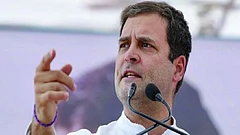
According to the bench, the contents of the FIRs prima facie showed that the petitioner had allegedly used derogatory expressions against the Prime Minister and the Mayor of Agartala with the intention of damaging their reputation.

What Were The Allegations?
The court was considering two petitions filed by Chakraborty, a content creator, challenging FIRs lodged at the East Agartala and West Agartala police stations as well as the chargesheets subsequently filed in the cases.
According to the complaints, Chakraborty allegedly used abusive and derogatory language against the Prime Minister. She was also accused of making objectionable remarks concerning the Mayor of Agartala and Mata Tripureshwari.
She was arrested in connection with the cases before being granted interim bail by the high court on January 7. Chargesheets were subsequently filed, and she was granted permanent bail on February 13.
Chakraborty later moved the high court seeking to have the criminal proceedings quashed. She argued that the allegations in the FIRs did not satisfy the legal requirements for criminal defamation and maintained that her comments were expressions of opinion protected under Article 19(1)(a) of the Constitution.
She also alleged that the cases against her were politically motivated.
The State opposed her petitions, arguing that she had deliberately made derogatory statements against the Prime Minister and had also hurt public sentiments through objectionable remarks about Mata Tripureswari.
According to the State, the investigation had disclosed a prima facie case and the allegations should therefore be examined during trial rather than terminated at the quashing stage.

Freedom Of Speech Has Limits, Court Says
While acknowledging freedom of speech as a fundamental right, the high court said the protection does not extend to defamatory, malicious or abusive material published online.
“It is trite law that free speech is not a license to ruin reputation, and such a person can face legal consequences for spreading false statements online. Posting false assertions, running malicious campaigns, or sharing unverified allegations online can trigger civil suits for damages or criminal prosecution,” the order said.
The bench also reflected on the growing role of social media in everyday communication, observing that information posted online can spread rapidly and cause reputational damage within a short period.
“False information can spread quickly on social media platforms and ultimately cause damage to a person’s reputation in a short period of time. In recent times, most of the people have begun to express their viewpoints on various topics, and simultaneously, the same is used for cyber defamation to defame others online,” the court observed.
According to the bench, the statements attributed to Chakraborty went beyond criticism and allegedly mocked the names and surnames of the Prime Minister and the Mayor. Some of her remarks, the court said, could also have hurt the sentiments of people who worship Mata Tripureswari.
The court held that the allegations could constitute defamation and said the complainants remained entitled to pursue legal remedies.
“Such unprivileged statement made by the petitioners caused harm to the personal and professional reputation of the Prime Minister and the Mayor of the State and the same can constitute defamation. The complainants, therefore, retain their right to sue for defamation,” it said.
The high court consequently refused to quash the criminal proceedings, leaving the allegations to be examined during trial.















