A June 2025 Finance Ministry post calling reports of UPI MDR “completely false, baseless, and misleading” has resurfaced after a new 0.4% merchant charge was announced.
From October 15, 2026, the MDR will apply to eligible person-to-merchant UPI payments above ₹2,000, while consumers and person-to-person transfers remain free.
The old post has fuelled political criticism from Rahul Gandhi and Gaurav Gogoi, while the government says the new framework is aimed at making the UPI ecosystem financially sustainable.
A 15-month-old government tweet is having a second life online, and not the kind the Finance Ministry would want. In June 2025, the ministry publicly dismissed reports that a Merchant Discount Rate (MDR) would ever be charged on UPI transactions, calling the idea "completely false, baseless, and misleading." This week, with the government notifying exactly such a charge, that old post has gone viral all over again — screenshotted, quote-tweeted and mocked, with users joking that official assurances seem to come with an unstated expiry date.
The resurfacing tweet has fed directly into a live political fight, with opposition leaders including Rahul Gandhi and Gaurav Gogoi citing the very same 2025 statement as evidence that the government's new UPI charge contradicts its own word.
What Is The Old Finance Ministry Tweet That's Resurfaced?
On June 11-12, 2025, the Finance Ministry issued a statement rejecting reports circulating online that it planned to impose MDR on UPI transactions, describing the claims as "completely false, baseless, and misleading" and warning that such speculation was causing "needless uncertainty, fear and suspicion" among citizens.
The ministry reiterated at the time that the government remained "fully committed to promoting digital payments via UPI." A similar denial had followed in April 2025, when the ministry separately rejected reports that GST could be levied on UPI transactions above Rs 2,000, noting that since no MDR was charged on UPI at the time, no GST could apply either. It is the June 2025 statement, in particular, that has been resurrected and widely recirculated this week.




What Changed Between June 2025 And September 2026?
On September 14, 2026, the Finance Ministry, in a framework detailed by the National Payments Corporation of India (NPCI), announced that a 0.4 per cent MDR would apply to specified person-to-merchant UPI transactions above Rs 2,000, effective October 15, 2026 — ending the zero-MDR regime on UPI that had been in place since the Central Board of Direct Taxes removed such charges in January 2020. Under the new structure, the charge is capped at Rs 300 for transactions of Rs 75,000 or more, while person-to-person transfers, small merchants and payments below Rs 2,000 remain exempt. Railways, telecom, insurance, fuel and select public utilities will instead attract a flat Rs 5 MDR rather than the percentage-based charge. The government has said the MDR will not be levied directly on consumers and that individuals will retain unlimited free UPI usage.
Why Is The Old Tweet Striking Such A Nerve Now?
The joke writes itself: a government statement calling MDR-on-UPI speculation "false, baseless, and misleading" sitting right next to the government's own notification of that exact charge just over a year later. Online users have leaned into the "expiry date" framing — the idea that official reassurances hold true only until they don't, with no warning of when the shelf life runs out.
The resurfacing has been amplified well beyond organic meme culture by opposition politicians actively pointing back to the same June 2025 post as proof of a policy U-turn, and it lands at a moment when trader backlash was already brewing — with Delhi's Kamla Nagar Market Association president Nitin Gupta warning that shopkeepers facing the new charge would simply "promote cash" instead.

How are Rahul Gandhi and Gaurav Gogoi reacting?
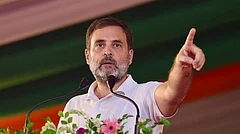
Rahul Gandhi led the Congress charge with a video posted on X on September 16, captioned "Modi ji, roll back the UPI tax. Now." In it, he contrasted Indira Gandhi's old line about not leaning left or right with what he called Prime Minister Modi's approach: "He has decided to lie down straight and prostrate himself in front of Donald Trump," Gandhi said, alleging the MDR amounted to a tax on "every single Indian person" that would ultimately benefit the United States. In an earlier post, he wrote that the government had "quietly opened the door to imposing fees on UPI," noting that transactions above Rs 2,000 make up only about 5 per cent of UPI's volume but nearly 65 per cent of its total transaction value, and asked pointedly where the fees charged to shopkeepers would ultimately come from.
Gaurav Gogoi, in a post on X on September 17, took a more procedural line, stating that the "Parliament Standing Committee on Finance has not discussed the UPI tax proposal that the Modi government has recently announced," and that the Finance Department had not placed any specific proposal before the panel. He added that questions raised about the need for an MDR had gone unanswered by government representatives at the time, and said the new policy "hurt the small Indian merchants, vendors, entrepreneurs and help the major American corporations," calling on the Prime Minister to "stop surrendering" and roll back the charge.
Gogoi also reshared a post by Congress leader Jairam Ramesh alleging that the government's Taxation and Other Laws (Amendment) Bill, 2026 had quietly removed the statutory guarantee that kept UPI transactions free.
How Has The Government Responded To The Criticism?
The BJP pushed back sharply, accusing Congress of "hyperventilating" over the MDR and pointing out that Gogoi himself, along with five other Congress-aligned MPs — K. Gopinath, Kishori Lal, Manish Tewari, P. Chidambaram and Pramod Tiwari — were present on the Parliamentary Standing Committee on Finance when its report recommending a tiered MDR and revenue framework for UPI was adopted on August 12, 2026, with no dissent recorded in the published minutes.
The government maintains the MDR is necessary to make the UPI ecosystem financially sustainable, citing a steep mismatch between the roughly Rs 2,000 crore allocated annually under its incentive scheme and the industry's estimated Rs 20,700 crore in operational costs, and officials have told PTI there is no question of reversing the decision.
Why Is This Resonating Beyond The Numbers?
At its core, the row is less about the 0.4 per cent figure itself and more about whether a categorical government denial can be trusted to hold. The viral resurfacing of the June 2025 tweet has turned that trust question into shareable, mockable content, while also complicating the opposition's own position — since several Congress MPs sat on the very committee that endorsed a tiered MDR model without objection.
Layered on top is Gandhi's geopolitical framing, tying a domestic payments policy to alleged US pressure, which has helped push the story beyond fintech and trader circles into the broader political conversation. What began as a bureaucratic denial in 2025 has, in the space of a week, become a case study in how quickly an old official promise can curdle into a punchline once policy catches up with it.