



The Supreme Court has warned that states and Union Territories could face penalties if pollution levels in the Yamuna continue to worsen, despite substantial spending on clean-up programmes.
Stakeholder engagement is also an important aspect for the success of Clean Yamuna initiatives. This is not only about identifying the government offices involved, but also the citizens in general.
Everyone can contribute to cleaning the river in some manner or the other. This is not restricted to sheer awareness generation, rather ownership, contribution and monitoring.
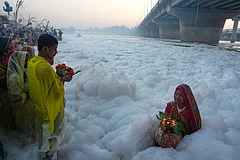
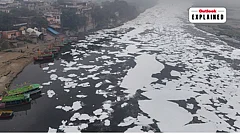
The Supreme Court has warned that states and Union Territories could face penalties if pollution levels in the Yamuna continue to worsen, despite substantial spending on clean-up programmes. The court has called for stricter monitoring of water quality and greater accountability across states. What is driving the river’s continued deterioration and can financial penalties and stronger inter-state coordination help restore it? Let’s talk about the key sources of pollution, the effectiveness of existing measures and what is needed for the long-term restoration of the Yamuna.
The Yamuna is a multi-pronged problem. It is important to understand the problem in holistic, as much as possible. Delhi is a major problem of its pollution source—pollution from mainly untreated wastewater. The total water supply of Delhi is 1,000 million gallons per day (MGD), as per the Delhi Pollution Control Committee. Using the standard factor of 80 per cent, wastewater generation is 800 MGD. Delhi has 37 sewage treatment plants (STPs) and the installed capacity is 814 MGD. That means that we have adequate capacity to treat all the wastewater. However, actual utilisation of the treatment capacity is 742 MGD—so there is a gap of around 57.32 MGD.



Treatment Standards
However, the treatment is not the same treatment with desired quality. Eleven STPs of the 36 are not complying standards. This is one officially notified problem.
Even with the SPTs that treat with quality, the problem is treated wastewater is released to the nearby drains that mixes with the untreated wastewater. This leads to a complete wastage of the effort made for treating on the one hand, and on the other, this contributes to polluting the Yamuna. This is because all the STPs are not located along the river, so treated water is discharged directly into the Yamuna.
The major deviation of the treated water to its standard is the presence of faecal cauliform (FC) generating from septage. The presence of FC is high in a considerable part of the Yamuna. Septage collection and treatment is particularly important where sewer network is absent. According to the Delhi Master Plan 2041, approximately 45 per cent of the city lacks sewerage coverage. Though the government report mentions that 8.74 lakh litres/day of septage is collected in 86 septage collection stations through a fleet of 136 vehicles, there could be no lesser than a total of 350–400 septage collection vehicles operating in the city. That means that a majority of the septage collection vehicles are not tracked and there is a high chance that they are disposing the septage in open areas, including drains and rivers.

Reusing Wastewater
Another problem is tapping of drains and treating the tapped wastewater. Eleven of the 22 drains are yet to be tapped for treatment. This is a major concern. Najafgarh and Shahdara are two major drains that contribute to almost 80 per cent of the total wastewater carried out by all the drains. Tapping them and treating their water, with quality, is critical for the health of the Yamuna.
The presence of 1,799 unauthorised colonies and the failure to tackle their waste-wastewater issues is a major problem as well. These colonies are dependent on private operators for sanitation services (septage clearing). Many unauthorised colonies depend on borewells, handpumps, purchased bottled water and tanker water (run by private operators) for drinking water. As we do not have the count of the volume of water used for domestic purposes, we do not have any idea as to how much to treat as well. The sewer line construction is currently ongoing. About 1,317 colonies now have sewer lines. Once all the unauthorised colonies are networked, we can be assured that the wastewater generated from there is counted and subsequently treated. This may have a bearing on the overall figures we have used above on wastewater volume and treatment capacity. Apart from the unauthorised colonies, there are about 755 jhuggi bastis—around 17 lakh people live there. The water and sanitation issues need to be resolved there as well.
Stakeholder engagement is also an important aspect for the success of Clean Yamuna initiatives. This is not only about identifying the government offices involved, but also the citizens in general. The business community, the residential welfare associations (RWAs), student groups—the Yamuna affects them differently. We must come together to help the Yamuna. The problem with the Yamuna is an interaction between institutions, citizens and the river itself. Everyone can contribute to cleaning the river in some manner or the other. This is not restricted to sheer awareness generation, rather ownership, contribution and monitoring. For example, many the RWAs now have decentralised STPs—treating wastewater generating from within the residential complex. Treatment of that wastewater with quality and then reusing the treated water for flushing, gardening and car washing can substantially reduce the burden on the demand for freshwater, the wastewater management system and the reuse of wastewater-water in a circular pattern.
Reuse of treated water is an important aspect. If we can increase the share of reuse—of treated water coming out from the STPs—from the reuse figure of around 15 per cent, it will substantially reduce the pressure on groundwater and drinking water. Delhi needs a reuse plan. Recently, the Centre for Science and Environment developed two city-level reuse plans—for Agra and Prayagraj. This can open up options that can have a lasting impact on the water-wastewater cycle for the city.
The Yamuna Action Plan of 2025 captures all these aspects. It is a matter of prioritising the identified topics, taking action and monitoring progress. The recent court order explicitly mentions accountability and penalty. Accountability is critical. Many rivers in the country are now dead, vanished or have become merely a drain without monitoring and accountability. We can only hope that with the government’s continuous monitoring, we will have the Yamuna as a living entity where people can relate with the river and generate positive memories.
(The author is Director, Water Programme, Centre for Science and Environment, New Delhi. He has worked for over 24 years on water, sanitation and local governance with central and state governments in India, and programmes in South Asian and African countries)
(Views expressed are personal)








