



Nepal’s Prime Minister Balendra Shah’s state visit to India on November 22–23, his first since taking office, produced a substantial package of agreements and projects.
The visit’s significance will be measured not by the number of agreements signed, but by whether they strengthen a relationship marked by deep people-to-people ties and profound interdependence.
Nepal’s new leadership, with a new vision, has created a historic moment to reset ties. India and Nepal should use the opportunity without becoming hostages to the past and build a more balanced partnership.
Nepal’s Prime Minister Balendra Shah’s state visit to India on November 22–23, his first since taking office, produced a substantial package of agreements and projects. The visit offers a new opportunity to strengthen bilateral ties in a fast-changing world. As Prime Minister Narendra Modi said, “We are partners in each other’s progress and a source of support for one another in times of difficulty.” The agreements and the joint vision—Viksit Bharat and Samunnat Nepal: Re-imagining the Partnership—provide a framework for turning that commitment into practical cooperation. At the same time, continued dialogue, which both nations are keen on, can help both sides address outstanding concerns and deepen mutual trust.
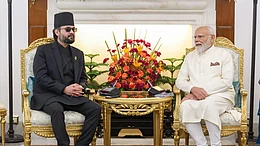
The two governments adopted the joint vision and agreed to review existing bilateral agreements, including the 1950 Treaty of Peace and Friendship, by mutual consent. India announced development assistance of Rs 15,000 crore: Rs 3,500 crore in grants for post-disaster reconstruction and infrastructure and Rs 11,500 crore line of credit for energy projects. The leaders also adopted agreements on academic and research cooperation, police training, civil-service capacity building, traditional medicine, satellite communications, sustainable urban development, health, livestock and fisheries.
The visit also advanced several practical projects. The leaders flagged off the Sarayu–Kamala Express rail service between Ayodhya and Janakpur, virtually laid the foundation stones for the 669 MW Lower Arun hydropower Project, a new integrated check post at Banbasa and inaugurated a motorable bridge linking Dharchula in India with Darchula in Nepal. They dedicated the second phase of the Motihari–Amlekhgunj petroleum pipeline to the people of Nepal and virtually laid the foundation stone for a petroleum terminal in Jhapa. They called for the early start of work on the Siliguri–Jhapa pipeline and agreed to explore cooperation on a cross-border gas pipeline. India also announced a new transit route for Nepal through Deendayal Port at Kandla, with access to Paradip to be provided once the necessary infrastructure is in place.


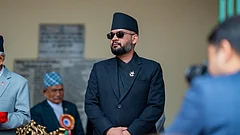
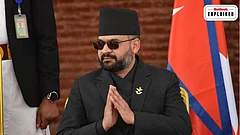
Air connectivity was another significant outcome. India and Nepal agreed to make the existing one-way B345 Kathmandu–Bhairahawa–Lucknow route bidirectional. The agreement is an important step, but technical consultations are still needed to finalise how it will operate; the route is not yet open to traffic in both directions. Nepal’s other proposals for additional air-entry routes remain under discussion.
Nepalese Concerns
The visit’s significance will be measured not by the number of agreements signed, but by whether they strengthen a relationship marked by deep people-to-people ties and profound interdependence. An open border, family links and shared Hindu and Buddhist traditions bind the two societies, while geography connects them through trade, transit, rivers and energy. Yet these links coexist with an enduring Nepalese concern that close dependence on India can limit Nepal’s room for independent choices.
That concern acquired a sharper political force as Nepal moved from monarchy to democracy. The monarchy was abolished in 2008; the constitution, promulgated in 2015, established Nepal as a federal democratic republic. The transition strengthened demands for a foreign policy that reflected Nepal’s sovereignty and allowed it to diversify its relationships, including with China. Nepal’s participation in China’s Belt and Road Initiative became part of this effort to broaden its options. India, for its part, has viewed developments in its immediate neighbourhood through the lens of its own security and strategic interests. Managing these different perspectives requires reassurance and consultation, not suspicion.
The 2015 constitution and the subsequent border disruption remain especially painful in Nepal. Madhesi groups in Nepal’s southern Terai, protesting aspects of the new constitution, staged sit-ins at several border crossings and obstructed the movement of goods, contributing to severe shortages of fuel and other essentials. India denied imposing a blockade, attributing the disruption to protests in Nepal and insecurity that deterred truck movements. In Nepal, however, many saw India’s role—or its failure to ease the disruption—as economic pressure at a moment of acute vulnerability. Whatever the competing accounts of responsibility, the shortages left a lasting public memory that both sides must address effectively.
The 1950 Treaty of Peace and Friendship remains central to Nepal’s call for a relationship that reflects contemporary realities and sovereign equality. The joint vision’s commitment to review existing agreements, including the treaty, by mutual consent is a constructive opening. Its significance will depend on whether both sides use the process to address Nepal’s concerns and build a more balanced, forward-looking relationship.
Economic Ties Present Another Test
Border questions also need patient attention. Nepal has objected to India’s road to Lipulekh, inaugurated in 2020, because Kathmandu claims the area as its territory; India says the road lies within India. The two sides have agreed to continue work on boundary pillars and directed their foreign secretaries to address outstanding boundary issues. That is a useful process commitment, but the disagreement itself remains unresolved.
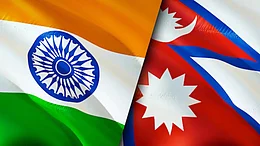
Economic ties present another test. India is Nepal’s largest trading partner, but the trade relationship is markedly unequal. Nepal’s bilateral trade deficit with India reached about NPR 952 billion in the fiscal year 2025–26. The joint vision calls for reviewing trade and investment frameworks, opening new transit connections and encouraging investment. These promises will matter most if they help Nepal expand exports, address barriers to market access and build productive capacity—not merely increase imports and dependence.
The visit offers a chance to move beyond a cycle in which Nepal’s pursuit of strategic autonomy is sometimes read in India as an effort to dilute its influence, while India’s role is seen in Kathmandu as constraining Nepal’s freedom of choice. India’s own experience with China shows how candid introspection can reveal policy shortcomings and prompt course correction.
The same principle applies to Nepal: recognising the grievances that have weakened trust is not a concession of India’s interests. It is part of protecting a relationship that matters to both countries. Nepal’s new leadership, with a new vision, has created a historic moment to reset ties. India and Nepal should use the opportunity without becoming hostages to the past and build a more balanced partnership—one that can guide India’s engagement with its other neighbours.
(The author is a former diplomat and economist)
(Views expressed are personal)








