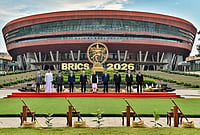
The Ramanathaswamy Temple in Rameswaram was used as the visual backdrop during Narendra Modi’s welcome for Xi Jinping at the BRICS summit
Rameswaram combines major Shaivite significance, Ramayana traditions, pilgrimage networks and distinctive Tamil temple architecture
The backdrop also places Tamil heritage within the wider civilisational narrative that India has increasingly highlighted in diplomatic and cultural settings
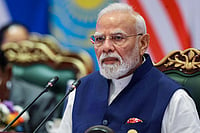
When Prime Minister Narendra Modi welcomed Chinese President Xi Jinping and other BRICS leaders at Bharat Mandapam in New Delhi on Saturday, the ceremony carried a distinctly Indian visual identity.
Behind the leaders was a large image of the Ramanathaswamy Temple in Rameswaram, Tamil Nadu. Modi also highlighted the significance of the temple to Xi during the welcome ceremony.
The choice raises a question beyond the ceremony itself: why Rameswaram?
The answer lies in what the temple represents: a major Shaivite shrine, a site associated with the Ramayana tradition, an important pilgrimage destination and a major example of Tamil temple architecture.
Why Rameswaram?
Rameswaram is located on Pamban Island off the southeastern coast of Tamil Nadu. Its religious importance extends well beyond the state.
The Ramanathaswamy Temple is dedicated to Lord Shiva and is traditionally associated with the story of Lord Rama worshipping Shiva at Rameswaram. India's official tourism portal describes Rameswaram as an important pilgrimage centre within the wider religious landscape associated with the Ramayana.




A Temple At The Crossroads Of Rama And Shiva
The temple's significance comes in part from the meeting of two major strands of Hindu religious tradition.
Ramanathaswamy is a form of Shiva, and the temple is traditionally associated with the story of Lord Rama worshipping Shiva at Rameswaram.
The temple is also recognised as one of the 12 Jyotirlinga shrines dedicated to Shiva. It is traditionally counted among the Char Dham pilgrimage sites as well.
Its importance, therefore, is not confined to Tamil religious history. Rameswaram forms part of a pilgrimage network that gives the site significance across India.
Why The Temple’s Architecture Matters
There is another reason the temple works particularly well as a visual backdrop: its architecture is immediately striking.
The Ramanathaswamy Temple is known for its monumental corridors, elaborate carvings and long rows of sculpted pillars. India's official tourism portal notes that the temple has 1,212 pillars along its corridors.
The image behind Modi and Xi therefore represents a physical monument as much as a religious tradition, placing Tamil architectural heritage directly in the frame of an international event.

What Does Rameswaram Say About Tamil Heritage?
This is where Rameswaram becomes particularly significant to the story.
Rameswaram represents a form of Tamil identity that is distinctly regional, yet deeply woven into India's wider religious and cultural geography. The government's Kashi Tamil Sangamam initiative has repeatedly highlighted the relationship between Tamil Nadu and Kashi as part of a wider civilisational and spiritual continuum.
The fourth edition of Kashi Tamil Sangamam culminated in Rameswaram in 2025 described the journey between Kashi and Rameswaram in terms of enduring cultural and civilisational links between North and South India.
That framing presents Rameswaram as both a distinctly Tamil site and part of a wider Indian cultural continuum.
How Tamil Heritage Became Part Of A Wider Civilisational Narrative
The Indian government has increasingly foregrounded Tamil language, culture, pilgrimage traditions and historical links as part of its broader presentation of India's cultural heritage.
Kashi Tamil Sangamam is one example. Its official framing connects Tamil Nadu and Kashi through language, culture, spirituality and people-to-people ties, while placing those links within the broader idea of Ek Bharat Shreshtha Bharat.
Modi has also spoken about taking Tamil language and heritage to audiences around the world. During his 2025 visit to Rameswaram, he spoke about the importance of Tamil language and heritage and linked India's cultural traditions with their wider global appeal.
Seen in that broader context, the Rameswaram backdrop places Tamil heritage within an international setting.

Why Was A Tamil Temple Chosen For The Backdrop?
There is no official statement in the material surrounding the BRICS ceremony explaining why the Ramanathaswamy Temple was selected for the backdrop.
The significance of the image is therefore better understood through what the backdrop represents than through any explicitly stated diplomatic intent.
Rameswaram brings together Tamil heritage, Hindu pilgrimage, monumental architecture and a sacred tradition that is presented by the Indian government as part of a wider civilisational continuum.
A temple in Tamil Nadu can therefore represent both the cultural identity of the region and a broader understanding of India's historical and religious heritage.
From Tamil Heritage To A National Civilisational Narrative
Rameswaram's significance extends across several layers. It is a Tamil sacred centre, a major Hindu pilgrimage destination and an architectural landmark. Its place in the Kashi-Rameswaram tradition also allows it to be presented as part of a wider North-South cultural and civilisational relationship.
The significance of the backdrop lies in what Rameswaram represents: a centuries-old Tamil sacred centre, a major architectural landmark and a site embedded in India's wider religious and cultural geography.
Through its links to the Kashi-Rameswaram tradition and the government's broader emphasis on Tamil language and heritage, Rameswaram can be presented as both distinctly Tamil and part of India's larger civilisational inheritance.