The United States ordered non-emergency embassy staff and their families to leave Saudi Arabia on Wednesday
Drone debris near the Shaybah oilfield killed a Nepali national and a Filipino national
Saudi Arabia said an Indian national and a Pakistani national were injured in the incident
The United States has ordered non-emergency embassy staff and their families in Saudi Arabia to leave, as drone debris near the Shaybah oilfield killed two people and injured two others. AP also reported that similar orders were issued for the United Arab Emirates, Jordan, Qatar and Bahrain.
Saudi Arabia said an Indian national was hurt when debris from a drone it intercepted fell near the oilfield in the kingdom’s southeast on Wednesday, October 21. A Nepali national and a Filipino national died in the incident. A Pakistani national was also injured.
“The U.S. Department of State issued an ordered departure for non-emergency U.S. government employees and their family members in Saudi Arabia,” State Department spokesperson Tommy Pigott wrote on X. He added: “Iranian-supported Houthis have increasingly engaged in hostilities against Saudi Arabia, including attacks on civilian airports and other critical infrastructure resulting in civilian casualties and severe travel disruptions.”
Shaybah Strike Details
The strike hit near Shaybah.
Saudi Arabia’s Ministry of Defence stated that debris from an intercepted drone fell on a contractor’s vehicle at the Shaybah oil field and started a fire. The oil field is located just 10 km south of the border to Abu Dhabi.

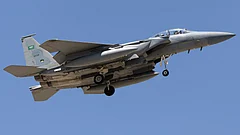
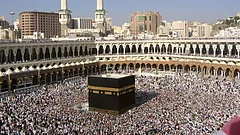
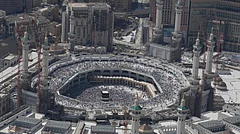
“An official source at the Ministry of Energy stated that Saudi air defences intercepted a drone attempting to target a processing facility at Saudi Aramco’s Shaybah oil field in the Eastern Province on Wednesday morning,” the press release stated. “The incident resulted in a fire in a vehicle belonging to a contractor operating at the oil field, outside the facility’s perimeter, with no impact on operations. The source explained that the relevant authorities responded to the incident and took the necessary measures.”
The ministry gave the casualty details in full. “The attempted attack resulted in the deaths of two individuals, a Filipino and a Nepali, and injuries to two others, a Pakistani and an Indian, due to falling debris following the interception,” it added. “The source extended sincere condolences and sympathy to the families of the deceased and wished the injured a speedy recovery.”
The strike came during a run of Houthi drone attacks. Fighting between the Houthis and the Saudi-led coalition in Yemen has continued, after their UN-administered four-year truce collapsed in July this year.
Regional Security Fallout
The State Department said on Wednesday that non-essential US embassy staff and their families were ordered to leave Saudi Arabia. A diplomatic source told AFP that “all American staff and their families have been ordered to depart from the US embassy” in the Gulf kingdom.
The source also said relatives of embassy staff were told to leave the United Arab Emirates, Jordan, Qatar and Bahrain, all of which Iran has targeted during the Middle East war. Pigott later confirmed the Saudi move on X, but said it covered only “non-emergency US government employees and their family members in Saudi Arabia only”. He also wrote that “the safety and security of Department personnel and their families remain our highest priority”.
Saudi Arabia has faced near-daily attacks this month from the Iran-backed Houthis, including a strike on Riyadh’s international airport that was the kingdom’s deadliest in years. Earlier on Wednesday, the Saudi-led coalition in Yemen reported intercepting six drones.
The war in Yemen has again intensified. In June, a four-year-old truce in Yemen’s civil war collapsed, reviving a conflict that dates back to 2014. The Saudi-led coalition has backed the internationally recognised government since 2015.
The US had already taken similar steps earlier in the wider Gulf crisis. It previously ordered non-essential staff to leave ahead of the start of its war against Iran and again in July before US President Donald Trump called off a new wave of strikes.
Late on Wednesday, Iranian state media reported explosions in the southern Hormozgan province, which overlooks the Strait of Hormuz, breaking a spell of relative calm. “A few minutes ago, the sound of several explosions was heard in the Karpan area of Sirik, in Hormozgan Province,” the official IRNA news agency reported. It added that “local sources have not yet disclosed the nature of these explosions”.
The fighting started in late February, when the United States and Israel struck Iran and killed the country’s supreme leader and senior military commanders. Tehran then tried to block the waterway and said ships must get its approval before crossing. In normal times, the Strait of Hormuz carries about a fifth of global oil shipments. Washington answered by blocking Iranian ports and ships.