



Donald Trump has launched “Operation Economic Fury” and threatened severe secondary sanctions against foreign entities that continue financial or commercial dealings with Iran.
Iran's rial fell to a record low against the US dollar after Trump's announcement, highlighting the immediate economic impact of Washington's latest pressure campaign.
Iran's Consul General in Mumbai rejected Trump's claim that the US controls the Strait of Hormuz, saying Tehran could reopen the waterway once Washington meets its commitments and accepts Iran's conditions.
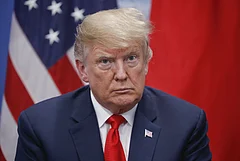
US President Donald Trump issued a sweeping ultimatum on Thursday threatening total economic isolation for Iran, launching "Operation Economic Fury" and declaring an "economic D-Day". The policy promises severe secondary sanctions on any foreign entities trading with Tehran, effectively forcing international partners to choose between US and Iranian markets. The administration demanded an immediate halt to Iranian oil smuggling, currency swap lines and cash transfers, while the Treasury Department designated 10 individuals operating a cash-smuggling network to Hezbollah.
Why Is Trump Turning To Economic Pressure On Iran?
The announcement triggered an immediate global financial reaction. Iran's currency, the rial, fell to a record low against the US dollar immediately following the declaration, The New York Times reported.
"In other words, any country, entity, financial institution, business, airport, or government entity that gives Iran a financial 'lifeline' will face tremendous economic consequences of their own," Trump said in a Truth Social post.
Running through the administration's latest warnings was another message that Treasury Secretary Scott Bessent made particularly clear on Thursday: Trump has no intention of returning to direct military confrontation. Instead, the president is pursuing economic pressure on Iran after the US spent weeks carrying out strikes against the country earlier this year, while subsequently backing away from several threats to restart military action.



Bessent Signals Bigger Debt Buyback As Treasury Moves To Calm Bond Market
In an interview with CNBC, Bessent said the accelerated buyback of government debt could exceed the announced $4 billion and pledged to “make a market” to stop a sell-off in long-term debt.
He said there was a “very good chance” that the US budget deficit under the Trump administration had reached its peak. The monthly US budget deficit climbed above $432 billion in July, marking its highest level in more than half a decade.
However, the bond market did not appear convinced. Yields rose again and wiped out the decline triggered by Bessent’s intervention, sending the S&P 500 lower.
US stock futures were little changed early Thursday, suggesting traders remain uncertain about whether the sell-off was a one-day scare or the beginning of a broader confrontation between the Treasury and the bond market.

Can US Sanctions Actually Cripple Iran’s Economy?
Iran's Consul General in Mumbai, Saeid Reza Mosayeb Motlagh, on Thursday rejected US President Donald Trump's assertion that Washington controls the Strait of Hormuz, describing the claim as “false” and insisting that Iran has “complete control” over the strategically important waterway. Speaking to ANI about whether the strait is controlled by the United States or Iran and whether Tehran plans to restore full access to international shipping, Motlagh said Iran could reopen the waterway once Washington honours its commitments and agrees to the conditions set by Tehran.

Iran's Consul General in Mumbai, Saeid Reza Mosayeb Motlagh, on Thursday rejected US President Donald Trump's assertion that Washington controls the Strait of Hormuz, describing the claim as “false” and insisting that Iran has “complete control” over the strategically important waterway. Speaking to ANI about whether the strait is controlled by the United States or Iran and whether Tehran plans to restore full access to international shipping, Motlagh said Iran could reopen the waterway once Washington honours its commitments and agrees to the conditions set by Tehran.”
The expanding economic campaign is part of Washington's broader effort to restrict Iran's oil revenues and access to international financial channels. The US has also established naval control around Iran's maritime access while seeking to restrict the country's oil exports and commercial links.















