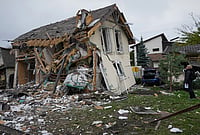
The Embassy of India in Beijing has asked families of Indian nationals still missing after the August 26 disaster to submit DNA samples to help identify them.
Priority samples are sought from parents, spouses and children, while samples from siblings and other relatives may be collected when necessary.
The samples will be forwarded to Chinese authorities for comparison, as DNA testing remains an important tool for identifying badly damaged or fragmented remains recovered after the floods.
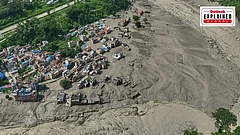
The Embassy of India in Beijing has asked families of Indian nationals still missing after the August 26 mudslide and flash flood to submit DNA samples to help identify them, after Chinese authorities confirmed they are now able to receive samples for comparison.
The Embassy said the samples will be forwarded to the concerned Chinese authorities, who will compare them with available records and inform India if a match is confirmed.
What Is The Embassy Asking Families To Do?
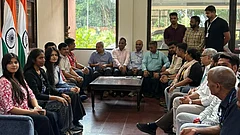
Families willing to provide DNA information are requested to submit the relevant data, in the internationally-recognised CODIS format, to the Embassy of India. The Embassy will forward the data to the concerned Chinese authorities for comparison.
The Embassy will be notified, and will in turn inform the family, should a match be confirmed. The statement says families should submit DNA information in the internationally recognised CODIS format.
Blood samples from the parents of the missing foreign national; blood samples from the spouse and children (samples from multiple children should be collected wherever possible).
If the missing person has no living parents or children, the embassy asked the kin to collect blood samples from siblings (collecting samples from all siblings is preferred); if necessary, collect samples from other maternal relatives (e.g., cousins on the maternal side) and paternal relatives (e.g., cousins on the paternal side).
In all such cases, details of the relationship may be specified.
The embassy asked to label DNA samples using the following format: "Nationality + Name and Passport Number of Missing Person + Name and Passport Number of Family Member + Sample ID Number."


How Will The DNA Matching Process Work?
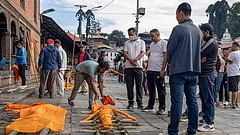
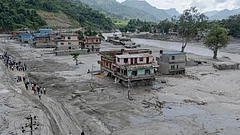
Authorities are relying on DNA testing to identify hundreds of bodies recovered after the August 26 floods and help families find relatives who remain missing.
Police have so far collected 2,272 DNA samples -- 1,260 from bodies and 1,012 from relatives -- as they try to establish the identities of those killed in the disaster, The Kathmandu Post reported.
Authorities said 1,030 bodies had been buried after DNA samples were collected and other identification procedures completed. The figure includes 222 women, 355 men and 453 bodies whose sex could not be established, the newspaper reported.

Only 96 bodies have been handed over to families so far after identification, according to Nepal's National Disaster Risk Reduction and Management Authority.
Identifying the dead has emerged as a major challenge.
Bodies recovered after being swept downstream have often been severely damaged, decomposed or recovered only in parts, making identification by face, clothing or personal belongings difficult, PTI reported, citing officials.