Iran's capture of a US Dive-LD underwater drone could allow its engineers to study the vessel and potentially reverse-engineer parts of its technology.
The Pentagon says the captured drone was an older, defective model that carried no sensitive data or classified sonar or radar equipment.
Analysts say the incident may offer Iran a propaganda win and insights into US autonomous underwater systems, despite unlikely to provide a decisive military advantage.
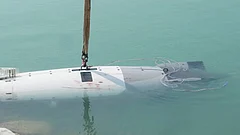
Iran's capture of a US military underwater drone has handed Tehran an opportunity to examine and potentially reverse-engineer the vessel, marking an awkward setback for the Pentagon and drone maker Anduril. The Dive-LD autonomous underwater vehicle (AUV) was designed for long-range surveillance and other undersea missions, and is part of a new generation of military drones built to operate for days with limited human intervention.
The US military and Anduril have downplayed the significance of the capture, saying the vehicle was an older model that malfunctioned and was recovered by Iranian forces after being left “dead in the water”. But analysts say the incident still gives Tehran a propaganda boost and an opportunity to study American underwater technology.
Iran Mocks US After Capturing Dive-LD
Iranian embassies around the world have mocked Washington over the incident. Iran's embassy in Ghana said on X that Iranian forces picked up the submersible “like a plastic bottle in a fishing net” and described it as being recovered intact.
US Navy Captain Tim Hawkins of US Central Command said the “defective drone was an older model that neither collected sensitive data nor carried any classified sonar or radar equipment.”



Anduril did not immediately respond to a request for comment.
Farzin Nadimi, a senior fellow at the Washington Institute for Near East Policy, said Iran would likely use the incident for propaganda and could potentially benefit technically.
“Of course Iran will take every opportunity as a propaganda win,” Nadimi said. “It can help the (Islamic Revolutionary Guard Corps) make better versions of their own designs.”
Bryan Clark, a senior fellow and director of the Center for Defense Concepts and Technology at the Hudson Institute, said Iranian engineers could reverse-engineer the drone's mechanical systems, even if its software offers greater protection.
From RQ-170 To Dive-LD: Why The Capture Matters
Washington has previously treated the loss of advanced unmanned technology to Iran as a serious security concern.
In 2011, Iran captured a US RQ-170 Sentinel stealth reconnaissance drone. Then-President Barack Obama publicly asked Tehran to return the aircraft. Iran later claimed it had reverse-engineered the drone and unveiled domestically produced aircraft that appeared to draw heavily on its design.
The US Navy also acted quickly in 2022 when an Iranian naval vessel attempted to tow away a Saildrone surface vessel in the Gulf. A Navy patrol ship and an MH-60S Seahawk helicopter were deployed to prevent Iran from taking possession of the technology, according to the Navy.
The latest incident has also exposed a contrast between Anduril's marketing of the Dive-LD and the Navy's description of the captured vehicle. Anduril has called the Dive-LD “the most reliable and flexible” large autonomous underwater vehicle available and says it can operate for up to 10 days in demanding conditions.
The Dive-LD has also been used by the US Navy and served as the testbed for Australia's Ghost Shark large underwater drone.
Analysts say Iran is unlikely to gain a decisive military advantage from the captured vessel, but the episode could still help Tehran study aspects of the technology and bolster its narrative of US vulnerability.
(With Inputs From Reuters)