German prosecutors allege that Serhii K. led a group that planted explosives on the Nord Stream pipelines in the Baltic Sea in September 2022.
The defendant denies involvement, while his lawyers argue that the pipelines’ connection to Russia’s war effort is relevant to the case.
The trial raises wider questions about Germany’s support for Ukraine and the legal consequences of attacks on critical infrastructure.
On September 26, 2022, the Baltic Sea became the scene of one of Europe’s most consequential acts of suspected sabotage. Underwater explosions ruptured three of the four pipelines built to carry Russian natural gas to Germany, sending methane bubbling towards the surface and shattering a project that had bound the two countries through energy.
Four years later, a Ukrainian former military officer is standing trial in Germany, accused of helping orchestrate the operation. He denies involvement.

The Case Against The Ukrainian Officer
The trial of Serhii K., a 50-year-old former Ukrainian military officer identified under German privacy rules, opened at Hamburg’s Higher Regional Court on October 14.
Prosecutors allege that he led a group comprising divers and an explosives expert in a covert mission to destroy the pipelines.
They claim the group travelled aboard a hired sailing yacht from Rostock, Germany, towards waters near the Danish island of Bornholm, where military-grade explosives were attached to the pipelines on the seabed.


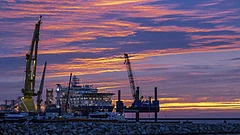

The trial is expected to continue into February 2027.

Arrested in Italy in August 2025, the defendant was extradited to Germany that November. He has denied involvement and exercised his right to remain silent at the opening of the trial.
His lawyers have challenged the prosecution’s case, arguing that the pipelines could be considered legitimate military targets because of their connection to Russia’s war effort.
German prosecutors, however, argue that the alleged attack on civilian infrastructure amounts to a war crime. The court must now examine the evidence and the competing arguments.

An Explosion With Political Consequences
The Nord Stream pipelines were central to Germany’s energy relationship with Russia. Nord Stream 1 had supplied a substantial share of Germany’s natural gas imports before Moscow halted deliveries in 2022.
Nord Stream 2 was completed but never entered service, with Berlin suspending its certification shortly before Russia’s full-scale invasion of Ukraine. Although Russia initially faced suspicion over the blasts, the German investigation has increasingly focused on alleged Ukrainian involvement. Kyiv has denied orchestrating the sabotage.
The case places Berlin in a delicate position. Germany remains one of Kyiv’s strongest supporters, yet the proceedings raise difficult questions about the possible involvement of Ukrainian actors in an attack on European infrastructure.
Another suspect, identified as Vladimir Z., was arrested in Croatia in August and is contesting extradition proceedings. The Hamburg trial offers the first public examination of evidence gathered during a lengthy investigation. What happened beneath the Baltic Sea may have damaged pipelines, but the questions now reaching the courtroom extend far beyond energy supplies.