India and the EU are actively negotiating an Investment Protection Agreement (IPA) to safeguard bilateral capital.
Proposed legal updates will be introduced in Parliament to enable the pending Geographical Indications (GI) pact.
The framework aims to protect investments and specific GI products like Darjeeling tea, Basmati rice, and Feta cheese.
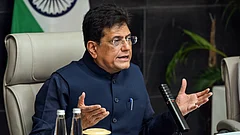
Negotiations for an Investment Protection Agreement (IPA) between India and the European Union are underway, Commerce and Industry Minister Piyush Goyal has said.
He also said some legal changes are required for an agreement on Geographical Indications (GIs) with the EU, which the ministry is going to introduce in Parliament.
"Discussions are underway on a bilateral investment agreement or the IPA, and for the GI pact, we need to make some legal changes," he told reporters here.
India and the 27-nation European Union announced the conclusion of negotiations for a free trade agreement on January 27, which is touted as “mother of all deals”.
The EU is already a leading investor in India. About 6,000 European firms are present in India.
A GI is primarily an agricultural, natural or manufactured product (handicrafts and industrial goods) originating from a definite geographical territory.
An IPA provides a framework to protect investments made by companies and investors in another country.
It aims to ensure fair and non-discriminatory treatment, protect investors against unlawful expropriation and provide mechanisms for resolving investment-related disputes.


Such agreements help boost investor confidence, reduce policy-related risks and encourage cross-border investment by offering greater certainty and transparency in the host country's regulatory framework.
Similarly, a GI agreement between India and the European Union would protect region-specific products in each other's markets, helping prevent imitation and misuse of their names.
It would safeguard products such as Darjeeling tea, Basmati rice and Indian handicrafts, while protecting European products such as Feta cheese.
Goyal said that these pacts would come into force after the implementation of the free trade agreement, which is likely to be signed in December and may come into force next in March or April.
He added that India's young and talented population, growing middle class, fast-growing economy and rapid adoption of modern technology make it an attractive investment destination.
With preferential access to economies accounting for 76 per cent of global GDP, India's trade opportunities would increase significantly, he added.