



Amidst all the talk about the death of reading in the post-literate world, are you optimistic about the future of books and writing?
The human race cannot survive without myth, narrative and shared stories. The future of writing may move from a purely textual process to a more responsive, inter-disciplinary and tactile one, but words will continue to articulate and to resonate our deepest feelings. Storytelling is an evolutionary learning process that helps us join the dots to comprehend the larger picture.
You have interacted with a large number of Indian writers over the years. What are some of the unique challenges Indian writers face?
The real struggle writers everywhere face is the struggle with themselves to find their voice and write with conviction and creativity. The established publishers are open to new and original writing, but there are always gatekeepers and processes of filtration. Reading habits are changing with the younger generations. Access to social media channels is important to visibility. Yet, I do believe that the digital space does lead to a more democratic publishing environment, for those who can figure out how to use it. I also believe that physical books will never go away.
What are some of the initiatives the Jaipur Literature Festival has taken to help Indian writers and literary traditions reach a larger audience?

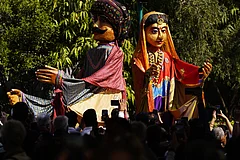

Literature always has a niche and dedicated audience. However, all the new and established literature festivals have contributed to a renewal of interest in reading, both in English and the Indian languages. The outreach programme in schools and institutions reached out to over 50 schools in Jaipur and 25 in Delhi this year. Next year, we hope to reach 100 schools.
While plenty of books in Indian languages are getting translated into English today, there is still a lack of translations among Indian languages.
In my observation and understanding, though I don’t have any handy figures to support this, there is an incremental rise in translation among and between Indian languages. The greater visibility of writers from across India and familiarity with their work organically promote this.
Can you share some of the highlights of the upcoming edition of the Jaipur Literature Festival in terms of regional voices and translated works?
My special theme for our landmark 20th edition is a series of sessions featuring all the 22 national Indian languages, as also some dialects and mother tongues from across the country. This will resonate at so many levels with the idea of ‘Many Languages One Literature’.
How can literary festivals reach out to younger readers and nurture India’s reading culture?
The present and the future both belong to the young. Sixty-seven per cent of our audiences at the Jaipur Literature Festival are below 25. This is a very bright generation. Social media and online access are part of the story, but reading and listening in to writers are still valued by the young.
In a world powered more and more by artificial intelligence, why is it crucial to have literature festivals?
The sense of community and of human interaction through literature festivals and the opportunity to listen in to writers are invaluable experiences.








