Iran's Navy commander, Rear Admiral Shahram Irani, said efforts to break the US naval blockade are under way, ports are operating and Iranian ships are getting naval escorts.
Trump called the blockade the greatest in history and said not one Iranian ship has got through, apart from a short moratorium.
Iran's Army Ground Force said it is at its highest combat readiness on the borders, and none of the claims on the strait have been independently verified.
Hormuz Hide-And-Seek: US And Iran Both Say They Hold The Strait
Iran's Navy chief says operations to break the US blockade are under way and ports are working, while Trump says not one Iranian ship has got through and the Army says it is ready on the borders

Summary
Iran's Navy commander, Rear Admiral Shahram Irani, said on Friday (local time) that Tehran's operations to break the US naval blockade were already under way, and that Iranian ports were operating normally. Hours earlier, US President Donald Trump had said the opposite. The result is two descriptions of one strait, and no way for an outsider to check either.
Iran Says Its Navy Is Challenging The US Blockade
Iranians called the blockade proof of failure. "A naval blockade makes no sense," he told state media in an interview carried by ISNA. "When a blockade is imposed during a war, it means the war has been lost." He claimed that US forces had been pushed away from Iranian waters, and that the enemy now sought permission to pass through the Strait of Hormuz. He gave no evidence.
The admiral also said Iranian vessels were getting naval escorts, and accused the US Navy of seizing Iranian oil tankers, two of which he said Tehran had recaptured during the war. He said the Army and IRGC navies, the Air Force, the Aerospace Force and the Ground Forces had all taken part. He did not name any ship or give a date.
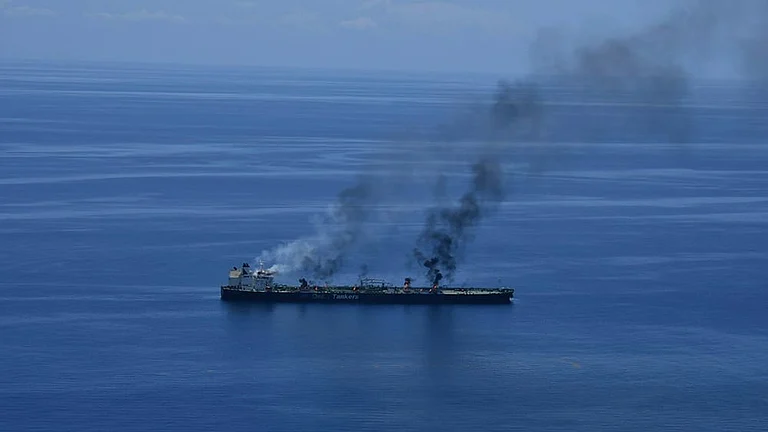
State broadcaster IRIB, citing the IRGC Navy's public relations department, added that the number of tankers trying to transit the strait by unauthorised routes had fallen significantly in recent days. It also said an oil tanker had struck a naval mine and exploded north of Ghanam Island. Neither claim was independently verified.
Army Says Ground Forces Are Ready Along Iran’s Borders
Iran's Army sent a separate signal, this time about land. Brigadier General Sirous Amanollahi, deputy commander for operations of the Ground Force, told IRNA that Army units are deployed along the country's borders, from the northwest to the point where Iran, Turkmenistan and Afghanistan meet. He said the force was at its highest level of combat readiness and had prepared operational plans to counter any ground invasion.
Advertisement
He also pointed to coordination among the Army, the IRGC, the police, the Basij and popular forces, and said the public's presence had helped to prevent ground operations against Iran. The message was of readiness, not of any specific threat. No invasion has been reported.
Claims Over US Carrier Strike And Tankers Disputed
Washington's account is different. President Donald Trump called the US operation "the greatest naval blockade in history" and said more oil was moving through the Strait of Hormuz than before the war began. "Not one Iranian ship has gotten through," he said, apart from "a little moratorium". An adviser to Iran's Supreme Leader said on Friday that Iran would neither reopen the strait nor allow the blockade to stand, according to state media.
Here the claims collide. Iran says ports work, the enemy is begging to pass and Iran's escorts are getting through. Trump says nothing Iranian passes and oil flows freely. Both can be partly true. Iran can keep its ports open for some trade while the US stops most of its tankers, and the strait can carry more oil for others even as Iran's own exports are squeezed. This is my reading, not either side's statement. No independent shipping data in these reports settles it.
Advertisement
What both accounts agree on is the strait's central role. Tehran has restricted passage since the war began on February 28, saying the waterway cannot be used to help military operations against Iran, and the Navy's commander said the order is for the strait to remain closed. A closed strait and a blockaded coast are different problems, and each side is describing only the one it is winning.
Published At: