There is a palpable sense of anticipation as the curtains go up on the 20th Asian Games on September 14 in Aichi-Nagoya, Japan. Especially so after India’s muted display at the recently concluded Commonwealth Games (CWG), Glasgow. The meagre haul of 39 medals was nowhere close to their best performance in the CWG history, largely due to omission of six disciplines where India won medals at the previous edition.
But if the trip to Glasgow was a dampener, the forthcoming Asian Games could definitely be the adrenaline jolt that India need.
It is a more selective approach to representation than the one adopted in Hangzhou in 2023, when India sent 634 athletes and returned with a record 107 medals. The smaller contingent follows the sports ministry’s emphasis on performance, with athletes selected on the probability of winning medals rather than simply expanding India’s participation across team and individual sports.
In Search of Gold
Athletics has emerged as one of India’s strongest pillars at multi-sport events, with Neeraj Chopra playing a huge role in changing the country’s perspective on track and field. With Chopra out with an ankle ligament tear, the focus shifts to his replacement Yashvir Singh in men’s javelin, along with Avinash Sable in the men’s steeplechase, Tajinderpal Singh Toor in shot put, Murali Sreeshankar in long jump, Tejaswin Shankar in decathlon, Jyothi Yarraji in women’s 100m hurdles, Parul Chaudhary in women’s steeplechase, Annu Rani in women’s javelin and Ancy Sojan in women’s long jump.

In individual events, shooting, badminton, weightlifting, boxing and archery have established performers capable of helping India maintain its 100-plus-medal ambitions.
Manu Bhaker, along with Esha Singh, Rudrankksh Patil, Tilottama Sen, Elavenil Valarivan and Aishwary Pratap Singh Tomar, headlines the shooting squad, which will look to build on India’s record 22-medal haul in Hangzhou. Established archers Jyothi Surekha Vennam and Dhiraj Bommadevara add further weight to the medal hopes.
Badminton brings no shortage of experience, with PV Sindhu and the formidable men’s doubles pairing of Satwik Rankireddy and Chirag Shetty. Boxing will look to Lovlina Borgohain and Jadumani Singh, while Paris Olympic bronze medallist Aman Sehrawat and young Antim Panghal are among India’s strongest wrestling prospects.
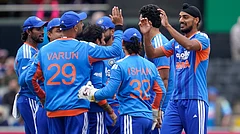
Hockey, kabaddi and cricket remain India’s strongest pillars in team events.
The Harmanpreet Singh-led men’s hockey team arrives after a bruising World Cup in the Netherlands and Belgium, where it finished eighth. But Asia’s No. 1 side has little time for self-pity. Gold in Aichi-Nagoya would also secure qualification for Olympics 2028, giving the campaign a prize that stretches beyond the Games themselves. Salima Tete’s women’s side will chase the same summit after finishing fourth at the World Cup.
In kabaddi, India are the defending champions in both the men’s and women’s events. Pawan Sehrawat, Arjun Deshwal and Aslam Inamdar bring experience to the men’s squad, while Pushpa Rana’s women’s team combines youth with experience.
India are the defending champions in both men’s and women’s cricket. But anticipation will be particularly high around the men’s team, which arrives with a far stronger line-up than the B-team that won gold at the previous edition. Led by Shreyas Iyer, the side features stars such as Jasprit Bumrah, Sanju Samson and Abhishek Sharma, alongside teenage sensation Vaibhav Sooryavanshi.
Diversification, then, is the underlying strength. India’s medal hopes are no longer built around a single athlete or discipline.
Hurdles on the Pitch
India’s campaign has already been marked by significant absences, although the reasons vary. The biggest blow is the absence of Neeraj Chopra. His withdrawal removes one of India’s strongest individual medal prospects.
The selection criteria set by the sports ministry have also hit several disciplines, altering the make-up of the contingent. Paris Olympic medallists Sift Kaur Samra, Swapnil Kusale and Sarabjot Singh failed to make the final squad. Tennis suffered a similar blow, with five promising players—Manas Dhamne, Vaishnavi Adkar, Sahaja Yamalapalli, Vaidehee Chaudhari and Prarthana Thombare—left out. The show-jumping squad in equestrian was also scrapped for similar reasons.
The sports ministry’s rulebook may have left several athletes at home, but it has also opened space for younger competitors to emerge.
But the omission that provoked the strongest reaction was that of India’s men’s and women’s football teams. Despite qualifying on merit, both teams were denied approval for the Asiad after failing to meet the government’s eligibility criteria, which require national teams to rank among the top eight in Asia for clearance to compete at multi-sport events. India’s women are ranked 13th while the men are 26th in Asia.
Beyond injuries and selection rules lies another weakness: disciplines that have struggled to keep pace.
Swimming is a glaring example. India last won an Asiad medal in the sport in 2014, a bronze in the 50m breaststroke. Volleyball has an even longer wait, with India’s last medal coming in 1986 in Seoul. Canoeing, track cycling, fencing, sepak takraw, surfing and soft tennis add to the list.
Springboard to Olympics
The strengths and weaknesses of the contingent also point to its biggest opportunity. For athletes such as Gulveer Singh, Sable, Sreeshankar and Tejaswin Shankar, Aichi-Nagoya offers a chance to turn potential into medals and establish themselves as important figures in the next Olympic cycle.
The sports ministry’s rulebook may have left several established athletes at home, but it has also opened space for younger competitors to emerge. Tripura’s Asmita Dey, who recently became India’s first CWG judo gold medallist, will look to build on that breakthrough while strengthening the country’s presence in women’s sport. Chhattisgarh’s Gyaneshwari Yadav carries the confidence of a CWG bronze into a weightlifting field crowded with Asia’s strongest competitors.
More broadly, India has increased women’s representation across disciplines. Strong performances from athletes such as Bhaker, Lovlina, Yarraji and Parul could strengthen the pipeline towards Olympics 2028.
Aichi-Nagoya can therefore be more than a medal campaign. It can be an audition for India’s next generation.
With a 634-member contingent, India crossed the 100-medal mark for the first time at Hangzhou 2023, winning a record 107 medals. Aichi-Nagoya offers a chance to build on that historic performance.
A 100-plus medal haul would underline the depth of India’s sporting talent. The country has moved beyond a small group of prominent faces, shifting the spotlight towards a wider pool of athletes. The challenge for them is to show that India’s sporting ambitions are no longer dependent on one extraordinary performer.
The stakes are higher still as India eyes the possibility of hosting the Summer Olympics in future. If that ambition is to become reality, Aichi-Nagoya can be an important starting point. Strong performances in Japan would not just add medals to India’s tally; they would strengthen the case for India as a serious sporting nation capable of staging the world’s biggest multi-sport event.
The Great Indian Dope Trick
India’s Asian Games preparations have also been clouded by a string of doping violations, with 12 athletes returning negative tests since the recent CWG in Glasgow. Wushu player Surya Bhanupratap Singh is the latest, testing positive for the prohibited substance Enobosarm. The list includes shooter Gaurav Kumar Masoori; rower Lakshya; wrestlers Mukul Dahiya and Deepanshu; and runner Abhishek Pal. Judoka Arun Kumar tested positive for an anabolic steroid, while Tulika Maan was provisionally suspended over accumulated whereabouts failures. Both had earlier been dropped from India’s CWG squad, ruling them out of Asian Games selection.
MORE FROM THIS ISSUE

Aakash Biswas is Associate Editor-Sports, Outlook