



Rahul Gandhi and other INDIA bloc leaders have sought permission to put 48 formal questions to the ECI on its decisions and the conduct of the nationwide SIR.
The questions focus on disagreements among election commissioners, access to voter databases, changes to Form 6, voter exclusions and appeals against inclusion orders in West Bengal.
The Supreme Court has asked the ECI to respond by December 9 before deciding whether the poll panel should be required to answer the interrogatories.
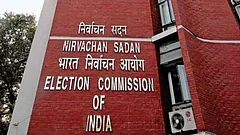
Leader of Opposition in the Lok Sabha Rahul Gandhi, along with other INDIA bloc leaders, has approached the Supreme Court seeking permission to put 48 formal questions, known as interrogatories, to the Election Commission of India (ECI) over its functioning and the ongoing Special Intensive Revision (SIR) of electoral rolls.
The application seeks responses from Chief Election Commissioner Gyanesh Kumar and Election Commissioners Sukhbir Singh Sandhu and Vivek Joshi. The Opposition has argued that the ECI's affidavits before the court do not adequately disclose the records and approvals behind its decisions.
The questions cover the nationwide SIR, alleged differences among election commissioners, changes to voter registration forms, appeals against voter inclusion orders in West Bengal and access to electoral databases.
Here are the 10 key questions the Opposition wants the poll panel to answer.

From SIR To Alleged Differences Among Commissioners
1. Who authorised the nationwide Special Intensive Revision?



The Opposition wants to know when and how the decision to conduct a nationwide SIR was taken, whether all three commissioners approved it and where the decision was formally recorded.
The question assumes significance because an RTI response from the Commission's First Appellate Authority in 2025 had stated that the ECI had not taken a decision to initiate a nationwide SIR that year.
2. How often did Sandhu and Joshi disagree with ECI decisions?
The interrogatories seek details of objections and reservations raised by Sandhu and Joshi between February 19, 2025, and October 26, 2026, concerning SIR, ECINET, Form 6 and the filing of appeals.
The Opposition wants to establish whether important decisions were taken unanimously or by majority under Section 18 of the 2023 law governing the appointment and functioning of election commissioners.
3. Did Gyanesh Kumar override the other commissioners?
The Opposition has questioned the allocation of responsibilities within the ECI, particularly the authority exercised by the CEC.
It has sought details of the July 28, 2026, work allocation order issued by Deputy Election Commissioner Maneesh Garg, which reportedly changed the oversight of the IT division and the routing of related files.
Sandhu and Joshi subsequently raised objections and issued a joint direction on July 30. The Opposition wants to know whether Gyanesh Kumar concurred with their decision and whether action was taken against Garg.
4. Who authorised appeals against voter inclusion orders in West Bengal?
The Opposition has questioned appeals filed against orders passed by judicial officers allowing voters to be included in electoral rolls in West Bengal.
According to the ECI's affidavit, 38 lakh appeals were pending before tribunals, including 22.21 lakh filed by deleted voters seeking restoration of their names and 16.10 lakh challenging voter inclusion.
The interrogatories seek to identify the officials who authorised these appeals and the criteria used to select the orders being challenged.

From Database Access To Voter Deletions
5. Who has access to electoral roll databases?
The questions directed at ECI Director General (IT) Seema Khanna seek details of access to electoral databases through ECINET and ERONET.
The Opposition wants to know which officials can add, delete or modify voter entries and whether private contractors or vendors have been given write access to the production database.
It also questions whether every modification is backed by an Electoral Registration Officer's order and recorded in an audit trail.
6. Can voter names be changed without an ERO's approval?
The interrogatories ask whether voter entries have been added, deleted or modified without individual orders from Electoral Registration Officers, including through bulk operations, de-duplication exercises or data migration.
The Opposition also wants the proposed review committee to examine database access logs and changes made to electoral records since June 24, 2025, when the SIR was announced.
7. Who introduced the additional declaration in online Form 6?
Form 6 is used by individuals seeking inclusion in electoral rolls. The controversy concerns an additional declaration introduced into its online version during the SIR.
Applicants were asked whether their names or those of their parents or grandparents appeared in electoral rolls prepared during previous intensive revisions, or whether none of these applied.
The Opposition wants to know who introduced the declaration, whether the Commission approved it and whether it led to applications being rejected, delayed or left unprocessed because applicants could not provide the required information.
8. How many voters were excluded during the SIR, and why?
The Opposition has sought state-wise and gender-wise figures of voters missing from draft rolls despite appearing in earlier electoral rolls, as well as those excluded between the draft and final lists.
It wants the ECI to categorise exclusions as deaths, migration, absence, duplication, ineligibility or other reasons.
It has also sought details of objections filed through Form 7, including excessive or allegedly false objections. The questions further seek information on action under Section 31 of the Representation of the People Act, 1950, which penalises false declarations concerning electoral rolls.
9. Were corrective measures introduced after the SIR was challenged?
The application seeks details of changes introduced by the ECI following legal challenges to the SIR.
These include the November 6 communication allowing another opportunity to electors marked as absent, shifted, dead or duplicate (ASDD) in certain states to secure inclusion in the final electoral rolls.
The Opposition wants to know how many electors benefited from the measure and whether similar relief is proposed for states where final SIR rolls have already been published.
10. Were important ECI decisions approved through WhatsApp and emails?
The Opposition has questioned the ECI's assertion that approvals for urgent decisions could be obtained electronically and subsequently recorded in official files.
It wants to know whether WhatsApp, email, the e-Office system or other electronic channels were used to approve decisions concerning SIR, ECINET, Form 6 and appeals.
It has also sought details of whether the corresponding communications, logs and metadata have been preserved.








