



Air India’s Phuket–Delhi turbulence incident raises questions over cabin safety, crew restraint and service procedures.
The incident highlights the need to prioritise passenger and cabin crew safety when clear-air turbulence strikes.
Questions also remain over a reported pilot substance-test result and alleged technical issues as the DGCA investigation continues.
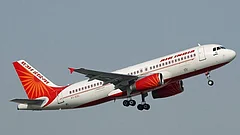
Approximately 90 minutes after its 08:27 take-off from Phuket International Airport (PIA), Air India flight AI-2379 experienced clear-air turbulence at its cruising altitude and reportedly dropped 300 feet in a few moments.
Social media was abuzz with passengers’ reels showing them screaming and stunned in the cabin, as they claimed that some of them had allegedly hit the ceiling. The pilot brought the aircraft under control. But 12 passengers were reported injured, as confirmed by Air India. The Airbus A-320, bearing registration VT-EXO, carried 137 passengers (including three infants), two pilots and six cabin crew. The injured passengers and crew were taken to hospital for treatment, and the aviation minister visited the injured to assess the situation. The DGCA has commenced an enquiry into the matter. Air India, for its part, is cooperating with the regulator. Social media and TV channels were flooded with photos of the aircraft interiors, which showed slight damage and cracks.

Questions Over The Flight And Crew
Reports have suggested that one of the pilots may not have cleared a psychoactive/psychotropic substance test administered on landing. The results of the confirmatory second test are still awaited, and details need to be verified. Air India has neither confirmed nor denied the same, as the results of the tests had not yet been received by them.
The Directorate General of Civil Aviation (DGCA) regulates psychoactive and psychotropic substance testing for flight crew, cabin crew and air traffic controllers under CAR Section 5, Series F, Part V. This protocol mandates random urine-based drug screening for substances including cocaine, cannabis, opioids, amphetamines, barbiturates and benzodiazepines for the purposes of aviation safety. By way of abundant precaution, it is also clarified that certain prescribed medications, bodybuilding products, etc., can also trigger false-positive results in psychoactive/psychotropic substance testing, so we must not be too hasty to pass judgement until the DGCA results are out. In extreme cases, if the pilots/crew have tested positive, depending on whether the authorities have assessed the actions to be rash, negligent or endangering flight safety and the lives of passengers, the authorities could even take legal action. There is also allegedly a report with the DGCA that suggests that the airline has reported that there was a “transient technical exigency” and some hydraulic issue. That, however, is a matter for the DGCA to investigate and report on.


The “maintenance post flight report” a copy of which I have perused, shows all the faults listed categorically. The story of clear air turbulence that was spread across the media for the first 5-6 days, would point to the system not being completely transparent. The latest is that the possibility of French investigators BEA and Airbus will be joining the AAIB in what is now an investigation into an accident as per ICAO classification.

Why Clear-Air Turbulence Is So Dangerous
Clear Air Turbulence (CAT) is an industry-wide phenomenon and is a sudden, invisible, high-altitude shaking caused by severe wind shear near jet streams. Turbulence also occurs within cloudbursts and weather conditions. CAT is rather pronounced in the South-East Asian region and happens without any cloud warnings, making it almost impossible to detect by onboard radars. Typically, jet streams can be likened to fast-moving paths of air that collide with slower-moving paths, which create a speed change that is wind shear. CAT, which is of a violent nature, tests the skills of the pilots, and it takes skilled pilots to manoeuvre the aircraft out of harm’s way, just as in the incident of AI-2379.
Captain Sam Thomas, President of ALPA, said that “it’s worrying to note that injuries continue to happen as a result of inflight turbulence. The travelling public needs to be sensitised to the fact that turbulence is an unavoidable condition and on certain routes it is more pronounced than others. There is no technology invented yet to authoritatively detect turbulence and therefore there are limited (things) that the pilot can do, other than his flying skills to battle nature’s elements and his aeroplane.” “We wish all the injured a speedy recovery”.
A recent incident with an American Airlines flight 174 from Raleigh-Durham to London, where the 777-200 aircraft was forced to divert to JFK an hour post-take-off due to severe turbulence, injured two crew members. The plane made a “heavy landing” with 239 passengers on board, and the FAA is investigating the turbulence incident.
In a similar well-publicised case of the Singapore Airlines SQ-321 incident in 2024, involving a Boeing 777-300, there was one death and grievous injuries. The flight from London to Singapore suffered catastrophic turbulence over Myanmar, where the altitude drop was 178 feet in a few seconds, with violent G-force swings, injuring hundreds (some with serious head and spinal trauma) and killing one passenger. This resulted in an emergency diversion to Bangkok to treat the injured with emergency trauma care. This was the first turbulence-related death in more than 25 years.
Has Clear-Air Turbulence Increased?
The critical factor is that a small change in atmospheric conditions can mean minor injuries or a catastrophic cabin event. In all cases, seat belts are the defining factor; all serious injuries occurred when passengers were not belted up. Why are there suddenly more incidents of CAT and turbulence at large? Some theories relate it to global warming and climate change, which result in more incidents of wind shear and layering. It is also linked to more traffic on routes (like transatlantic and South Asian routes) where the density of flights is exceedingly high. Warming atmospheres intensify jet streams and cause more CAT incidents.
Pilots all over the world advise passengers to keep their seatbelts loosely fastened in case of clear-air turbulence, which cannot be predicted. The DGCA rules follow all ICAO-mandated norms and also advise that seatbelts should be loosely fastened. The DGCA rules advise that passengers should wear their seat belts when seated; in the event of the seat-belt sign coming on, the services should be suspended, passengers seated and secured, and passengers informed by regular announcements and follow their airlines’ Standard Operating Procedures.
Interestingly, Air India on August 1, had issued a ‘bi-weekly bulletin’ to its crew, in which it reiterated previous instructions that “cabin crew must remain vigilant and always maintain continuous awareness of seat belt sign activation. Upon illumination during cruise, hot beverage service must be discontinued immediately, and the nearest available cabin crew member must make the turbulence announcement”. The same procedure is also followed by IndiGo.
I travelled three days ago on an IndiGo flight, and we encountered turbulence, and the seat-belt announcements were made by the captain and crew, followed by an announcement that the hot beverage (tea/coffee service) was being discontinued. I reached out to both Air India and IndiGo to clarify this. Air India responded that they had issued this reminder on 1/8/26 “prior to the 4th Aug Phuket flight” and that they reiterated best safety practices during “monsoon”; this was merely reiterating a practice that was previously in existence. IndiGo also responded that they followed all DGCA norms and suspended hot beverages when the seat-belt signs came on, and in case the turbulence was bad, they suspended the entire service. This brought up an interesting point as to why the entire service was not being suspended altogether. After all, why should the cabin crew risk their lives and safety?
In a 1998 incident, an Air India Airbus flying between Singapore and New Delhi fell almost 500 feet, and the crew hit the ceiling and were critically injured. One air hostess became a paraplegic for life and had to spend the next 30 years of her career in a wheelchair. The other crew member was so badly injured facially that she had to have facial surgery and carried mental scars all her life, and gave up flying.
The DGCA CAR Civil Aviation Requirement Section 7, Series M, Part 1 on cabin crew duties, read with the Operations Circular 04 of 2023 on Monsoon Operations issued by the then Director General, states: “5.2.2 During the flight, alert them early enough for expected turbulence, for them to suspend services, secure the galley and cabin, as needed.” As Captain Sam Thomas of ALPA opines, “The most vulnerable are the cabin crew who have to do the service. Passengers should not remove seatbelts unless they need to visit the washroom; at least keep it loosely fastened.”
The regulators must sit down with airlines and aviation professionals to ensure that the safety of passengers and cabin crew is kept paramount at all times, and if services need to be totally suspended, then so they should be. India’s lack of an independent regulatory body like the UK’s Civil Aviation Authority (CAA) or the USA’s FAA-type of body that has independent professionals who are not subject to government or bureaucratic interference is the need of the hour, and this would remove political interference and non-aviator bureaucrats from heading aviation.
Passengers must realise that the skies are not necessarily more dangerous; it is the cabin that is more vulnerable, especially when people are not strapped in. Safety, after all, is not an accident; it concerns us all.
Views expressed by the author are personal.















