Supreme Court directed that detentions must follow the procedure established by law.
The bench stressed safeguards for peaceful, unarmed assemblies outside prohibitory order areas.
Metro and rail services must operate normally unless public-order restrictions are necessary.
The Supreme Court on Sunday ordered normal functioning of Metro and railway services in Delhi, an uninterrupted internet access and an immediate review of barricades while hearing challenges to restrictions imposed ahead of protests against Chief Election Commissioner Gyanesh Kumar.
A bench of Justices Joymalya Bagchi and V Mohana also directed that peaceful, unarmed protesters must not be detained except through the procedure established by law, particularly outside areas covered by prohibitory orders under Section 163 of the Bharatiya Nagarik Suraksha Sanhita (BNSS).
The special hearing on Sunday followed petitions alleging mass detentions, restrictions on movement, internet suspensions and failure to comply with the court’s earlier directions on transport services. The petitions also challenged the closure of 45 Metro stations during Saturday’s planned demonstration.
Recording the submissions, the bench said senior lawyers had alleged a “flagrant violation of the directions”, citing disrupted Metro services, the closure of New Delhi and Nizamuddin railway stations, the absence of traffic advisories and harassment and detention beyond areas covered by prohibitory orders.

The court directed that Metro and railway facilities function normally unless restrictions were required to maintain public order. It also ordered authorities to permit movement across the capital, subject to traffic regulations and lawful restrictions.



Barricades must be reviewed immediately against prevailing law-and-order and traffic requirements, the bench said. Internet facilities were to remain undisturbed.
The judges also addressed restrictions around the Supreme Court, directing authorities to remove notices referring to Section 163, if they had not already done so, to prevent uncertainty over access to courts.
“We have been informed that a notice under Section 163 has been imposed in and around the Supreme Court. We direct the authorities to take down the restriction so that there is no apprehension of access to justice with regard to ingress and egress to the Supreme Court or any other court,” the bench said.

Solicitor General Tushar Mehta was directed to ensure that lawyers, journalists and other professionals faced no obstruction while performing their duties.
While affirming the right to demonstrate, the court said protests must follow the law.
“You have a right to protest, absolutely no quarrel on that but the process in which you protest has to be within the Police Act,” the bench said.
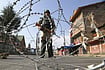
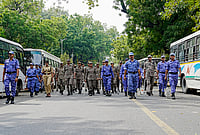
The hearing came after extensive security restrictions prevented the Cockroach Janta Party’s proposed Saturday protest against the CEC. About 41,000 security personnel were deployed across Delhi, and around 7,000 people were reportedly detained.
On Friday, Chief Justice of India Surya Kant had asked authorities to reconsider Metro station closures and regulate Metro and railway services instead of prohibiting them outright, to reduce inconvenience to commuters.
The petitions before Sunday’s bench questioned whether authorities had followed those directions during the security operation.
The matter will be heard again on Tuesday.