Theja Rio's debut feature, Angh, premiered at the Toronto International Film Festival.
Angh is the only Indian film in the festival's Platform competition.
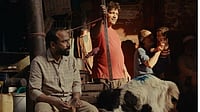
Rio's film is an intimate father-son story set in 1960s Nagaland amidst the incursions of an American missionary.
Modernity arrives in several garbs all at once. It shifts between assimilation, a promise of progress and a threat of complete cultural loss. Development can wholly wash over a sharp sense of identity that once existed, chipping away at it one by one. Premiering in Platform competition at the Toronto International Film Festival 2026, Theja Rio’s brilliantly immersive debut, Angh, understands every shade of this complex negotiation. Rio, born in Nagaland’s Kohima, brings alive the state’s churning historical moment as Christianity burst in the 1960s. At the centre of the quiet, reflective drama is a tribal chief, Anghba (Anghlong Konyak). He’s a mournful witness to his community’s transformation under the sway of an American missionary (Douglas James Henshall). There’s a gentle ache in Angh that seeps under your skin, without a hint of rush.
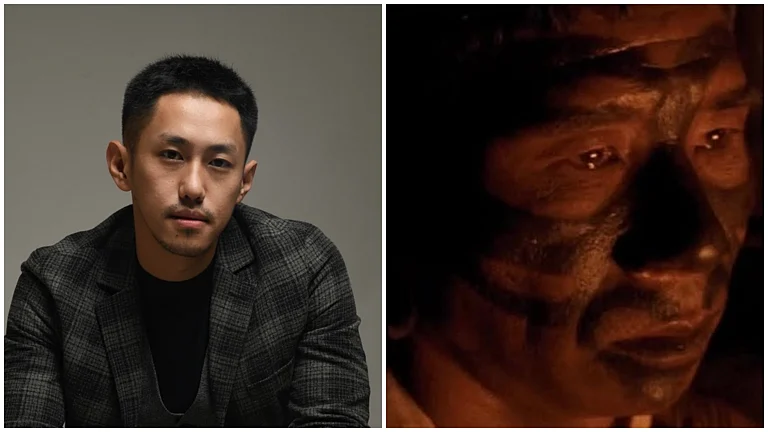
One of the film’s most evocative shots comes early. The striking opening has the chief on a hunting expedition in the forest till he observes the missionary passing through on a boat. The latter meets his steady gaze. He’s accompanied by few Naga converts, his radio’s music cuts like an interruption. Rio lays out these disruptions through a slow, considered process of effacement. The rigid chief stays back in the now-abandoned village with his dying wife and young son Amao (Sobino Rengma). He’s insistent that they will endure though she reminds him that the community is no longer united.

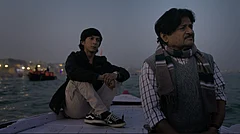

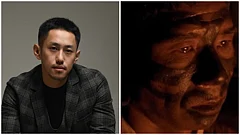

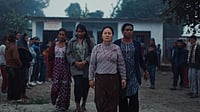
Christianity had already started making inroads in Nagaland by the end of the 19th century. However, it was the 1950s and 1960s that saw the full, speedy sprawl of a heightened Christian revival movement. This changed the fabric of the state forever. Angh is a sobering reckoning with this assimilation. Rio traces not just how a sociocultural map was redrawn but also a deep existential shift, along various lines of identity, was wrought. Forests shrink. Eventually, a language dies with Konyak replaced by English. A worldview, a philosophy stands being eroded.

Rio weaves a distinct cultural intimacy into the film. Angh breathes in its geography, tribal iconography in a way only Rio could have established. He shows how rituals, that might be sacred for one generation, could chafe at the next. There’s a lot of care and patience with which he places these elements right at the heart of the story. The gruesomeness of these chafe at the son. He’s disturbed, distanced furthermore by what his father holds as essential and intrinsic to the Konyak grain of being. These rites have been handed down through successive generations. They are a reminder of a cultural past. Even as Anghba tries to socialise and keep his son tethered to their soil, Amao strains to break free. Shot on 16mm by Adam Pietkiewicz, Angh renders its world in pulsing texture. The cinematographer finds a stillness to the desolate village, forests and riverside stints that move between melancholic, haunted and peaceful. Rio lends enough space and time to the increasingly fraught father-son relationship so that a latter rupture stings.
The missionary’s allure is far greater for Amao. The hymns, laughter and togetherness of his peers in the new village draw him closer. Mute, Amao can’t confront his father. But he learns to resist. He might even hold resentment towards Anghba for just letting his mother die instead of relying on the medical attention the missionary suggests. Small acts of defiance accrue towards a devastating final lash-out. A bristling Sobino Rengma seizes onto the minute disaffections, the creeping alienation and a son’s rage at his father for tearing them away from joy. Even when a former neighbour who returns disenchanted with the conversions and warns him, the boy is too young to process and heed. He’s surging for a taste of the changes, whereas Anghba is particular about nostalgia, preservation, his roots. He intuits a snare underneath the missionary’s generosities. An unforgettable dream sequence gives a searing glimpse of the community spirit that once buzzed through the ghost village.
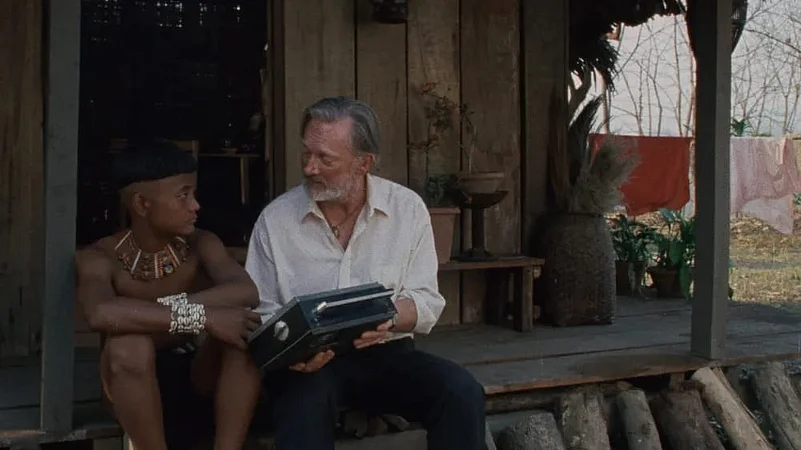
The tragedy of Anghba is the losing foothold over cultural legitimacy, a way of being and living that appears to be entirely replaced by an alien set of customs and appearances. Anghba feels that if he cedes, he’s signing away his entire history. The chief sees it as nothing but a violation, a gross betrayal of the elders who are no longer around. He’s headstrong and imperious but doesn’t strike out. He never masks his abject disapproval of brethren, who were once his neighbours and have abandoned the village. Anghlong Konyak is as indomitable as shattering. He’s also capturing a man whose power and privilege as a chief have all but been struck down. Konyak drills into his stubbornness, resilience, frayed majesty and an ultimate surrender. Anghba’s bottomless grief, uncertainty and anxiety drape Angh like a mist. Rio mines the film’s emotion and power from one man’s steadfast refusal to bend amidst overwhelming homogeneity. Though the filmmaker’s measured stance prevents the missionary from being slotted into an outright villain, the latter should have been etched slightly more. Anghba’s fight plays out on a battlefield of ideas that includes commercialised demarcations within orchard yields that used to be shared by all.

Yet, Rio’s attention to intricate detail, pace and plaintive atmosphere overcome any awkward gap. Angh works because it’s never didactic or gets pulled into easy binaries. Rio favours contradictions and dilemmas without neatly pitching one side over the other. Yet, he’s wary enough to acknowledge the price paid in this collision between the extant indigenous way and the missionaries. There are medical breakthroughs, roads, education being ushered in. But the very physical and cultural bearings of the community risk being clipped, overlaid by a new religion. Rio ensures the presence and influence of local specificities, like when the father urges his son to “remove that skin” (stripping of tee and pants) or not to stray from his shadow. Ways of sustenance change. The forest, once a world unto its own and which the community used to respect, is too laid siege. A fine wrestling of paradoxes gives the film heft and dimension, elevating it above simplistic connotations. Angh heralds the arrival of a bright new beacon of Indian cinema who’s here to stay.