



Anand Patwardhan questioned the Tarun Tejpal rape conviction, citing CCTV footage as proof.
Critics accused the filmmaker of victim-blaming and undermining the Bombay High Court's ruling.
The row reignites debate on progressive men shielding peers accused of sexual misconduct.
There is a particular kind of disappointment that arrives when someone you believed understood injustice suddenly seems unable to recognise it in front of him. Anand Patwardhan and Tarun Tejpal's controversy has produced exactly that feeling for many who grew up assuming that men who spent their lives documenting oppression would instinctively know what solidarity with a survivor looks like.
For anyone who has followed Indian journalism over the past decade, the Tarun Tejpal case needs little introduction. The former Tehelka editor-in-chief was accused by a young colleague of sexually assaulting her inside a hotel lift during the magazine’s ThinkFest event in Goa in November 2013. What followed was a decade of legal battles, a trial court acquittal in 2021 and, eventually, the Bombay High Court overturning that acquittal and convicting Tejpal. He was sentenced to 10 years in prison.
On the other hand, Anand Patwardhan is hardly a bystander to India's public life either. One of the country's best-known documentary filmmakers, he has spent decades examining communalism, militarism, caste, patriarchy, inequality and the abuse of power. Ram Ke Naam, Father, Son and Holy War, Jai Bhim Comrade and Reason have all asked audiences to look closely at systems that protect the powerful at the expense of the vulnerable. In 2015, he was also among the filmmakers who returned their National Awards in protest against what they described as growing intolerance.
That is precisely why his comments on the Tejpal verdict are so difficult to shrug off.

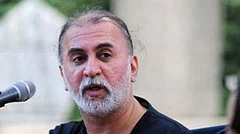


Anand Patwardhan and the Tarun Tejpal case: What did he say?
Responding to a social media discussion about the case, he reported having questioned whether rape had occurred, pointing to lift CCTV footage showing Tejpal and the woman entering and leaving the lift and appearing to behave normally afterwards, because no camera existed inside the lift itself. He also suggested that the reversal of the acquittal was less about evidence and more about a judiciary he believes increasingly bends to the ruling party's wishes.

This is where the argument becomes deeply troubling.
Since when did surviving sexual assault come with a required facial expression? Why should a woman walking out of a lift looking composed be treated as evidence that nothing happened inside it? A person can smile after being assaulted. They can speak normally. They can return to work, eat a meal, attend a meeting or even continue interacting with the person who hurt them. None of those reactions establish what happened behind a closed door.

Trauma does not arrive with a universally recognisable script.
The Bombay High Court's decision is important precisely because it pushed back against the idea of the perfect victim: the woman who must behave exactly as society expects a traumatised woman to behave before her account can be believed. A survivor does not have to perform distress for her allegation to deserve serious consideration.
The Old Boys' Club is not always conservative
This is not about demanding Patwardhan abandon his politics, nor about placing court verdicts beyond question. Courts can be challenged and evidence debated. The problem begins when political suspicion starts doing the work that evidence is supposed to do. That is why this feels bigger than one Facebook comment. Progressive men have spent years teaching audiences to interrogate systems of power. Yet when sexual violence turns up inside their own social and professional circles, that critical gaze can grow strangely selective
This is not a new story. In 2013, journalist and Newslaundry co-founder Abhinandan Sekhri wrote that the allegations against Tejpal were serious and deserved to be treated with the severity rape demands, even as he argued the allegations should not erase the work of everyone else at Tehelka. Years later, Newslaundry's handling of Nirupama Sekhri's 2014 letter to the survivor, which subjected her behaviour and choices to extraordinary scrutiny, became its own uncomfortable chapter, revisited again in a 2021 discussion on the platform about the trial court's troubling reasoning.
Elsewhere, Noam Chomsky's correspondence with Jeffrey Epstein became a source of intense criticism precisely because his reputation as an intellectual associated with progressive causes sat so uneasily beside his willingness to maintain a relationship with a convicted sex offender.
Naseeruddin Shah's public endorsement of a book connected to Mahmood Farooqui, who was convicted of rape before being acquitted by the Delhi High Court, similarly left many admirers grappling with an uncomfortable question: what happens when the person you admire fails the moral test you assumed they would pass?

The point is not to place these cases on the same factual or legal footing. They are not the same. The point is the recurring discomfort they expose: how easily progressive credentials can coexist with deeply troubling blind spots when women are involved. Women, meanwhile, are handed a test with no winning answer. Speak up, and they are asked why they waited. Report immediately, and they are questioned for not behaving differently. Resist, and the manner of resistance is picked apart. Look traumatised, and they are unstable. Look composed, and they could not possibly have been hurt.
The old boys' club does not always look old, conservative or openly misogynistic. Sometimes it wears the language of progress. Sometimes it makes films about injustice. Sometimes it speaks beautifully about equality. Sometimes it is simply the man you instinctively trust because you have spent years believing that his politics make him safe. That is what makes these moments so disappointing. The problem is not that the people we admire are incapable of being wrong. It is that women are so often expected to prove their pain while powerful men are given endless room to explain theirs.
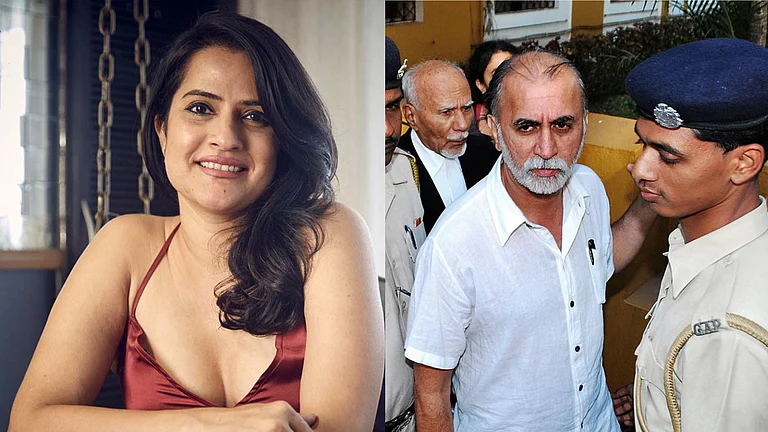
Anand Patwardhan, Abhinandan Sekhri and the question of selective solidarity
The Tejpal story also has an uncomfortable connection to the wider journalism ecosystem.
In 2013, Newslaundry co-founder Abhinandan Sekhri wrote about the allegations against Tejpal, calling the matter serious and stating that rape must be dealt with severely, while also arguing that the allegations should not erase the work done by everyone at Tehelka. Years later, Newslaundry faced criticism over its handling of Nirupama Sekhri's controversial 2014 letter to the survivor, which subjected the woman's conduct and choices to intense scrutiny. None of this points to some coordinated conspiracy, that would be far too easy and far too convenient. It points instead to something subtler: powerful men are routinely granted a complexity that women rarely receive. A man can be brilliant, progressive, flawed and still worthy of understanding, all at once. A woman who alleges sexual assault is too often asked to account for every decision she made before, during and after the incident.
Why did she go there? Why did she stay? Why did she speak normally? Why did she not look frightened? Why did she continue working? Why did she not behave differently? There is no winning performance. This is where the boys' club becomes so damaging, and it does not require men to sit together and agree to protect one another. Sometimes all it takes is a culture in which a powerful man's reputation is treated as a complicated thing worth preserving, while a woman's credibility is treated as something she must continuously prove.
The damage reaches beyond one man's opinion
The real worry is not that an acclaimed filmmaker got something wrong. It is the reach he carries. Patwardhan has spent decades shaping the political and social imagination of young Indians through his films, and for anyone who grew up seeing him as a voice against injustice, his words carry a particular authority. When that same voice weighs a survivor's credibility against how composed she looked leaving a lift, the message travels far past Facebook: that trauma must look a certain way to count, and that a lifetime of good work can quietly offset present harm.
This is not about saying Patwardhan should stop criticising Modi, or that courts cannot be questioned. They absolutely can, verdicts can be challenged, evidence debated, judicial decisions appealed. The problem begins when political suspicion starts doing the work that evidence is supposed to do. A young woman listening to this debate may hear that even after surviving an assault, she must also behave correctly afterwards. A young man may absorb the equally troubling idea that progressive credentials can coexist comfortably with old assumptions about how women should respond to violence. And that is why this is so infuriating: we keep telling women to speak up, then interrogate how they spoke; tell them to report, then ask why they waited; tell them to resist, then examine how they resisted; tell them to leave, then ask why they stayed. If they look traumatised, they are unstable. If they look composed, they could not possibly have been hurt. What, exactly, are women supposed to look like?
People can make extraordinary films and still hold terrible ideas. They can fight one form of injustice and fail another. They can be politically courageous and personally blind. Their work can remain valuable without their moral authority becoming a permanent exemption from scrutiny. The real test of progressive politics is not how loudly someone condemns injustice committed by people they dislike — it is what happens when the accused belongs to their own intellectual, professional or political world. That is where the applause should stop, because women should not have to wait for every progressive hero to rediscover feminism when the victim happens to be someone else's daughter, colleague or friend.

The old boys' club survives not because every man inside it is openly misogynistic, but because too many powerful men continue to receive the benefit of the doubt long after women have been asked to prove themselves beyond reason. And perhaps that is the most depressing lesson from the Anand Patwardhan-Tarun Tejpal controversy: sometimes the old boys' club does not arrive looking like the enemy. Sometimes it arrives fluent in the language of progress, carrying decades of credibility, insisting it is only asking questions.
Note: The views expressed in this article are solely those of the author and do not necessarily reflect the views of Outlook.















