



Rahul Gandhi's remarks on India's economy, democracy and institutions during US visits have repeatedly triggered BJP criticism.
BJP leaders have accused Gandhi of damaging India's international reputation by questioning government policies and institutions abroad.
The Congress maintains that criticising the government and raising national concerns are legitimate responsibilities of the Opposition.
Congress leader Rahul Gandhi's comments during overseas visits have repeatedly triggered political confrontations in India, with the Bharatiya Janata Party (BJP) accusing him of damaging the country's reputation and questioning his criticism of Indian institutions on foreign soil.
The latest controversy erupted after Gandhi, during an interaction at Columbia University's School of International and Public Affairs (SIPA) in New York, described the Indian economy as being on the brink of a disaster. He flagged widespread unemployment, shortcomings in the education system and questioned the effectiveness of government initiatives such as Make in India and Startup India.
The remarks drew sharp reactions from BJP leaders, including Assam Chief Minister Himanta Biswa Sarma and Union Parliamentary Affairs Minister Kiren Rijiju.
Sarma, in a post on X, shared a video taking a swipe at the Congress leader and said: "Baba, if you can't win at home, at least stop losing India's reputation abroad."
Rijiju, meanwhile, accused Gandhi of making inaccurate statements about India during foreign engagements. He cited assessments by international financial institutions, including the International Monetary Fund (IMF) and the World Bank, which have recognised India as the world's fastest-growing major economy.
The exchange is the latest instance of a recurring political battle over Gandhi's statements abroad and the BJP's charge that he portrays India negatively before international audiences.
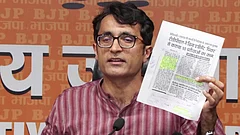


What Has Rahul Gandhi Said During Earlier Overseas Visits?
The latest remarks are not the first time Gandhi's foreign engagements have triggered a political row.
In April 2025, during an interaction with the Indian diaspora in Boston, Gandhi questioned the functioning of the Election Commission of India (ECI), alleging that the poll panel was compromised.
Referring to the 2024 Maharashtra Assembly elections, he questioned the increase in voter numbers and cited figures suggesting that around 65 lakh votes were added in the final hours of polling.
His comments prompted an immediate response from the BJP, which accused him of defaming the country and its constitutional institutions abroad.
BJP spokesperson Pradeep Bhandari called Gandhi an "agent of George Soros", while party leaders Shehzad Poonawalla and Sambit Patra also criticised his remarks then.
The controversy followed another political confrontation during Gandhi's September 2024 visit to the United States. His meeting with US Congresswoman Ilhan Omar, who has been critical of India's policies, drew criticism from BJP leaders. The party questioned his decision to engage with her, accusing him of associating with voices hostile to India's interests.

BJP's criticismTo His Overseas Remarks
The BJP's criticism largely centres on its argument that a senior Opposition leader has a responsibility to protect India's image internationally, even while questioning the government's policies.
Gandhi, as Leader of the Opposition in the Lok Sabha, is among the country's most prominent political figures. The ruling party argues that his statements during international engagements can influence how foreign audiences perceive India's economy, democratic institutions and governance.
Rijiju made a similar argument in his latest response, saying the government would generally prefer not to react to every statement made by Gandhi but felt compelled to object when he made what the minister described as inaccurate claims about India abroad.
The BJP has also repeatedly accused the Congress leader of giving ammunition to critics of India by raising domestic political issues before foreign audiences.








