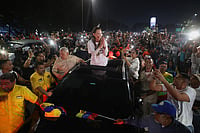
Serbia’s student-backed Student List secured a reported parliamentary majority, defeating the alliance led by longtime leader Aleksandar Vučić after years of anti-government protests.
The movement has yet to confirm its prime ministerial candidate, leaving uncertainty over who will lead the next government.
Serbia’s parliament must be constituted within the prescribed deadline, after which a new government must be formed within 90 days; the transition will depend on the formal election results and leadership negotiations.
Serbia is entering a new political era after a student-backed movement defeated the alliance led by longtime leader Aleksandar Vučić in a parliamentary election, raising questions over who will become the next prime minister and how quickly a new government can take office. With nearly 99% of votes counted, the Student List secured 52.7% of the vote, translating into 139 seats in the 250-member National Assembly, while the alliance led by Vučić’s Serbian Progressive Party won 39.2% and 97 seats.
Vučić conceded defeat on Sunday, following two years of anti-government protests driven by demands for accountability and action against corruption.

Who Could Become Serbia’s Next Prime Minister?
The Student List did not name a prime ministerial candidate during its election campaign, reflecting its effort to present itself as a collective movement rather than a traditional party centred on a single leader. Ilija Srdanović, a professor at the University of Novi Sad’s Faculty of Medicine, has emerged as a leading potential candidate. However, the movement has yet to confirm who will head the government or take charge of key portfolios such as finance, justice and internal affairs. Its parliamentary majority gives it the numbers to form a government without relying on a coalition with Vučić’s alliance, but choosing a cabinet will require agreement among a diverse group of academics, professionals and activists.



The movement emerged from protests following the collapse of a railway station canopy in Novi Sad in November 2024, which killed 16 people. Demonstrators accused the authorities of corruption and demanded accountability, transparent public procurement and stronger institutions. The government and Vučić’s allies have denied allegations of wrongdoing. The election result marks a significant challenge to a political establishment that has dominated Serbian politics for more than a decade.

When Will A New Government Be Formed?
The timetable depends on the final election results and the formal constitution of the new parliament. Under Serbia’s rules, the National Assembly must be constituted within 30 days of the publication of the final results. A new government must then be formed within 90 days of the constitution of the Assembly. The Student List’s parliamentary majority could make the process more straightforward than in elections requiring prolonged coalition negotiations, although internal discussions over leadership and ministerial appointments could still take time.
The new administration will face pressure to turn the movement’s anti-corruption promises into policy while addressing concerns over education, public institutions and government accountability. Its composition and early decisions will also shape Serbia’s relations with the European Union, Russia and China. For now, the election has delivered a clear parliamentary result, but the identity of the next prime minister and the precise date the government will take office remain unresolved.