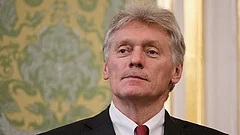
Kremlin spokesperson Dmitry Peskov said 90% of Russia’s payments and transactions with BRICS countries are now conducted in national currencies.
Peskov said the shift was driven by Western sanctions restricting Russia’s access to the dollar, not an ideological push for de-dollarisation.
On the Saudi Arabia-Pakistan-Turkiye Mecca Pact, Peskov welcomed the potential contribution to regional security and said there was no reason for India to be concerned.
Russia is not pursuing de-dollarisation but has been pushed to use national currencies because Western sanctions blocked access to the dollar, Kremlin spokesperson Dmitry Peskov said on Tuesday.
Peskov said Russia has reached a point where 90 per cent of all payments and transactions with BRICS countries are now conducted in national currencies rather than the US dollar. He called this a significant shift but said an ideological push against the dollar itself did not drive it.
“It’s not because we are aiming for de-dollarisation, for getting rid of US dollars,” Peskov said, adding that Russia remains open to any acceptable method of payment.
He said the shift came because certain countries have used their national currency as a tool of political pressure, imposing sanctions on Russia. “So, if they don’t let us use their money, we use our own money,” he said.
On whether BRICS was an anti-Western bloc, Peskov rejected the characterisation, aligning Russia’s position with India’s.
“We would join India in not agreeing with those who say that BRICS is against some western countries,” he said.

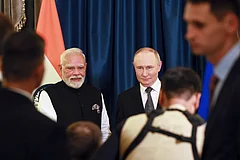
BRICS exists for its own members and for countries that share its ideologies, he said, and is not directed against any third party.
Peskov described this as the defining feature of the grouping, and said those who repeatedly frame BRICS as an anti-Western alliance were making “a great mistake.”
The remarks come amid continuing debate over the future role of the dollar in global trade, as BRICS nations, including Brazil, Russia, India, China and South Africa, along with newer members, have expanded local-currency settlement mechanisms in recent years, partly in response to Western sanctions on Russia following its full-scale invasion of Ukraine in February 2022.
When asked about the value of payments made for rubble from the Indian side, he declined to disclose the amount.
Western governments have repeatedly raised concerns that BRICS could evolve into a platform for challenging dollar dominance and Western-led financial institutions.
Moscow and New Delhi have both pushed back on such framing, instead describing the grouping as a platform for cooperation among its members rather than a bloc defined by opposition to any other country or region.
The Kremlin spokesperson’s remarks reflect Russia’s continuing effort to expand trade settled outside the dollar system, a shift accelerated since 2022, even as officials insist the move is pragmatic rather than a deliberate strategy to displace the US currency in global finance.
On Mecca pact between Pakistan, Saudi Arabia and Turkiye
Peskov said: “We hope this will be another contribution to regional stability and security. It shouldn’t be a reason for concern for other countries in the region, such
as India. We don’t see any reason for such fears. If it genuinely contributes to regional security, we would of course welcome the participation of other important regional players in this process. That would widen the scope of this dialogue and further strengthen regional security. So that is our position.”
“The format is brand new, it has yet to be developed and we are yet to hear more about its vision for global and regional security. So let's wait a while and be patient about it,” he added.
On August 7, Saudi Arabia, Turkey, and Pakistan officially signed the Mecca Pact, a mutual defence alliance that treats an armed attack on one member as an attack on all three.