For one grieving family in Gujarat’s Surat, the decision to donate the heart of their loved one became a final act of extraordinary generosity. Hundreds of kilometres away in Ahmedabad, another family waited anxiously, hoping that the heart would arrive in time to give their loved one a second chance at life.
Connecting these two families was not just medical science but an unprecedented journey aboard a Vande Bharat Express.
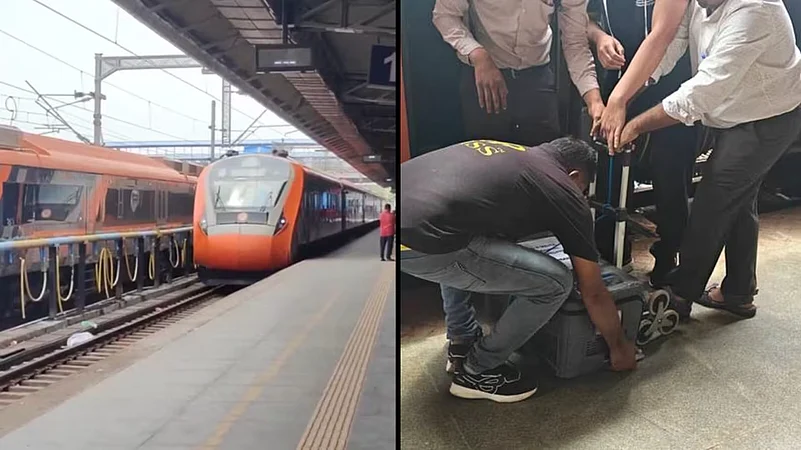
While air ambulances have traditionally been used for such missions, in a first for the country, Indian Railways successfully transported a live donor heart by train from Surat to Ahmedabad, marking a significant milestone in India's organ transplantation network.
The heart was carried on Train No. 20901 Mumbai Central-Gandhinagar Capital Vande Bharat Express before being rushed through a specially created green corridor to the U.N. Mehta Institute of Cardiology and Research Centre, where transplant surgeons were waiting.
The operation required clockwork precision. A donor heart remains viable for only about four to six hours after retrieval, leaving virtually no room for delay. Indian Railways, the Railway Protection Force (RPF), Gujarat Police, transplant coordinators and medical teams synchronised every step—from organ retrieval in Surat to its transfer into the operating theatre in Ahmedabad.
Calling it a landmark achievement, Ved Prakash, Divisional Railway Manager, Ahmedabad, said the mission reflected Indian Railways' commitment to serving society beyond transportation.



"In such life-saving missions, every minute is crucial. The excellent coordination among Indian Railways, RPF, Gujarat Police and the medical teams ensured the success of this mission. Contributing towards saving a human life is not only our responsibility but also our highest duty towards service and humanity," he said.
While the train journey made headlines, doctors point out that it represents only one link in a much larger chain that begins with an extraordinary decision made by grieving families.
Behind every successful transplant lies a family that, in the midst of unimaginable personal loss, chooses to donate the organs of a loved one so that others may live.
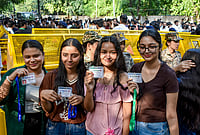
That spirit of generosity was celebrated on Friday at the All India Institute of Medical Sciences (AIIMS), Delhi, where the Organ Retrieval Banking Organisation (ORBO) honoured 38 donor families whose decisions gave dozens of patients a second chance at life.
The annual felicitation ceremony brought together donor families, transplant recipients, doctors, government officials, police personnel and civil society organisations to acknowledge what AIIMS Director Prof. Nikhil Tandon described as "one of the noblest acts of humanity."
"Every year, organ and tissue donation gives a new lease on life to patients with end-stage organ failure. We must come together to spread awareness, address misconceptions and build a more positive outlook toward donation," Prof. Tandon said.
He described the decision taken by donor families during moments of profound grief as "a noble deed that has granted new life to many and stands as an enduring testament to human compassion."
Among those honoured was 26-year-old Priyanka Yadav from Ghaziabad.
She was the sole earning member of her family, caring for her ailing mother and supporting her two younger brothers. After suffering fatal injuries in a road accident while returning from Nainital, she was declared brain dead in March this year.
Despite their devastating loss, her family agreed to donate her kidneys, liver, heart valves and corneas—saving and transforming multiple lives.
Another family honoured was that of 23-year-old Sagar, who died after a motorcycle accident. Remembered for his willingness to help others, his final act reflected the values he lived by. His kidneys, liver, heart valves and corneas were donated to patients waiting for transplantation.
The family of 37-year-old Ghanshyam Kashyap from Delhi also chose hope over despair after he suffered a fatal brain injury following an accidental fall. His lungs, kidneys, liver, heart valves and corneas helped give several critically ill patients another chance at life.
AIIMS also honoured citizens who had pledged during their lifetime to donate their entire bodies for medical education and research, underscoring that organ donation extends beyond transplantation to advancing medical science itself.
According to Prof. Aarti Vij, Professor-in-Charge of ORBO, successful transplantation depends on an intricate network of professionals working seamlessly together.
"Retrieval to transplantation is a complex continuum that calls for seamless coordination among donor families, transplant coordinators, treating physicians, transplant teams, support staff, forensic authorities, laboratory services and the police—each performing an indispensable role," she said.
To strengthen the system, ORBO has instituted mandatory notification of every death occurring at AIIMS, allowing transplant coordinators to assess potential organ donation opportunities around the clock.
It has also trained over 1,350 resident doctors and nearly 1,500 critical care nurses while conducting awareness programmes in schools, colleges, government institutions and community organisations to dispel myths surrounding organ donation.
Although awareness has improved over the years, India's deceased organ donation rate remains among the lowest in the world. Thousands of patients suffering from heart, liver, kidney and lung failure continue to die while waiting for suitable donors.
Dr. (Prof.) Tarun Kumar, Interventional Cardiologist at Medanta Moolchand Heart Center, Delhi too felt that “family willingness in tough situations to take critical decisions along with state support and capable doctors are required for an organ donation to be successful.”
Doctors estimate that a single deceased donor can save up to eight lives through organ donation while improving many others through the donation of tissues such as corneas, skin, bones and heart valves.