



Day 1 opened with the inauguration by the Chief Minister of Meghalaya Konrad K. Sangma.
Booker-Prize winning authors Kiran Desai and Damon Galgut spoke about creativity, literature and the rich culture and traditions of the Northeastern states in their respective sessions.
The final day featured conversations on disability and inclusion, Garo literature and culture, Shillong's food scene, Assam's history, women in commerce, graphic storytelling and the meaning of home.
Every November, Shillong welcomes writers, poets, thinkers, and readers from Meghalaya, across India, and beyond to the Shillong Literary Festival. This year, the festival’s sixth edition organised under the banner of Meghalaya Tourism was held from November 12 to 14 at Ward’s Lake.
Day 1 opened with the inauguration by the Chief Minister of Meghalaya Konrad K. Sangma, followed by ten sessions on Shillong's story, fiction, the Monpas, Khasi literature, literary magazines, the writing life, conservation, climate change, memoir and the making of Mizoram. The chief minister spoke of balanced progress as Meghalaya grows into one of the country's fastest-growing economies, of the festival motivating young people to write, and of the living root-bridges, India's UNESCO World Heritage nomination: “Here we are not constructing, but we are weaving bridges,” he said, emphasising on staying connected to our roots while moving forward.
Booker-Prize winning authors Kiran Desai and Damon Galgut spoke about creativity, literature and the rich culture and traditions of the Northeastern states in their respective sessions. Eight books by seven authors, covering a wide range of topics and genres, including regional history, biography, diplomacy and fiction were released on the opening day.


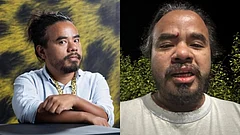
The second day of the festival brought together several writers, filmmakers, musicians and thinkers for conversations on science and nature, the writing life, biography, cinema, Tripura's history and Khasi music and poetry, along with the announcement of a new short-story competition for aspiring writers. Desai and Galgut were in conversation with well-known writer Anjum Hasan on the struggles and unexpected rewards of being a writer, and how family and personal experience shape literary work. Sandip Roy and Vineet Gill discussed the art of documenting the lives of artists through biography, including Gill's book on Nirmal Verma. Filmmaker Pradip Kurbah and Biana Lisa W. Momin discussed independent cinema, representation and stories of underdogs.
Bijoy Kumar Hrangkhawl spoke about his memoirs with Pradyot Bikram Manikya Deb Barma, tracing Tripura's history of insurgency, resistance and political movements. He shared his his journey as a former insurgent fighting for the oppressed, his years of imprisonment, his meeting with former Prime Minister Rajiv Gandhi and the struggle for constitutional protection for the people of Tripura, underlining the importance of identity, political rights and standing up for one's people. In a session held in Khasi, Raphael Warjri, Aijinkmen Janong and Rangkitbok Dohkrut explored the relationship between music, poetry and Khasi cultural identity. P.S. Thangkhiew spoke of a short-story writing competition started in memory of his father to encourage aspiring writers. The competition offers prizes for writers and students, with categories for Khasi, Garo and other languages, and requires original writing with no use of AI.
Authors who spoke on stage on Day 2 included Streamlet Dkhar, Kartikeya Vajpai, Alka Saraogi, Gautam Hazarika, and debut novelist Rupinder Brar. The day closed with two Friday the 13th specials: Satyajit Sarna on horror, mystery and cautionary messages in his debut book Redtooth, and a thriller special with Zac O'Yeah and Ankush Saikia.

The final day featured conversations on disability and inclusion, Garo literature and culture, Shillong's food scene, Assam's history, women in commerce, graphic storytelling and the meaning of home, followed by the announcement of the First Bloom winners and a closing ceremony addressed by Paul Lyngdoh, Minister, Tourism, Government of Meghalaya. He welcomed the new voices emerging through First Bloom and said that Shillong, which has always embraced diverse cultures, deserves recognition as the cultural centre of Northeast India. Calling for greater engagement with Gen Z and millennials, he said, “The written word promises something that endures, endures beyond even your days,” and urged, “When you disagree with somebody do so, but do not become disagreeable as a person.”
Poets Lalnunsanga Ralte, Sbunbha Kharumnuid, Eusebia Kimde S. Sangma, Christina D. Sangma and Abhijeet Gogoi read verses in Khasi, Garo, Assamese and English. Authors who graced the festival stage on Day 3 included Shinjini Kumar, Vijay Gogoi, Mitra Phukan, Sarnath Banerjee, Bela Negi, Daniel Challam , Janice Pariat and Prasenjit K. Basu.
Vijay Kumar D., IAS, Commissioner & Secretary, Tourism Department, said Ward's Lake recorded a footfall of about 8,000 on the final day, against 1,000 to 1,500 on its busiest days, making this the most successful edition of the festival. Thanking the Tourism Department, Festival Curator Malavika Banerjee, the authors, media and volunteers, he quoted Voltaire: “Let us read and let us dance. These are two amusements which will not cause harm to anybody. I think these two things we do wonderfully in Shillong.”








