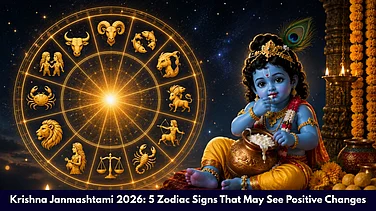
Krishna Janmashtami 2026 falls on Friday, 4 September, with the festival’s spiritual core anchored in the convergence of Ashtami Tithi and Rohini Nakshatra. In traditional Hindu astrology, this combination is held to be especially potent because Lord Krishna is believed to have been born at midnight under Rohini, the Moon’s most favoured lunar mansion.
The cosmic signature of Krishna’s birth:
Scriptural and devotional traditions describe Krishna’s birth as occurring on the eighth lunar day (Ashtami) of the dark fortnight in the month of Bhadrapada, with the moon positioned in Rohini Nakshatra. In 2026, Rohini Nakshatra spans much of 4 September, overlapping with Ashtami Tithi and the midnight Nishita Kaal window that marks the moment of birth in popular observance. Because the birth narrative itself ties Krishna to Rohini, the nakshatra becomes more than an astronomical detail; it is treated as a divine signature that sanctifies the time and the rituals performed within it.
Why Rohini is seen as auspicious?
Rohini is ruled by the Moon and traditionally associated with growth, beauty, nourishment, fertility and abundance. In Vedic astrology it is often described as one of the gentlest and most auspicious nakshatras, linked to creation and the flourishing of life. Some devotional sources add that Rohini is under the supervision of Brahma, the creator, which further elevates its status for beginnings and sacred acts. When such a nakshatra coincides with Ashtami—the tithi connected to Krishna’s eighth avatar—the moment is viewed as doubly charged: the lunar quality of Rohini supports emotional receptivity and devotion, while Ashtami channels the protective, dharmic energy associated with Krishna’s purpose of restoring balance.


For devotees, this means that prayers, fasting, kirtan and midnight puja performed while Rohini is active are believed to carry enhanced spiritual resonance. The logic is symbolic as much as astrological: if the divine entered the world under a particular star, then aligning worship with that star is a way of meeting the divine on its own terms.
How this shapes Janmashtami observance in 2026?
In 2026, the timing of Rohini and Ashtami creates a nuanced calendar. Many Smarta traditions observe Janmashtami on 4 September, while several Vaishnava communities, including ISKCON and major temples in Mathura and Vrindavan, observe it a day later, seeking the clearest overlap of Ashtami and Rohini at midnight. This variation underscores how central the Rohini–Ashtami combination is to the ritual logic of the festival.
Practically, devotees often keep a day-long fast and break it only after both Ashtami Tithi and Rohini Nakshatra have ended on the following day. The midnight Nishita Kaal puja—typically between around 11:57 pm and 12:43 am on the night of 4–5 September—is performed when the birth moment is symbolically reenacted, with the infant Krishna’s idol placed in a cradle and devotional songs sung. Because Rohini is linked to nourishment and grace, offerings often emphasise purity and simplicity: fresh fruits, milk-based sweets, and flowers, reflecting the nakshatra’s themes of abundance and tenderness.
The deeper devotional meaning:
Beyond astrology, Rohini’s auspiciousness in Krishna worship points to a larger spiritual idea: the cosmos itself participates in the divine story. The Moon’s “favourite” nakshatra becomes the cradle for an avatar whose life teaches love, duty and surrender. For the devotee, observing Janmashtami under Rohini is a way to align personal rhythm with that cosmic pattern—slowing down, nurturing devotion, and allowing grace to “grow” within, much like the fertile, creative energy attributed to Rohini.

FAQs:
1. Why is Rohini Nakshatra specifically linked to Krishna?
Traditional accounts hold that Krishna was born when the Moon was in Rohini Nakshatra on Ashtami Tithi. Because the birth narrative itself names Rohini, the nakshatra is treated as Krishna’s birth star, making it especially sacred for rituals commemorating his arrival.
2. What makes Rohini–Ashtami together more auspicious than either alone?
Ashtami Tithi is connected to Krishna’s eighth avatar and the dharmic purpose of his birth, while Rohini Nakshatra is associated with growth, beauty and nourishment under the Moon’s influence. When both coincide, devotees believe the time carries compounded spiritual potency, ideal for fasting, midnight puja and deep devotional practices.
3. How does the 2026 timing affect Janmashtami observance?
In 2026, Rohini Nakshatra and Ashtami Tithi do not align identically for all traditions, leading some groups to observe Janmashtami on 4 September and others on 5 September to capture the midnight overlap. Many devotees break their fast only after both Ashtami and Rohini have ended, emphasising the importance of the combined window for completing the vrata.