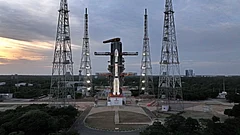
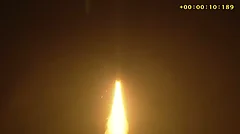
Hyderabad-based Skyroot Aerospace scripted history on 18 July 2026 with the successful launch of India's first private orbital-class rocket, Vikram-1, into low Earth orbit. Former Indian Space Research Organisation (ISRO) scientists Pawan Kumar Chandana and Naga Bharath Daka are now on a near-probable mission to make space accessible for future generations through private orbital launch capabilities.
While the two former ISRO scientists deserve all the credit, the success of Vikram-1 actually reflects the vibrance and scope for innovation Hyderabad has to offer. The true architect of this victory is the city of Hyderabad itself.
Cosmoserve, another Hyderabad-based startup, developed a cost-effective space debris removal spacecraft that was aboard Vikram-1. The startup is supported by T-Works, a government-owned state-of-the-art prototyping centre that allows innovators to create hardware products.
Hyderabad is a promising city that is quietly transforming itself into a global defence and aerospace capital. It is not common knowledge that Telangana has the world’s largest civil aerospace maintenance, repair, and overhaul (MRO) facility for Leading Edge Aviation Propulsion (LEAP) engines. The Safran facility is built to service up to 300 LEAP engines annually — the very engines powering the global fleets of the Airbus A320neo and Boeing 737 MAX.
In November 2025, Telangana Chief Minister A. Revanth Reddy laid the foundation stone for what will be the first M88 military engine MRO workshop outside of France. This dedicated facility will independently service the complex engines powering the frontline Dassault Rafale fighter jets used by the Indian Air Force and Navy.
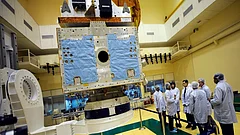
Besides possessing one of the world’s most unique MRO advantages, the state is also making strides in manufacturing. Telangana will soon have the distinction of manufacturing the entire Rafale fighter aircraft fuselage. Again, this will be the first time outside France. Dassault Aviation partnered with Tata Advanced Systems Limited (TASL) to manufacture critical structural components—including the complex front, central, and rear fuselage sections. The facility is expected to roll off the assembly line by the second half of next year.
With a strong ecosystem of defence laboratories, research institutions, advanced manufacturing facilities, and a vibrant MSME base, the state stands as one of the world’s most cost-effective aerospace destinations. It hosts more than 130 aerospace companies that span global original equipment manufacturers (OEMs), Tier-1 suppliers, private space startups, and a network of over 1,000 small-to-medium enterprises (MSMEs). Truly the new France of aerospace.
Telangana has an undisputed advantage – land availability unlike anywhere in the country, along with high talent concentration.
The state government took up building a next-generation city of global standards - 'Bharat Future City' - across 30,000 acres at a location which is 20 minutes from the Rajiv Gandhi International Airport. This itself is major differentiator in comparison with other Indian cities. Gujarat's GIFT City spans only 700 acres while Bharat Future City is being built across 30,000 acres. The state is attracting talent like no other Indian state, with the highest net talent influx thanks to traits like great infrastructure and superior quality of life.
About the Author: Anvesh Reddy P. is a former Reuters journalist, and currently works with the Telangana government.
Disclaimer: The views and opinions expressed in this article are those of the author(s) and do not necessarily reflect the official policy or position of the publisher. While every effort has been made to ensure the accuracy of the information, the publisher is not responsible for any errors or omissions, or for the results obtained from the use of this information.