Modi announced a Development Cooperation Package of 24,000 crore Nepali rupees for Nepal's flood reconstruction and long-term development, with an IIT campus, Kandla and Paradip port access and new energy and border projects.
Shah thanked India for acting as a first responder in disasters, invited Indian investors and students, and called mutual respect, trust and goodwill the heart of ties.
India and Nepal signed eight MoUs, launched the Sarayu-Kamala Express, and released a joint vision document, while neither leader's remarks mentioned the border dispute.
India Announces NPR 24,000-Crore Package For Nepal, Signs 8 MoUs And Flags Off Ayodhya-Janakpur Train
Narendra Modi announced an NPR 240 billion development cooperation package for Nepal after talks with Balendra Shah, who invited Indian investors and called for stronger cooperation in trade, energy, education and connectivity

Summary
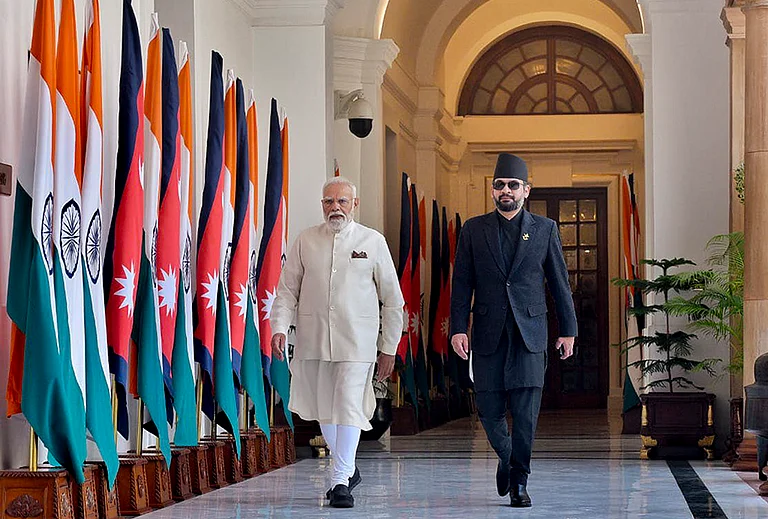
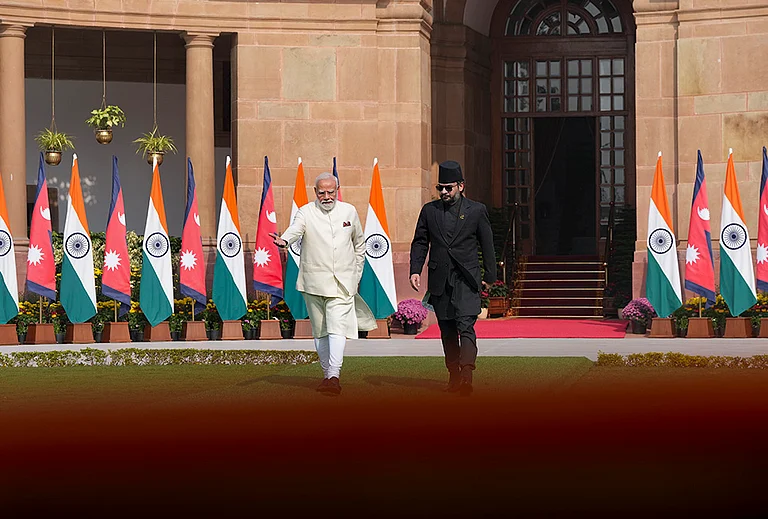
Prime Minister Narendra Modi on Monday announced a development cooperation package of 24,000 crore Nepali rupees (NPR 240 billion) for Nepal's reconstruction and long-term development following the devastating floods in August, as he held talks with Nepal Prime Minister Balendra Shah in New Delhi.
The announcement was among the major outcomes of Shah's first bilateral visit to India since taking office in March. The two leaders also discussed energy, trade, infrastructure, education and cross-border connectivity, with Modi describing the relationship as one of “apnapan and unwavering trust” and Shah calling for a partnership built on “mutual trust, cooperation and shared prosperity”.
Trade, Energy And Infrastructure Take Centre Stage
Connectivity and energy cooperation featured prominently in Modi's remarks. The two prime ministers inaugurated the motorable bridge linking Darchula in Nepal with Dharchula in Uttarakhand and the second phase of the Motihari-Amlekhgunj petroleum pipeline. They also laid foundation stones for an integrated check post at Banbasa, a petroleum storage terminal in Jhapa and the 669-MW Lower Arun Hydropower Project. Modi said these initiatives would make cross-border trade and movement easier, while giving fresh momentum to infrastructure links between Nepal and Indian states, including Bihar and Uttar Pradesh.
On trade, Modi said India would provide Nepal access to the ports of Kandla and Paradip to facilitate its transit trade. He also highlighted the role of India's energy market in developing Nepal's hydropower potential, pointing to the foundation stone for the Lower Arun project and India's commitment to completing the Arun-3 hydropower project on schedule. Referring to India's role as a supplier of petroleum products and essential commodities, Modi said supplies of fuel, fertilisers and other necessities to Nepal had been maintained despite serious challenges to oil supplies this year. The inauguration of the second phase of the Motihari-Amlekhgunj pipeline and the proposed Jhapa petroleum terminal, he said, would strengthen this partnership.
Modi also announced plans to support Nepal's younger workforce through technology, education and entrepreneurship. These include a start-up incubator, innovation hub and an offshore campus of the Indian Institute of Technology in Nepal, along with expanded scholarships for Nepali students in law and technology. India would also assist Nepal in developing agro-industrial parks to promote food processing and value addition. Modi said the two countries would encourage young creators to take their shared cultural heritage to international audiences and expand cooperation in cricket infrastructure and player training.
Advertisement
Modi Announces 24,000 Crore Nepali Rupee Package, Highlights Shared Ties
Addressing the joint press interaction after the talks, Modi said India had always been a participant in Nepal's development journey. Referring to the mandate Shah received from the Nepali people, he said it reflected the aspirations and expectations of a new generation. “India has always been a partner in the development journey of a strong and prosperous Nepal,” Modi said, adding that the two sides had taken several important decisions to take their relationship to new heights.
Modi said the assistance would help affected families get their lives back on track, create new opportunities and strengthen Nepal's ability to respond to future disasters. “Our resolve will be to help affected families return to normal life,” he said. The package is worth approximately $1.62 billion; it is denominated in Nepali rupees, not Indian rupees.
Advertisement
The 26 August disaster, caused by a glacier collapse on Nepal's border with China, sent mud and rock crashing into the Trishuli river. The package, he said, is meant so that "the lives of the affected families get back on track", new opportunities are created and Nepal is better prepared for future disasters.
The relationship, in his words, is "not merely of neighbourhood but of belonging and unbreakable trust". He added: "Our joys are shared. So are our challenges." He also praised Shah's "clear vision" and said the "historic mandate" Nepal's voters gave him reflects the hopes of a new generation.
Modi also placed religious and cultural links at the centre of the relationship, invoking Lord Ram and Goddess Sita as symbols of a shared civilisational heritage. Recalling his 2018 visit to Janakpur, he repeated his earlier observation: “Nepal ke bina hamare dhaam adhoore hain. Nepal ke bina hamare Ram bhi adhoore hain” — India's sacred pilgrimage circuit and its understanding of Lord Ram, he said, would be incomplete without Nepal. He noted that the consecration of Ram Lalla in Ayodhya in 2024 had renewed interest in the shared religious connection, with around 30 crore devotees visiting Ayodhya in 2025, according to his speech.
Advertisement
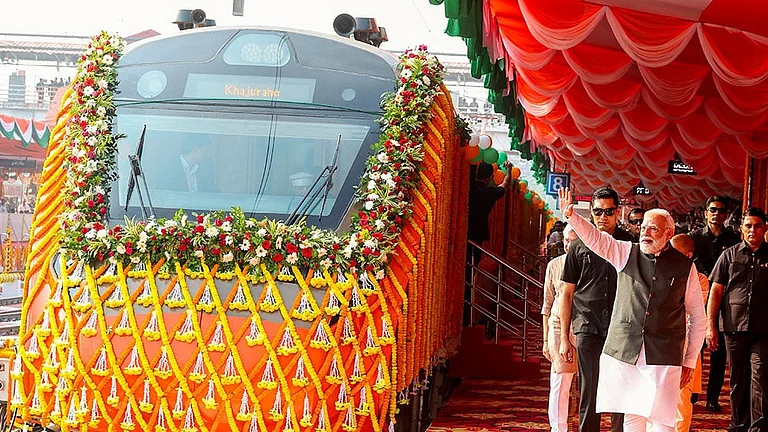
The two leaders also virtually flagged off the Saryu-Kamala Express, connecting Janakpur Dham in Nepal with Ayodhya Cantonment in Uttar Pradesh. Modi said the service would make it easier for pilgrims visiting Ayodhya to travel to Janakpur and pay their respects at the site associated with Sita. The weekly service is scheduled to begin regular operations on November 28, with the 604-km journey expected to take around 19 hours. Modi also proposed stronger connectivity between other religious destinations, including Lumbini and Bodh Gaya.
Balen Shah Calls For A Modern Partnership, Invites Indian Investment
In his remarks, Shah thanked Modi for the invitation and hospitality, and acknowledged India's assistance during Nepal's natural disasters. “India has consistently stood as a first responder in times of natural disasters and difficult hours,” he said, expressing appreciation to the Indian government and people for their support. He described the relationship as one rooted in mutual respect and said the two countries had held “candid, substantive and forward-looking discussions” across a wide range of areas.
Advertisement
Shah said the agreements and infrastructure projects discussed during the visit should translate into opportunities for ordinary people, particularly younger generations. He identified employment for Nepal's youth, new opportunities for students and access to markets for entrepreneurs as important measures of the partnership's success. “I am confident that these historic milestones will elevate Nepal-India relations to new heights,” he said, adding that the two countries needed to build on their longstanding relationship through mutual trust, cooperation and shared prosperity.
The Nepali Prime Minister also invited Indian businesses to invest in his country. “I warmly welcome Indian investors to Nepal to partner in the economic prosperity of our two countries,” he said. He called for stronger direct air connectivity between cities in both countries and proposed that Indian students should also have opportunities to study at an IIT campus in Nepal. His remarks placed economic opportunity and people-to-people exchanges alongside infrastructure and energy as priorities for the relationship.
Shah also extended an invitation to Modi to visit Nepal and encouraged Indian travellers to explore the country's religious and cultural destinations, including Pashupatinath, Muktinath, Janakpur, Lumbini and the living goddess Kumari. He concluded by expressing the hope that the friendship between the two countries would remain grounded in trust and continue to produce shared prosperity. The two leaders also announced a joint vision document outlining areas for future cooperation, while eight memoranda of understanding were signed across sectors including health, traditional medicine, urban development, civil-service training, livestock and fisheries, and satellite communications.
Published At: