RSS publicity in-charge Sunil Ambekar called for a nationwide National Register of Citizens.
Ambekar said NRC could help identify people “wrongly included” in electoral rolls.
He linked citizenship identification to CAA beneficiaries and what he described as “population imbalance”.
The Rashtriya Swayamsevak Sangh (RSS) has called for a nationwide National Register of Citizens (NRC), with its publicity in-charge Sunil Ambekar arguing that identifying citizens is necessary to address what he described as “population imbalance” and safeguard the country’s “unity, integrity and security”.
Speaking at an event at the Indira Gandhi National Centre for the Arts (IGNCA), Ambekar, as reported by the Indian Express, said an NRC could help identify people who had been “wrongly included” in electoral rolls. He also said those who had come to India from neighbouring countries and were eligible under the Citizenship Amendment Act (CAA) should have their citizenship established.
“When solutions (to population imbalance) are discussed, it is said there should be a National Register of Citizens,” Ambekar said.
He linked the issue to the 1947 Partition, arguing that demographic changes in India had to be viewed in the context of the country’s history and security.
Ambekar also referred to people from Scheduled Caste, Scheduled Tribe and economically weaker sections who, he said, had remained in neighbouring countries that became Islamic states after Partition and subsequently faced persecution.
“For those who have come back, ensuring their citizenship through CAA is necessary. Identifying such people through the NRC is necessary. If people have been wrongly included in the voter list, it is necessary to identify them,” he said.


RSS also linked demographic change with questions of cultural identity. Ambekar said every nation has an identity and argued that maintaining a balance among people who regard the country’s culture as their own was necessary to preserve that identity.
“Every nation has an identity. If the population of such people who consider the culture of the country as their own remains in equilibrium then the cultural identity of the country is preserved,” he said.

Owaisi Calls NRC ‘100 Times Worse’
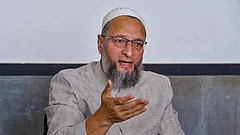
AIMIM chief and Hyderabad MP Asaduddin Owaisi has opposed the idea of a nationwide NRC and has described the current SIR exercise as a “backdoor NRC”. He has also argued that the NRC would create difficulties for people who lack documentary proof of citizenship.
“NRC is going to be 100 times worse. We’ve already seen how disastrous the NRC has been in Assam. It has caused immense trouble, especially for minorities, SC/STs and migrants,” Owaisi said in September.
Owaisi questioned how people dependent on government rations would be able to produce documents needed to establish their citizenship.
“NRC will force everyone to stand in line and prove their citizenship,” he said.
His comments came as opposition parties were raising concerns over the Election Commission’s SIR exercise and its implications for electoral rolls.
The latest RSS call for a nationwide NRC therefore comes against the backdrop of two separate but related debates — the identification and verification of citizenship, and the ongoing scrutiny of electoral rolls through SIR. The government, however, has not announced a nationwide NRC.

What Is NRC?
The NRC is not a new administrative concept. The first National Register of Citizens was prepared after the 1951 Census, recording households and the people residing in them.
The issue became particularly significant in Assam because of concerns over migration from erstwhile East Pakistan and, after 1971, Bangladesh. The six-year Assam movement, led by the All Assam Students' Union (AASU), demanded the identification and deportation of people who had entered the state after the cut-off period. The movement ended with the signing of the Assam Accord in 1985.
The nationwide NRC proposal became politically contentious during the protests against the Citizenship Amendment Act in 2019-20. Prime Minister Narendra Modi said in December 2019 that his government had not discussed a nationwide NRC since coming to power, while the BJP did not include the proposal in its 2024 election manifesto.
The government has not officially announced a nationwide NRC. The debate has resurfaced alongside the Census exercise and the Election Commission’s Special Intensive Revision (SIR) of electoral rolls.