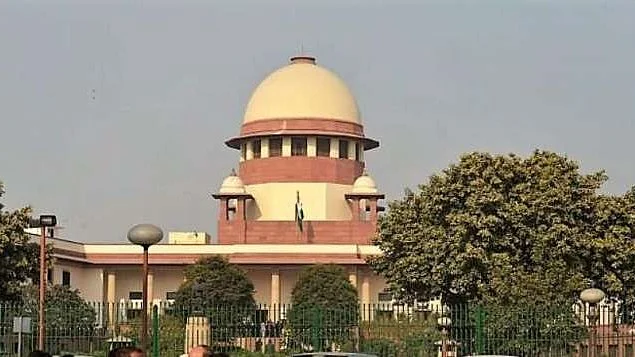
The Centre opposed the plea seeking income-based creamy layer exclusion within SC and ST reservation categories before the Supreme Court.
It argued that reservations are meant to address historical and social discrimination, and that income alone cannot determine backwardness.
The government said any change to reservation policy requires a comprehensive empirical study and falls within Parliament's legislative domain.
The Centre opposed a petition before the Supreme Court concerning the proposed changes to India’s reservation policy. The case, Ramashankar Prajapati vs Union of India, was opposed by the Union government, said that “principles of creamy layer do not apply to SCs and STs,” The Hindu reported.
The petitions sought creamy-layer exclusion within the reserved categories of Scheduled Castes (SCs) and Scheduled Tribes (STs) as in the Other Backwards Classes (OBC). But, the Union government said that the matter does not raise any constitutional issue.
What Did The Centre Tell The Supreme Court?
The Union Ministry of Social Justice and Empowerment said that a majority of welfare schemes- minus reservation in educational institutes and services under the State- for the reserved categories have a “means test which ensures that benefits of schemes percolate to those who actually deserve them”.
The Centre said, as quoted by The Hindu, “Modification of reservation policy, particularly to introduce income-based preferences within reserved categories, should be preceded by a holistic review and thorough empirical study, including socio-economic data of reserved category beneficiaries.”
.png?auto=format%2Ccompress&fit=max&format=webp&w=240&dpr=1.0)

Why Did The Centre Oppose The Plea?
The Centre said the provisions reservations to SCs, STs, OBCs, and Economically Weaker Section (EWS), were made to “achieve social equality and justice, overcome historical disadvantages and discrimination, ensure economic empowerment and upliftment for marginalized communities, and promote their inclusive participation in education, public services, and decision-making processes”.
It also said that the current matter of seeking income-based creamy layer does not raise a constitutional issue, or does not violate any fundamental right under the constitution.
Background To The Case
The petitioner sought an income-based sub-quota within the reserved categories, favouring economically weaker people in these categories, as per Live Law. The Union government said it was ‘misconceived’.
Earlier in 2024, seven-judge Bench in State of Punjab vs Davinder Singh, Justice (Retd) BR Gavai opined that the government “must” find a way to identify a creamy layer for SCs and STs even if the criteria for this identification was different than that for OBCs. But now, the Centre said that only the Parliament can add or remove communities from the reservation lists. It said that this domain is not for the courts to enter.