RSS chief Mohan Bhagwat said Bharat's “destiny” is to show the world that unity and diversity can coexist.
He stressed the RSS's civilisational idea of oneness while urging the Indian diaspora to fulfil its responsibilities towards the US.
His address came amid controversy over the RSS event.
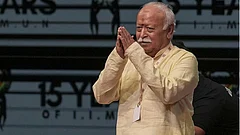
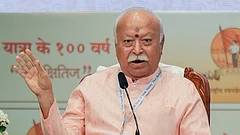
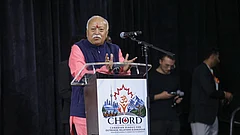
RSS chief Mohan Bhagwat on Saturday said Bharat’s “destiny” was to demonstrate to the world that unity and diversity can coexist, arguing that India must convey this idea “not by preaching, but by practice”.
Addressing around 5,000 people at New York’s Madison Square Garden, Bhagwat said nations were not merely geographical entities but had a larger “duty” to fulfil. Invoking Swami Vivekananda, he said every nation had a message to deliver, a mission to accomplish and a destiny to fulfil.
“For Bharat, this unity and diversity are part of the DNA,” Bhagwat said, stressing that diversity must be “celebrated”, “respected” and “accepted” while retaining a sense of oneness.
Bhagwat’s Address Amid New York Controversy
Bhagwat’s appearance came amid controversy over the RSS event in New York. Mayor Zohran Mamdani had earlier said he did not support the programme, describing the RSS as part of what he called an “exclusionary vision” and questioning its compatibility with the pluralistic and secular India he had grown up with.
“I don’t support the rally, but I don’t know if the city has any jurisdiction on cancelling a private event,” Mamdani had said.

Interfaith and civil rights organisations, including Hindus for Human Rights, the Indian American Muslim Council and the Interfaith Centre of New York, had also called for the event to be cancelled.
The gathering, organised by the AHEAD Forum as part of the RSS’s centenary-year global outreach, was attended largely by members of the Indian diaspora.
Against this backdrop, Bhagwat used his address to lay out the RSS’s civilisational understanding of India, repeatedly returning to the idea of unity underlying differences of religion, culture and appearance.

‘We Belong To Each Other’
Bhagwat said the idea of oneness was not merely philosophical but should shape how people treated one another.
Using the example of a person trying to eat while watching another human being go hungry, he said the instinctive recognition of another’s suffering reflected a basic human sense of connectedness.
He contrasted “live and let live” with an approach in which people are allowed to live only if they obey those in power. Those who cared for others irrespective of whether they were useful or obedient, he said, represented the “devas”, while the opposite approach was associated with “rakshasas”.
Bhagwat said India’s civilisational tradition viewed humanity as connected through the atman, like beads woven into a single thread.
“You appear different but you are not,” he said, arguing that differences of body, clothing and modes of worship were temporary while an underlying unity remained.
“That is the mission Bharat has to accomplish. Not by preaching, but by practice. That is the destiny of Bharat,” he said.
‘First Responsibility Is Towards US’
Addressing the Indian diaspora, Bhagwat said their first responsibility was towards the US, which he described as their “karmabhoomi”.
If they wished to contribute to India, he said, they should first fulfil their responsibilities towards the country where they lived and reflect the values they had inherited from India.
“We take from the world and so we have to give back. How much we earn is not important. How much we distribute is,” he said.
Bhagwat also spoke about humanity’s responsibility towards nature, arguing that human beings’ dominance over other species carried a corresponding duty to protect and sustain them.
He cited historian Yuval Noah Harari’s Sapiens while warning against viewing humanity as the master of creation.
“We cannot merely let live. We have to help others live,” he said.
On conflict, Bhagwat said India’s civilisational tradition did not call for the destruction of enemies. Instead, he argued, people should wish for the end of a “wicked mindset” rather than the destruction of the person.
“Even our enemies and we are one,” he said, describing enmity as a “man-made thing” arising from circumstances and situations.