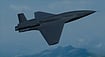
In an exclusive interview with Outlook’s Anish Kumar, WB Group’s vice-president Adam Bartosiewicz, who was part of a delegation accompanied Poland’s prime minister Donald Tusk last week, said that the company’s drones are built to military standards, including operation at minus 40 °C and can be adapted to India’s conditions within the limits of physics.
Citing the war in Ukraine, he said drones have made the battlefield almost transparent, dense air defences have all but ended air superiority, and electronic warfare means every mission reveals a unit's position.
India's conditions; high altitude, desert heat and heavy electronic interference, are very different from Europe's. What has it taken to adapt your systems for them?
ADAM BARTOSIEWICZ: From the outset, our equipment has been designed to meet military standards, and those standards are very demanding. For example, it is standard for us that military equipment must operate even at minus 40 degrees Celsius. Of course, with drones we are not always talking about conditions quite that extreme, but we take these kinds of structural stresses into account right from the design stage.
So we are able to meet genuinely harsh environmental requirements. And let me remind you: we export our equipment to many countries outside Europe, where operating conditions can be very different.
As for altitude, we can certainly deliver anything that complies with the laws of physics.


Loitering munitions have gone from a niche weapon to a standard one in under a decade. What explains that rise?
ADAM BARTOSIEWICZ: First and foremost, drones have proved to be extraordinarily versatile. And they are cost-effective, too. Loitering munitions can search for a target on their own. With systems like ours, which can stay airborne for a really long time, you can conduct reconnaissance for a while and only in the final phase of the mission, when there is still enough energy in reserve, identify a target and destroy it.
That is a fundamental difference compared with many conventional weapons.
And on top of that, loitering munitions offer precision comparable to missiles, while costing several times less.
Out of Ukraine, Nagorno-Karabakh, West Asia and Operation Sindoor, which holds the most relevant lesson for India, and why? And what has real combat in Ukraine taught manufacturers that trials never could?
ADAM BARTOSIEWICZ: Well, the thing is, real wartime conditions are always tougher than the conditions in which you run tests.
Of course, we can try to make testing conditions resemble an actual conflict as closely as possible. But we can never recreate everything. The enemy can always surprise us with some new way of operating or using technology.
One of the most important lessons from Ukraine, though, is that modern drones have become something like a much more sophisticated version of a conventional projectile.
They can severely restrict the movement of vehicles and people. They also make it harder to conceal concentrations of troops and equipment.
This has led to greater separation between the opposing sides. It has created what people call a 'death zone'. Once you enter an area like that, there is practically nowhere to hide. You are visible, and you can be attacked at any moment.
That is a very significant change.
Experience from Ukraine shows that the modern battlefield has become almost transparent. It is very difficult to hide a single object, a vehicle or, say, a concentration of larger numbers of units. It is also difficult to conceal preparations for a manoeuvre.
But we have to realise that this situation will not necessarily repeat itself in every future conflict.
We are in the fifth year of the war, and both armies fighting in Ukraine are already severely exhausted. To a large extent, they have lost the ability to concentrate major forces in one place, launch a powerful strike and break through the other side's defences.
Another very important observation concerns air superiority.
It seems to me that Ukraine has demonstrated something extremely important: with the current density of air-defence systems on the battlefield, air superiority, as traditionally understood, practically ceases to exist.
We are talking about the entire spectrum of systems, from medium-range air defence all the way down to MANPADS -- man-portable air-defence systems.
Under those conditions, an aircraft appearing over enemy territory can be almost tantamount to that aircraft being shot down. So the traditional idea that you first gain air superiority and then operate freely over the battlefield largely belongs in the realm of fairy tales today.
Look at how many weapons, including relatively inexpensive converted aerial bombs produced in enormous quantities, are being given the ability to strike targets from long distances. They are fitted with additional wings, guidance systems and other solutions that extend their range.
That is precisely a consequence of not being able to operate freely in the air. You have to keep your distance from the enemy, so you release your weapons far from the target.
And here, in my view, there is still an enormous amount to be done, especially when it comes to drones.
These lessons may seem obvious to me, but we should draw on them when thinking about what the battlefield of the future will look like.
And then there is electronic warfare. On a massive scale.
Today, every mission is, in effect, a disclosure of your presence at a particular location. And because electronic-warfare systems are so closely linked to strike assets, very little time may pass between detecting such a formation and attacking it.
Those are, in my opinion, the most important lessons we should be taking from this conflict.
Should India bet on large numbers of low-cost drones, or fewer sophisticated ones? When does a drone become cheap enough to be treated as expendable, and how does that change the way commanders use it?
ADAM BARTOSIEWICZ: That is a very interesting question. And I think the answer is quite simple: both. Definitely both.
Why? Because relatively inexpensive systems, such as individual drones operated by a single soldier, can be extremely effective.
But more sophisticated systems, capable of penetrating defensive lines — both kinetic countermeasures and electronic-warfare defences — are simply essential for reconnaissance deep behind enemy lines.
They are also needed to destroy high-value targets, such as electronic-warfare systems, radars or air-defence systems.
So, both. These categories of systems perform different missions and complement one another.
And there is one more thing we need to remember.
Truly modern, military-grade drones are difficult to manufacture cheaply. They need highly sophisticated electronics to ensure reliable performance in a demanding combat environment.
They need the right sensors and solutions to protect them against interceptors. They have to operate without a GPS signal and under intense interference generated by electronic-warfare systems.
In other words, we are talking about highly advanced systems.
They cannot be cheap. They simply cannot.
What does "affordable" really mean here? How should a military compare the cost of a loitering munition with that of a missile or an artillery shell?
ADAM BARTOSIEWICZ: First of all, I want to emphasise that a loitering munition is not simply a substitute for a missile. The way it can be used covers a much broader range of scenarios.
After all, it combines a reconnaissance platform with an effector. And that gives you considerably more flexibility.
A missile generally has a relatively short flight time and limited room to manoeuvre. You cannot really use it for reconnaissance.
In certain aspects, the comparison is not very favourable to conventional missiles. Loitering-munition systems are not only cheaper; they can also do more.
Of course, in theory you might argue that it is harder to shoot down a missile than an unmanned aircraft.
But in practice these are completely different types of weapons, and you counter them in completely different ways.
When infantry, tanks and artillery fight together, what does that demand of the drones supporting them? Beyond the munition itself, what else does an artillery unit need to use it well – surveillance, targeting support, training?
ADAM BARTOSIEWICZ: I really like this question, because it touches on an extremely important issue.
If you have artillery systems that need to communicate with the outside world in order to coordinate their operations, then of course the first, simplest and most obvious use of drones is reconnaissance. Right?
But then another problem arises.
If we want to send the results of that reconnaissance — the coordinates of a detected target, for example — to a C2, or Command and Control, system, we have to use radio communications. And every such transmission creates electromagnetic emissions.
This is where I see enormous value in giving drones communication functions as well. That could significantly reduce the level of electromagnetic emissions associated with communications between vehicles.
And that, in turn, would make it harder to detect those formations by identifying their emissions.
Drones can also play another very important role: protecting formations of conventional military equipment from enemy observation.
They can carry sensors that detect other drones conducting surveillance, as well as systems that can interfere with communications between those drones and their operators.
So there really are many ways to use drones to protect your own formation — not just to act against the enemy.
The drone is the part people see, but the communications network behind it matters just as much. How important is that network in making everything work together?
ADAM BARTOSIEWICZ: It is absolutely fundamental. Good drones must have reliable communication systems.
And these cannot simply be standard radios whose design, software and electronics are widely known and readily available.
Such systems are relatively easy to jam.
Most drone manufacturers use off-the-shelf communication solutions. They are standard, well known and widely available.
We take a different approach.
From the very beginning, our drones are designed and produced as part of a larger system. We use our own communications solutions, developed with specific military requirements in mind.
You could say that the best drones will be made by companies that really understand military radios.
And that is exactly the kind of company we are.
With militaries worldwide racing to equip themselves with unmanned systems, where do you see WB India's cooperation with the Indian armed forces going over the next decade?
ADAM BARTOSIEWICZ: I have said this many times during my visit to India with the Polish government delegation.
We want WB India to become a Grand Champion of India's defence industry — just as WB Group is today in Poland.
And we want to build a relationship with the Indian armed forces that is every bit as strong as the one we have today in Poland and across Europe.