A Journey Shaped by Purpose
For London-based entrepreneurs of Indian origin, Captain Arun Kar (Retd.) and Nidhi Kar, humanitarian work has never been an event — it has been a continuum. Their journey, rooted in compassion and responsibility, has steadily evolved from grassroots interventions in India to global platforms of dialogue and impact. When the couple was honoured at the United Nations Headquarters in New York in February 2026 with a Certificate of Appreciation, it marked not an endpoint, but a reflection of years of quiet, consistent service aligned with the United Nations Sustainable Development Goals (SDGs). Presented in the presence of Ambassador Luis Suarez Hernández, Representative of the United Nations, and Dr. Barkha Versha, Chairperson of the United Nations Global Peace Council, the recognition acknowledged their contributions across public health, sanitation, gender equity, community empowerment, environmental sustainability and global cooperation. For Arun and Nidhi Kar, however, the true measure of their work has always been the lives touched — often away from public attention.
Advancing Sanitation, Health & Dignity – Odisha, India (Aligned with UN SDGs 3, 5 and 6)
Dignity has remained central to their understanding of meaningful development. In Nabarangpur district of Odisha, Arun Kar and Nidhi Kar focused their humanitarian engagement on addressing a fundamental yet often overlooked challenge — access to safe and private sanitation for young girls. Recognising the urgency of the situation, they supported and financed the construction of a secure, roofed bathroom facility for 46 tribal girls, helping address serious concerns around privacy, safety, hygiene and human dignity in a residential care setting where such basic infrastructure had long been absent. The initiative followed careful field-level assessments and collaborative coordination with district officials and community contributors, including Dr. Bibhuti Bhusan Pattnayak, Swagatika Tripathy, and social worker Kanhu Raj Benjamin Singh Sadhu. Alongside the sanitation effort, menstrual hygiene support was extended through the Mo Library initiative, where community mobilisation helped provide sanitary pads to 38 girls for three months, reinforcing the importance of health, hygiene and gender-sensitive care at the grassroots level. The initiative reflected a simple yet powerful belief: when dignity is protected, opportunity and well-being naturally follow. This effort aligns with SDG 3 (Good Health and Well-Being) by improving hygiene and health conditions, SDG 5 (Gender Equality) by addressing gender-specific needs with dignity, and SDG 6 (Clean Water and Sanitation) by enabling access to safe sanitation — demonstrating how focused grassroots action can create lasting human impact.




Grassroots Humanitarian Outreach – Uttarakhand, India (Aligned with UN SDGs 1, SDG 2, SDG 3, SDG 10)
In the remote stretches of Udham Singh Nagar, Uttarakhand, where seasonal extremes often intensify everyday hardship, humanitarian support can make the difference between survival and dignity. During 2025, a quiet outreach initiative supported vulnerable elderly individuals, women and children facing harsh climatic and economic challenges, offering care and essential relief at moments when it was needed most. This effort was carried out with the participation and support of Arun Kar and Nidhi Kar, alongside the Futela family — Vinod Futela, Shailly Futela, Vishal Futela, Vivek Futela and Nancy Futela, reflecting a shared commitment to compassion-driven service. During the severe winter months, when temperatures fall sharply across the region, the initiative ensured the distribution of hot meals and winter clothing, helping individuals withstand extreme cold with warmth and nutritional support. As the season transitioned into intense summer heat, the outreach continued with the distribution of fresh meals and essential footwear, supporting those who walk long distances in difficult conditions without adequate protection. The outreach aligns with SDG 1 (No Poverty) by supporting vulnerable populations, SDG 2 (Zero Hunger) through direct food assistance, SDG 3 (Good Health and Well-Being) by addressing seasonal health risks, and SDG 10 (Reduced Inequalities) by extending dignity and care to underserved communities — underscoring the enduring impact of humanitarian compassion.
Empowering Women Through Sports – Support to Precision Shooter Satabdi Dash, UK (Aligned with UN SDGs 5 and 3)
Arun Kar and Nidhi Kar, through the strategic backing of Xpertnest, extended structured support to emerging precision shooter Satabdi Dash, a rising woman athlete based in the United Kingdom. Recognising her dedication, discipline and competitive potential in the highly specialised sport of precision shooting, The initiative reflects a broader commitment to enabling women to excel in traditionally underrepresented sporting domains by providing encouragement, mentorship and performance stability at crucial stages of their journey. Satabdi Dash’s progress represents not only individual sporting excellence but also the growing visibility of women in precision sports, reinforcing confidence, representation and equal opportunity. The support extended by Arun Kar and Nidhi Kar underscores their belief that empowering women through sport builds resilience, leadership and long-term societal impact. This initiative aligns with SDG 5 (Gender Equality) by promoting women’s participation and advancement in competitive sport, and with SDG 3 (Good Health & Well-Being) by encouraging physical discipline, mental strength and high-performance development.
Strengthening Community Through Sports & Social Cohesion – The UK (Aligned with UN SDGs 3, 10 and 11)
Community, at its core, has always been the foundation of lasting and meaningful impact. Through their sustained engagement with the Odia diaspora in the United Kingdom, Arun Kar and Nidhi Kar have worked to strengthen social cohesion, cultural identity and collective well-being through shared participation and community connection. By promoting sports-led initiatives, encouraging youth involvement and supporting inclusive gatherings, they have helped create platforms that foster discipline, teamwork and a deep sense of belonging among community members across generations. These initiatives, supported by community contributors including Rasmi Nanda, have gone beyond recreational activity to foster connection, confidence and unity within the diaspora. Through structured sporting engagement and community interaction, families and young people have been brought together in a spirit of collaboration and cultural continuity — reinforcing the idea that strong communities are built through participation, inclusion and shared responsibility. This initiative aligns with SDG 3 (Good Health and Well-Being) by encouraging physical and mental well-being, SDG 10 (Reduced Inequalities) by fostering inclusion and participation, and SDG 11 (Sustainable Cities and Communities) by strengthening social cohesion and community resilience — highlighting how unity and engagement can become catalysts for long-term social development.
Guinness World Record & UNICEF Polio Mission – Global Health Impact (Aligned with UN SDGs 3 and 17)
For Arun Kar and Nidhi Kar, humanitarian commitment has often taken deeply personal forms. One of the most defining moments in Arun Kar’s journey came when he completed the Vitality Marathon and achieved a Guinness World Record, dedicating the effort to supporting polio vaccination initiatives for UNICEF. The run was not merely a test of endurance, but a symbolic contribution to a global mission — protecting children from preventable disease and advancing the long-standing international effort to eradicate polio. Beyond the record itself, the campaign highlighted how humanitarian values can be translated into action — combining resilience, discipline and social responsibility. For Arun and Nidhi Kar, the milestone represented not a personal achievement, but a commitment to contributing, in however small a way, to a healthier and more equitable world. The initiative aligns with SDG 3 (Good Health and Well-Being) by supporting global immunisation and child health protection, and SDG 17 (Partnerships for the Goals) by reflecting how collaboration between individuals, institutions and global organisations can advance shared public health objectives and long-term humanitarian progress.
Cultural Diplomacy & Global Dialogue – Global South Maritime Heritage Summit (Aligned with UN SDGs 17, SDG 11, SDG 13)
Development, in its most meaningful sense, is deeply connected with cultural identity and shared human heritage. In advancing diaspora-led cultural diplomacy, Arun Kar and Nidhi Kar played a key role in shaping the Global South Maritime Heritage Summit, held alongside the Bali Jatra UK celebrations at the House of Lords, UK Parliament. The initiative reflected a broader effort to link historical legacy with contemporary global priorities. Drawing from Odisha’s rich maritime heritage, the summit explored themes of sustainability, international cooperation and the evolving narrative of the Global South — demonstrating how cultural memory can meaningfully inform modern dialogue and collective progress. The summit was shaped through the leadership and contributions of Partha Sarathi Panda, Dr. Bibhuti Bhusan Pattnayak and Sweta Mohanty, along with the coordination and institutional support of Team Xpertnest led by Chintan Panara. Together, they helped translate cultural identity into a platform for engagement and global conversation. By strengthening cultural and intellectual exchange between the United Kingdom and India, the initiative contributed to broader dialogue among Global South nations — fostering cooperation rooted in shared history, sustainability and future collaboration. The effort aligns with SDG 17 (Partnerships for the Goals) by promoting international cooperation, SDG 11 (Sustainable Cities and Communities) by preserving and celebrating cultural heritage, and SDG 13 (Climate Action) through dialogue centred on sustainability and responsible development — reinforcing a vision where culture, cooperation and sustainable progress move forward together.
Environmental Responsibility – Earthnest Initiative Against Plastic Bag Pollution (Aligned with UN SDGs 12, 13 and 14)
Environmental responsibility has become an essential extension of a broader humanitarian philosophy that recognises the inseparable link between human well-being and ecological balance. In this spirit, Arun Kar and Nidhi Kar, alongside Chintan Panara and Pradip Butani, co-founded and advanced Earthnest with a clear objective: to address one of the most visible and damaging environmental challenges of our time — plastic bag pollution. Single-use plastic bags have become deeply embedded in daily life, yet their environmental cost is staggering. They clog landfills, contaminate soil, enter rivers and oceans, and endanger marine and terrestrial ecosystems. Through Earthnest, the team has sought to move beyond awareness campaigns and focus instead on practical, scalable alternatives. Their work centres on promoting biodegradable and eco-friendly substitutes designed to reduce long-term environmental damage while remaining viable for everyday use across retail, hospitality and community applications. In many ways, Earthnest reflects a shift in mindset — from reactive environmental cleanup to preventive responsibility. The initiative aligns naturally with SDG 12 (Responsible Consumption and Production) by promoting sustainable alternatives, SDG 13 (Climate Action) by reducing environmental impact, and SDG 14 (Life Below Water) by addressing plastic waste that threatens oceans and biodiversity. For Arun and Nidhi Kar, environmental stewardship is not an abstract concept; it is a shared duty that connects local choices to global consequences. Through Earthnest, their work underscores a broader belief: meaningful development cannot be separated from environmental responsibility. Protecting ecosystems, reducing waste and encouraging sustainable behaviour are not optional pursuits — they are integral to building a future where progress and preservation coexist.

Global Platforms, Continuing Responsibility
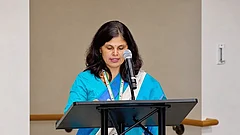
Shortly before being honoured at the United Nations Headquarters, Arun Kar and Nidhi Kar were recognised at the New York Times Award 2026, presented on 21 February 2026 at the Martinique Hotel in New York. The ceremony was organised by the United Nations Global Peace Council (UNGPC) in collaboration with UNGM (United Nations Global Marketplace) and the United Nations Sustainable Development Goals (UNSDG) framework, and was presided over by Ambassador Luis Suarez Hernández. The gathering brought together an international cross-section of leaders, diplomats and professionals committed to social impact and global cooperation, including Rocio Del Pilar Parientes, Hugo Eduardo Parientes Ramos, Lubna Dajani, Josh Berman, Elvira Tata, Dr. Laurent Khayat, Phakapan Salao, Luz Maria Utrera, Klea Rama, Ykov David Cohen, Dr. Sridhar PeddiReddy, Stela Tata, Rashad Alkhader, Megi Rama, Chavvi Naz, Nadeem Khan, Dr. Parveen Smith, Mamdouh Zeidan, Dalila Benmehidi, and Serafin De Los Angeles Sarduy Escalona. During the event, Arun Kar was invited to speak, where he reflected on the evolving intersection of humanitarian action, responsible innovation and sustainable development. He emphasised that meaningful progress must be grounded in real human needs, and that technology and innovation should serve as tools to strengthen dignity, inclusion and long-term societal well-being. His address also highlighted the importance of global cooperation and shared responsibility, stressing that sustainable development can only be achieved when nations, institutions and communities work together beyond boundaries.
Beyond Recognition — A Continuing Journey
For Arun Kar and Nidhi Kar, recognition has never been the destination. Their journey reflects a belief that lasting impact is built through humility, collaboration and sustained commitment. From sanitation and public health to environmental responsibility and global dialogue, their work demonstrates how grassroots compassion, when combined with long-term vision, can create meaningful change across communities and borders.
About Arun Kar and Nidhi Kar
Captain Arun Kar (Retd.) is a London-based entrepreneur of Indian origin and former Indian Army officer, engaged in technology, sustainability and humanitarian initiatives across India and the United Kingdom. He is co-founder of Xpertnest and Earthnest, with work spanning public health, sanitation, environmental responsibility, community development and global engagement aligned with the United Nations Sustainable Development Goals.
Nidhi Kar, Director at Earthnest, has been actively involved in environmental and community-focused initiatives, contributing to grassroots humanitarian outreach, sustainability programmes and women-centred social efforts. Together, they continue to advance initiatives centred on dignity, inclusion and responsible development.