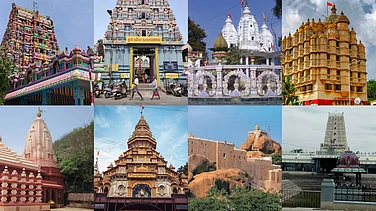
Ganesh Chaturthi might be rooted in Maharashtra, but over the last couple of decades, Delhi has built its own, surprisingly vibrant version of the festival. It's not quite Mumbai's scale; nothing really is, but the capital has grown a genuine Ganpati culture of its own, with pandals popping up from Dwarka to Mayur Vihar, community groups outdoing each other with themes, and even a full Ganesh temple in the middle of Connaught Place. If you're in Delhi this September, here's where to head for Ganesh Chaturthi 2026, which begins on Monday, September 14, and closes with Visarjan on Friday, September 25.
Why Delhi's Celebration Feels Different
Delhi's Ganesh Chaturthi crowd is a mix: Maharashtrian families who've settled in the capital and kept their traditions alive, South Indian communities with their own decades-old pandals, and a growing number of Delhiites from every background who've simply started joining in for the atmosphere, the food, and the sheer spectacle. That mix is what gives Delhi's celebration its particular flavour: you'll find Vedic chanting at one pandal and a full-blown light-and-sound show at another, sometimes just streets apart.
Top Pandals to Visit
Maharashtra Sadan, New Delhi
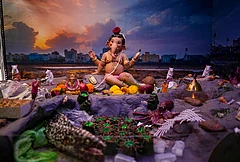
If you want the most authentic version of Ganeshotsav in Delhi, this is where to go. Maharashtra Sadan's celebration is organised by the Sarvajanik Ganeshotsav Samiti, originally formed by Maharashtra state government employees posted in the capital. The rituals here stay close to the Pune and Mumbai template, with daily aarti, traditional Marathi customs, and a genuinely devotional atmosphere rather than a purely spectacle-driven one.

Maharashtra Bhawan, Connaught Place
Close by at KG Marg, Maharashtra Bhawan brings its own slice of Mumbai to central Delhi, complete with dhol-tasha drummers, Maharashtrian folk performances, and food stalls serving puran poli, batata vada, and other festival staples. It's a favourite for anyone who wants the sound and energy of a Mumbai Ganeshotsav without leaving the city.
RK Puram Ganesh Utsav
One of Delhi's oldest running Ganesh Chaturthi celebrations, this pandal is organised by South Indian community groups and leans firmly into devotion over decoration. Expect Vedic rituals, steady bhajans, and a calmer, more contemplative crowd than some of the flashier pandals elsewhere in the city, plus prasad that regular visitors will tell you is worth the trip on its own.
Lal Bagh Ka Raja, Delhi
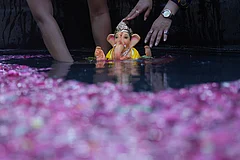
Modelled after Mumbai's legendary Lalbaugcha Raja, Delhi's own version has become one of the city's biggest draws, typically featuring one of the tallest idols in the capital — past editions have gone up to 18 feet. The scale, the crowds, and the general buzz make it a must-visit if you want to see Ganesh Chaturthi at its grandest within Delhi.
Dwarka's Community Pandals
Dwarka has quietly become one of Delhi's most elaborate Ganesh Chaturthi hubs, with a theme that changes every year and idol heights that regularly rival the city's biggest pandals. Beyond the daily aarti, organisers here typically line up devotional singing and cultural performances through the ten days, making it as much a nightly community event as a religious one.
Pitampura
Known for pushing idol scale even further, Pitampura's pandal has in past years unveiled some of Delhi's tallest Ganpati statues, directly inspired by Mumbai's iconic idols. If towering, dramatically lit murtis are what you're after, this is usually one of the standout stops.
Themed Pandals in Mayur Vihar and Laxmi Nagar
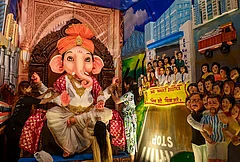
Some of Delhi's newer pandals have leaned into creative, topical themes rather than sticking to tradition alone. In recent years, pandals in Laxmi Nagar and Mayur Vihar have built entire installations around patriotic and current-affairs themes, everything from tributes to India's space missions to military operations, alongside more traditional showcases of spiritual heritage and artisan craftsmanship. It's worth checking closer to the date what theme each community group has settled on for 2026, since these tend to be refreshed annually.
Dilli Haat
For a more festival-meets-family-outing experience, Dilli Haat's Ganesh Chaturthi setup typically centres around a large idol (often around 5 feet), surrounded by craft stalls, puppet shows, live music and dance, and food vendors. It's an easy recommendation if you're bringing kids along, since there's usually a dedicated play area on top of the religious festivities.
Greater Kailash
South Delhi's Greater Kailash keeps its celebration comparatively low-key, with smaller crowds than Chandni Chowk or Connaught Place, but the pandal decorations and idol craftsmanship here are often quietly impressive. If you'd rather experience the festival's calmer, more intimate side, GK is usually a solid choice.
Temples Worth a Visit
Ganesh Mandir, Connaught Place
Tucked into the middle of one of Delhi's busiest commercial districts, this is one of the city's oldest dedicated Ganesh temples. During the festival, it draws a steady stream of devotees even amid the shopping crowds of CP, making it an easy stop if you're already out and about in central Delhi.
Chandni Chowk
Old Delhi's Chandni Chowk isn't home to a single famous Ganesh temple, but its narrow lanes fill up with decorated pandals and processions during the festival, offering a glimpse of how Ganesh Chaturthi has been observed here for generations. The mix of Mughal-era architecture and modern festival decorations makes for a distinctly Old Delhi kind of celebration.
Cultural Events and Processions
Connaught Place Processions
Through the ten days of the festival, Connaught Place's central circular road often turns into a moving celebration, with processions from nearby pandals passing through — dhol-tasha beats, dancing, and chants of "Ganpati Bappa Morya" drawing crowds along the route as groups make their way toward Visarjan.
Yamuna Ghat on Visarjan Day
If there's one place to be on the final day, it's the Yamuna Ghat, which functions as Delhi's main immersion point. On Anant Chaturdashi, processions from across the city converge here, and the atmosphere, equal parts emotional farewell and joyful celebration, is arguably the most striking single moment of Delhi's entire festival calendar. Given the crowd size, it's worth heading down early if you want to actually see the immersion rather than just the edges of the crowd.
A Few Practical Notes for 2026
Timing your visits: Crowds peak on the first day (Sthapana) and again on Visarjan day, so if you'd rather avoid the crush, aim for a mid-week visit instead.
Getting around: Many of Delhi's major pandals, Laxmi Nagar, Mayur Vihar, and RK Puram, sit close to metro stations, which tends to be a far easier way in than driving, especially once processions start closing off roads.
Parking: Municipal corporations typically set up designated festival parking zones near the bigger pandals, with nominal charges for two-wheelers and cars. If you're driving, it's worth checking for these in advance rather than hunting for street parking on the day.
Food: Expect a genuinely widespread at the bigger pandals — traditional modak alongside South Indian, Gujarati, and plain old Delhi street food, with several venues also running free community meals (bhandara) during the festival.
Delhi may not have a single iconic pandal on the scale of Mumbai's Lalbaugcha Raja, but that's almost the point: the city's charm during Ganesh Chaturthi comes from its variety. Whether you want quiet devotion at RK Puram, dhol-tasha energy at Maharashtra Bhawan, or the sheer scale of Lal Bagh Ka Raja, there's a version of the festival in Delhi that'll suit exactly the kind of Ganpati Bappa experience you're looking for.